
The Future of Business is Agentic. We Build the Engine.
What Are the Best AI Solutions for SaaS Platforms?
The best AI solutions for SaaS focus on Product-Led Growth (PLG) through predictive churn modeling and automated user onboarding. By integrating generative AI directly into the software interface, SaaS companies provide “Copilot” experiences that allow users to complete complex tasks via natural language commands.
Core AI Solutions Powering SaaS Growth
- 1. Embedded Generative AI (Copilots): AI copilots transform user interaction by enabling natural language commands instead of manual navigation.
- 2. Predictive Churn Modeling: Machine learning models analyze behavioral signals to identify at-risk users before they churn.
- 3. Automated Onboarding Systems: AI-driven onboarding reduces time-to-value from days to minutes.
- 4. Intelligent Search (NLU-Based): Natural Language Understanding (NLU) enables users to find answers instantly without friction.
- 5. Autonomous Product Optimization: AI continuously improves UX, feature adoption, and workflows based on real-time data.
The best AI solutions for SaaS focus on Product-Led Growth (PLG) through predictive churn modeling and automated user onboarding. By integrating generative AI directly into the software interface, SaaS companies provide “Copilot” experiences that allow users to complete complex tasks via natural language commands.
How Does AI Reduce Churn for SaaS Platforms?
AI transforms churn from a reactive metric into a predictable and preventable outcome.
SaaS platforms utilize AI to identify “at-risk” customers by analyzing usage patterns and support ticket sentiment. If a user’s engagement drops below a defined threshold, the AI triggers automated re-engagement workflows or alerts customer success managers to intervene.
Key Churn Signals Detected by AI
- Drop in team-wide adoption
- Declining login frequency
- Reduced feature usage
- Negative sentiment in support interactions
- Slower onboarding progression
AI-Driven Retention Actions
- Dynamic pricing or incentive triggers
- Automated email and in-app nudges
- Personalized feature recommendations
- AI-guided onboarding resets

What Are the Benefits of AI for SaaS Retention?
AI enables SaaS companies to shift from customer support to customer prediction and orchestration.
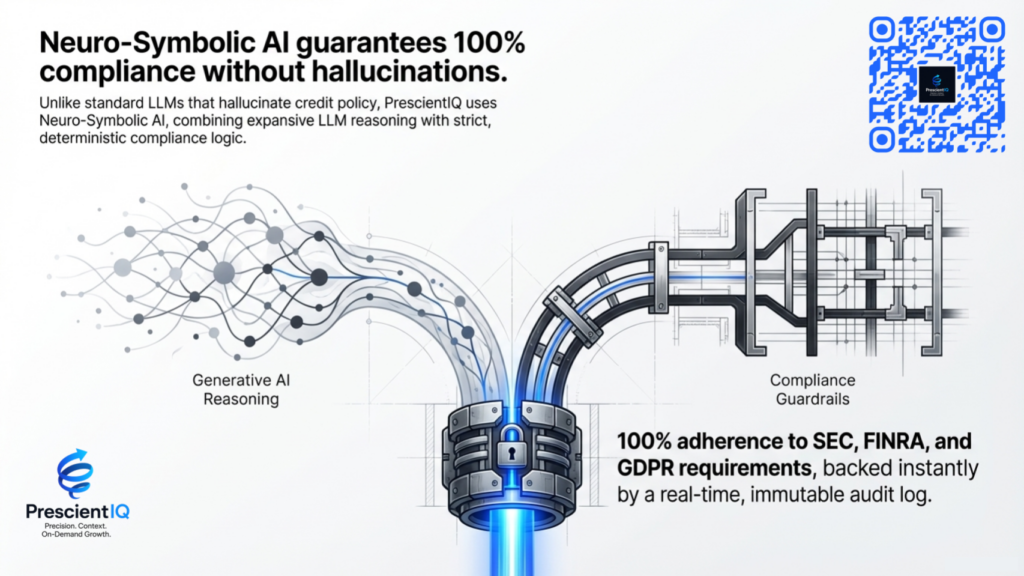
SaaS platforms utilize AI to identify “at-risk” customers by analyzing usage patterns and support ticket sentiment. If engagement drops, the AI triggers automated re-engagement workflows. This proactive approach reduces churn and increases Customer Lifetime Value (CLV).
Business Outcomes
- Reduced Customer Success costs
- 45–50% reduction in churn
- 45–40% increase in Customer Lifetime Value (CLV)
- Faster onboarding and activation rates
- Higher Net Revenue Retention (NRR)

Innovation Levers Enabled by AI
- Faster Product Iteration: AI detects bugs, anomalies, and UX friction in real time.
- Autonomous Feature Recommendations: AI identifies which features drive retention and automatically promotes them.
- Data-Driven Roadmaps: Product decisions shift from opinion-based to behavior-based.
- 4. Continuous Learning Systems: Every user interaction improves the system globally.
AI enables SaaS companies to shift from customer support to customer prediction and orchestration.
The Shift to Intelligence-First SaaS
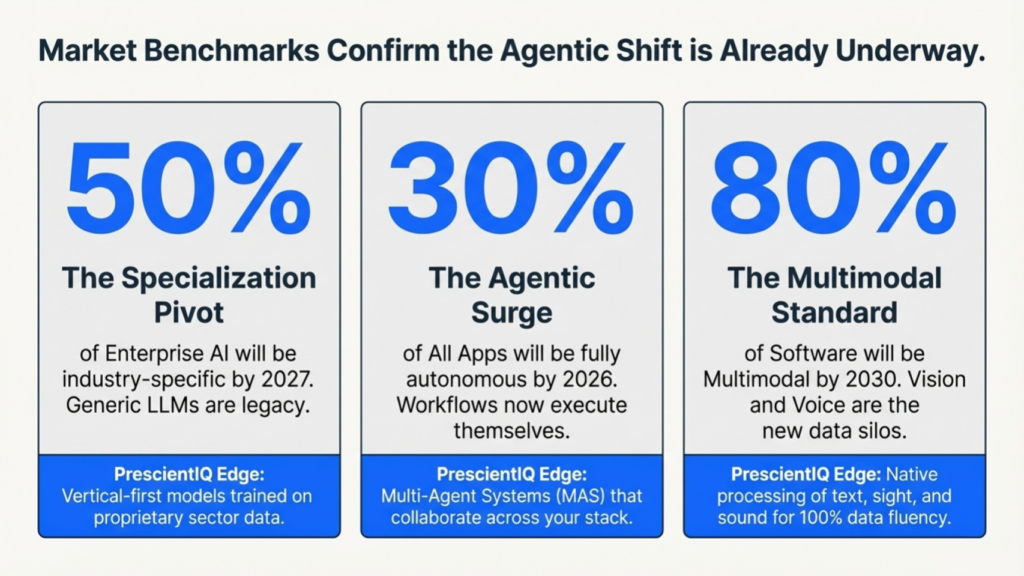
Traditional SaaS products were designed as tools that users must learn. AI-first SaaS platforms are designed to be partners that learn from users.
This shift fundamentally changes:
- Retention model → from reactive to predictive
- User expectations → from navigation to conversation
- Product design → from static UI to adaptive interfaces
- Growth strategy → from sales-led to product-led

Why SaaS Leaders Are Moving to AI Now
- Collapse of traditional funnels in favor of PLG
- Rising Customer Acquisition Costs (CAC)
- Increased competition and feature parity
- Demand for instant value realization
- Growth of AI-native competitors
AI Capabilities and Their Impact on SaaS Metrics
| AI Capability | Impact on SaaS Metrics |
| Predictive Lead Scoring | Increases Sales Velocity |
| Automated Bug Detection | Reduces Development Cycles |
| NLU Search | Improves User Retention |
| Generative AI Copilots | Increases Daily Active Users (DAU) |
| Behavioral Analytics | Improves Product-Market Fit |
| AI Onboarding | Reduces Time-to-Value |
Vertical AI Specializations
Industry Impact at a Glance
| Industry | Primary AI Application | Key Strategic Outcome |
| Finance | Fraud & Risk Modeling | 40% Reduction in False Positives |
| Healthcare | Diagnostic Assistance | 25% Increase in Triage Efficiency |
| Retail | Demand Forecasting | 15% Reduction in Inventory Costs |
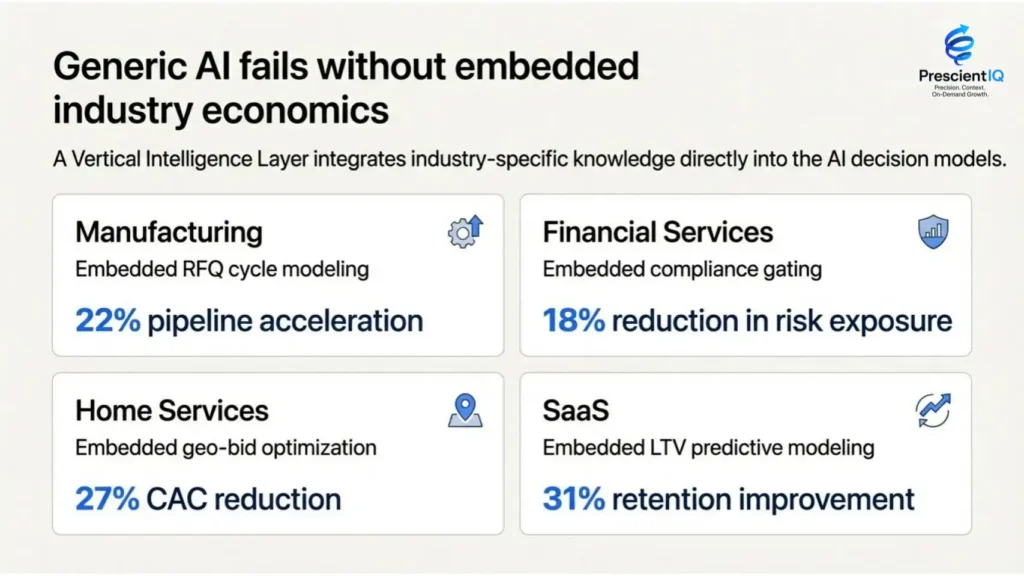
| SaaS | User Behavior Analytics | 20% Improvement in LTV (Lifetime Value) |
Trusted by the world’s leading businesses



“Ad wastage was eliminated by 35% lift in sales.”
Lead Results You Can Measure
What is AI in SaaS?
AI in SaaS refers to embedding machine learning and generative AI into software platforms to automate workflows, personalize experiences, and predict user behavior.
How does AI improve SaaS retention?
AI improves retention by identifying at-risk users early and triggering automated or human interventions before churn occurs.
What is a SaaS Copilot?
A SaaS Copilot is an embedded AI assistant that allows users to interact with software using natural language to complete tasks faster.
Is AI necessary for SaaS growth?
Yes. AI is becoming a core requirement for competitive SaaS platforms, particularly for Product-Led Growth (PLG) and retention optimization.