
Applications and Case Studies
What is Digital Labor?
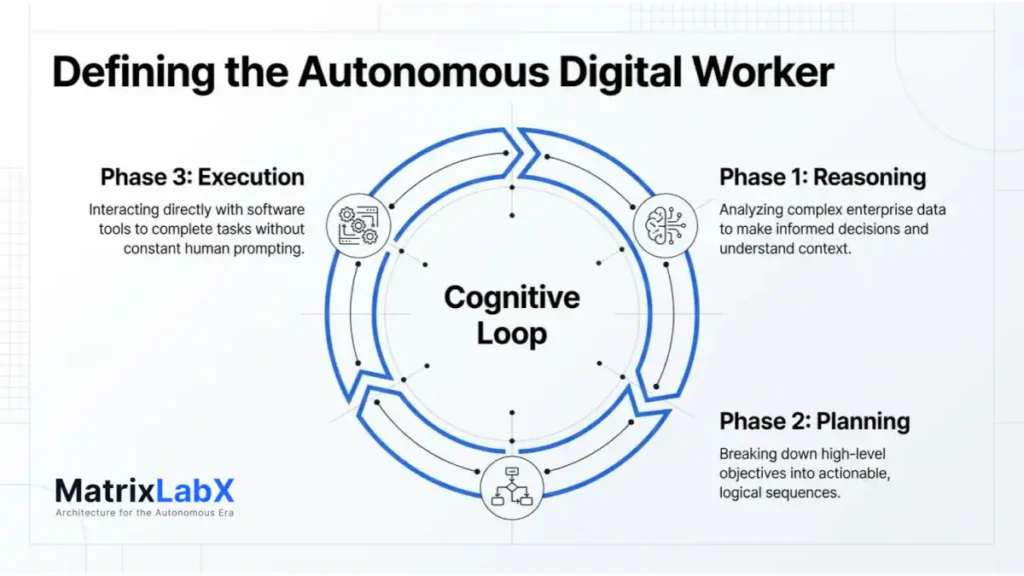
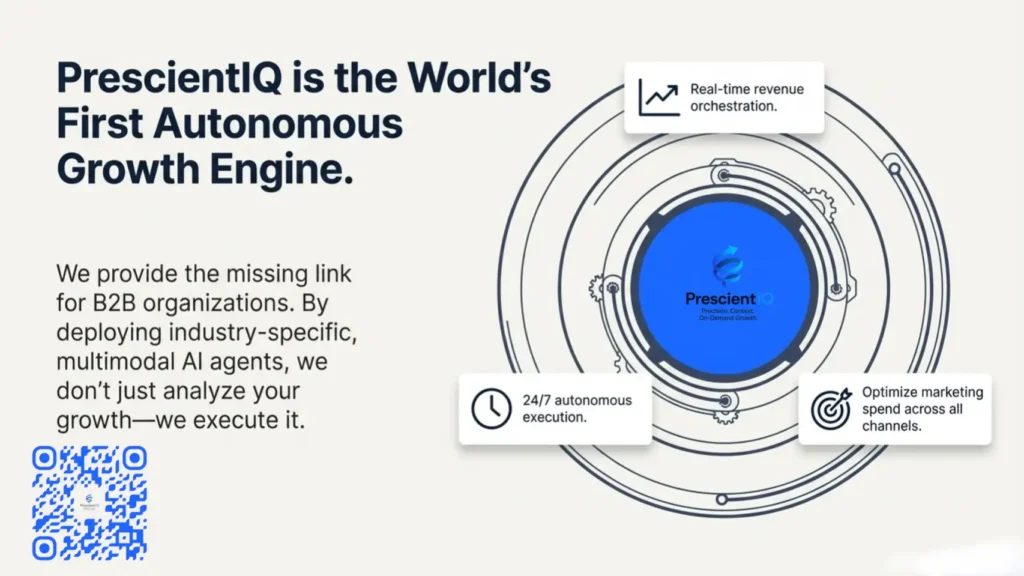
Digital labor refers to autonomous agentic workflows that transform high-volume telemetry into hyper-personalized interventions. Unlike traditional automation, MatrixLabX’s PrescientIQ engine doesn’t just follow rules; it identifies friction in real time and executes goal-driven decisions, delivering a 10:1 return on investment.
What are Industry Models?
MatrixLabX Industry Models are specialized, pre-trained AI frameworks that deliver sector-specific intelligence for MatrixLabX’s autonomous marketing and sales platforms. Unlike generic artificial intelligence, these models are engineered to understand the unique regulatory, operational, and customer requirements of specific business sectors from day one.
- Embedded Generative AI (Copilots): AI copilots transform user interaction by enabling natural-language commands rather than manual navigation.
- Predictive Churn Modeling: Machine learning models analyze behavioral signals to identify at-risk users before they churn.
- Automated Onboarding Systems: AI-driven onboarding reduces time-to-value from days to minutes.
- Intelligent Search (NLU-Based): Natural Language Understanding (NLU) enables users to find answers instantly, with no friction.
- Autonomous Product Optimization: AI continuously improves UX, feature adoption, and workflows based on real-time data.
For every $1 invested in MatrixLabX digital labor, enterprises realize over $10 in value by eliminating bottlenecks in human review.
- 50% Lower CAC through automated prospecting.
- 45-50% Reduction in core friction points (e.g., churn).
- 20% Improvement in Customer Lifetime Value (LTV).

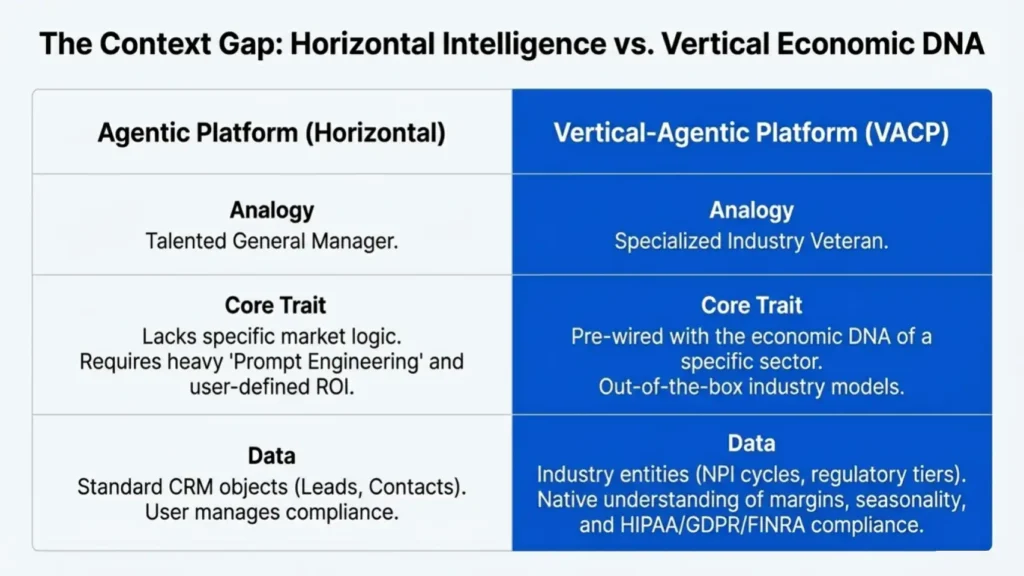
Core Purpose and Function
These models serve as a “logic layer” within the MatrixLabX ecosystem, specifically connecting the foundational PrescientIQ™ AI engine to industry-specific data.
- Contextual Relevance: They eliminate the need for extensive custom development by providing “industry-expert” intelligence immediately upon activation.
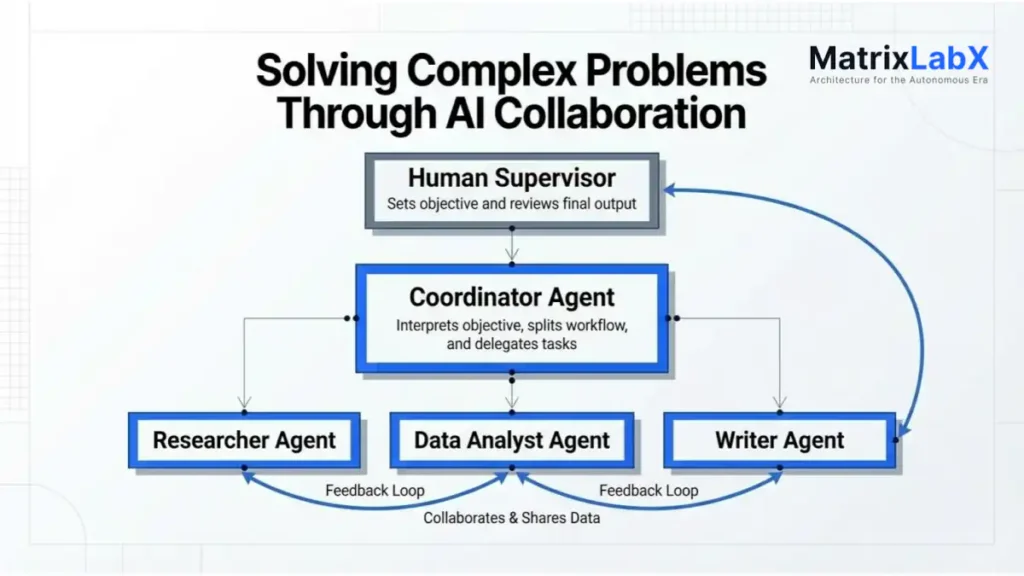
- Autonomous Execution: They power AI Agents and Agentic Systems (modular intelligent agents) and the NeuralEdge orchestration layer to automate entire workflows—such as GEO, AEO, SEO, ad management, and CRM hygiene—tailored to a particular industry’s standards.
- Predictive Insights: Models use “Causal Intelligence” and “Pre-Factual Simulation” to forecast the P&L impact of business decisions before capital is deployed.
Supported Industries
MatrixLabX has developed specialized models for a wide range of sectors, including:
- Technology & SaaS: Focuses on ARR growth, pipeline coverage, and reducing CAC.
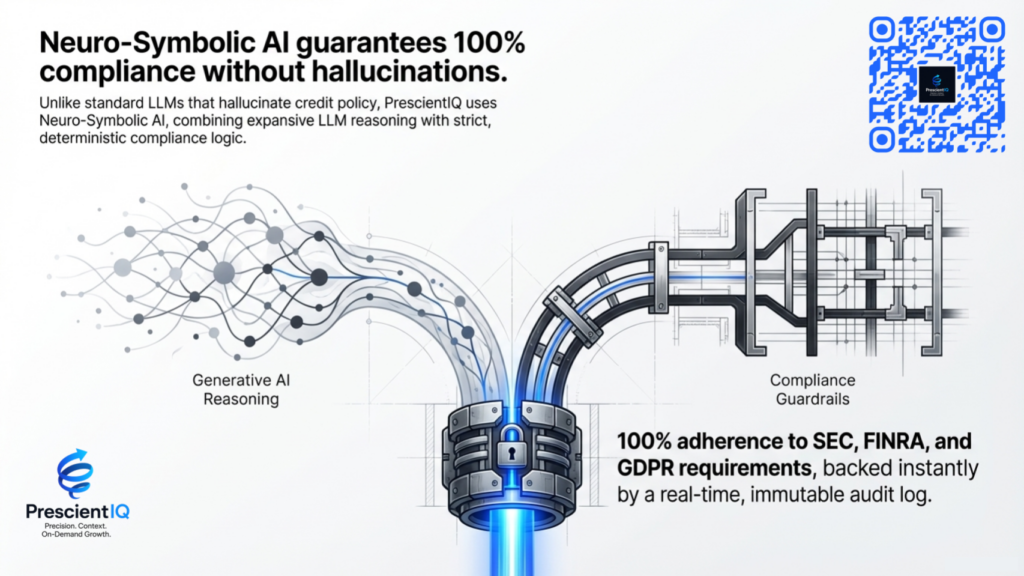
- Financial Services: Designed for wealth management and fintech, focusing on risk detection and hyper-personalization while meeting SOC 2 and GDPR standards.
- Healthcare & Life Sciences: Tailored for complex regulatory environments and patient engagement.
- Manufacturing & Industrial: Built to optimize multi-channel demand and dealer scaling.
- E-Commerce: Targets demand forecasting, dynamic pricing, and churn prediction.
- Additional Sectors: Professional services, retail, construction, real estate, energy, and transportation.
Comparison to Traditional Systems
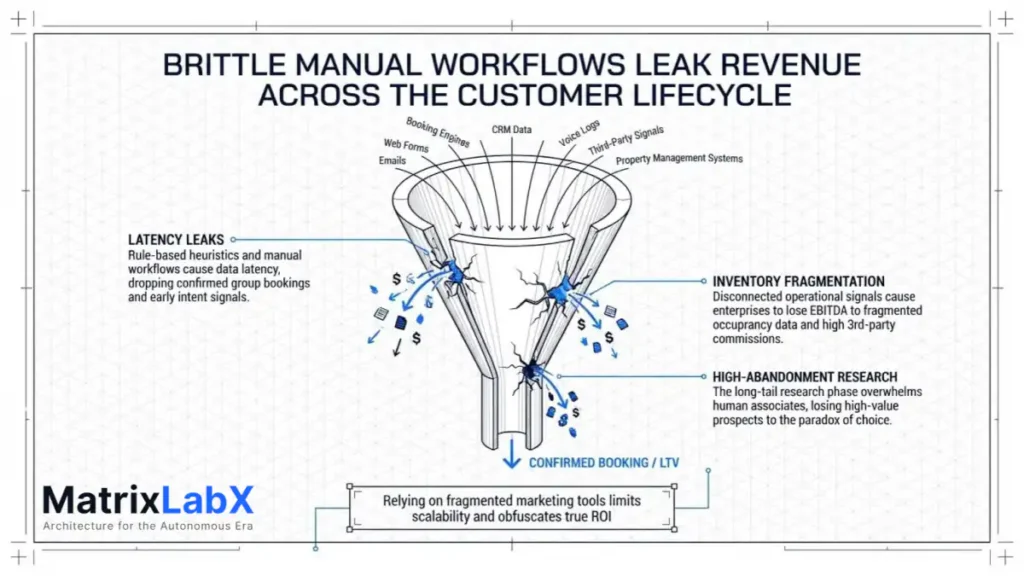
According to MatrixLabX, these industry models shift businesses from “tool-based stacks” to “autonomous growth architectures”.
| Feature | Traditional Industry Tools | MatrixLabX Industry Models |
| Intelligence | Static, human-led playbooks | Autonomous, self-optimizing agents |
| Data Usage | Broad segmentation | Real-time, context-aware decisions |
| Personalization | Reactive and labor-intensive | Proactive and hyper-personalized |
| Implementation | Weeks or months to set up | Vertical deployment often in days |
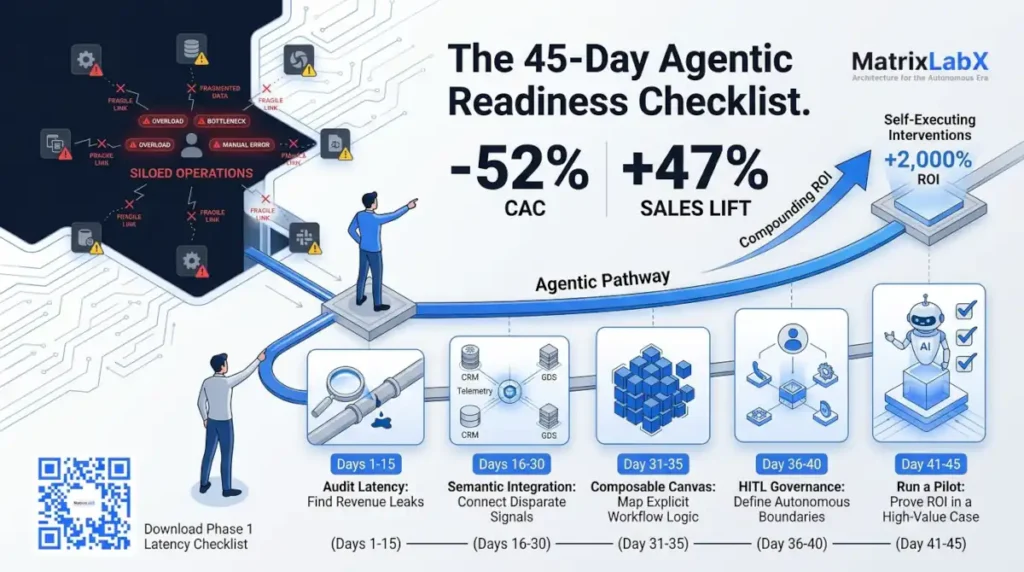
The Agentic Readiness Audit
Have you ever conducted a comprehensive evaluation of your company’s data liquidity and workflow atomicization, or aimed at enabling a transition from passive “Copilots” to autonomous Vertical Agentic Systems?
Financial Services: Predictive Risk & Portfolio Analysis
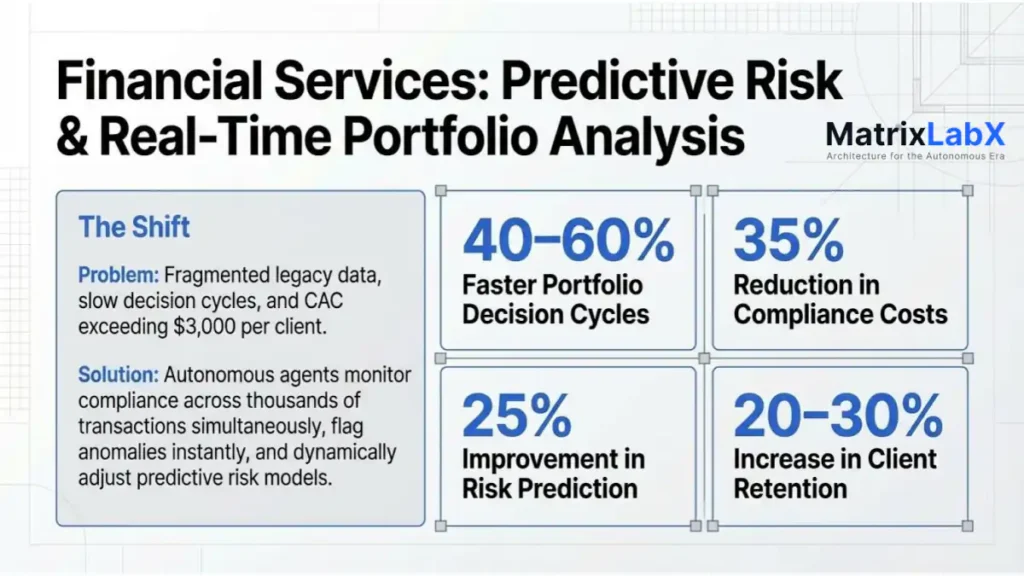
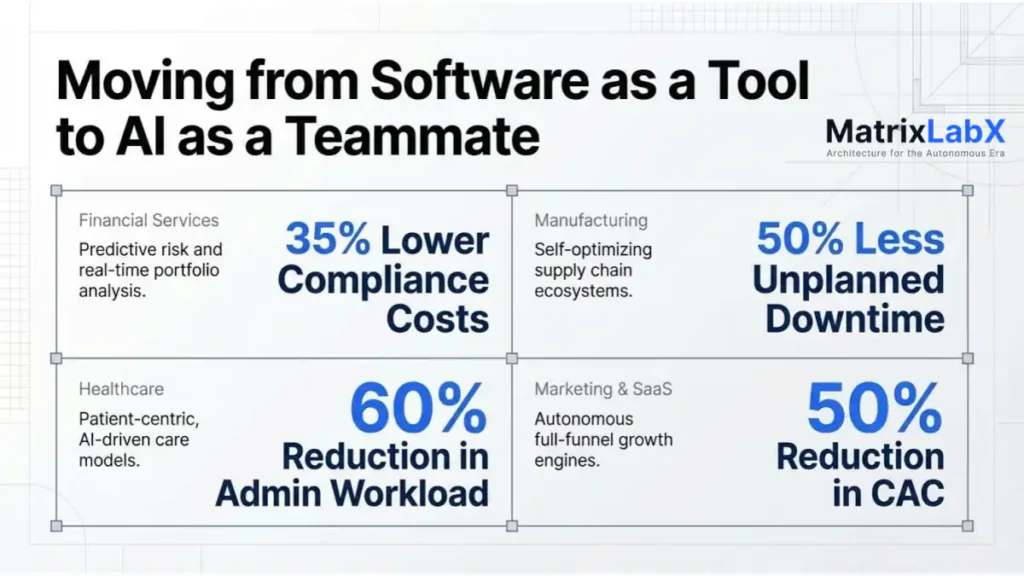
The Shift: Moving from fragmented legacy data and $3,000+ CAC to real-time, autonomous compliance and risk modeling.
| Customer Job | Pain Points (Friction) | Gains (Impact) | Pain Relievers (The Engine) |
| Portfolio Management | Slow decision cycles; manual data silos. | 40-60% faster decision cycles. | Autonomous agents monitor thousands of transactions simultaneously. |
| Risk Mitigation | Lagging indicators; inaccurate risk models. | 25% improvement in risk prediction. | Dynamic adjustment of predictive models based on real-time anomalies. |
| Compliance | High overhead; regulatory bottlenecks. | 35% reduction in compliance costs. | Agentic workflows flag anomalies instantly for immediate resolution. |
| Retention | Silent churn; missed high-net-worth signals. | 25% reduction in churn; 30% increase in cross-sell. | Integration of financial behavior with wealth indicators to prioritize outreach. |
Healthcare: Patient-Centric, AI-Driven Care Models
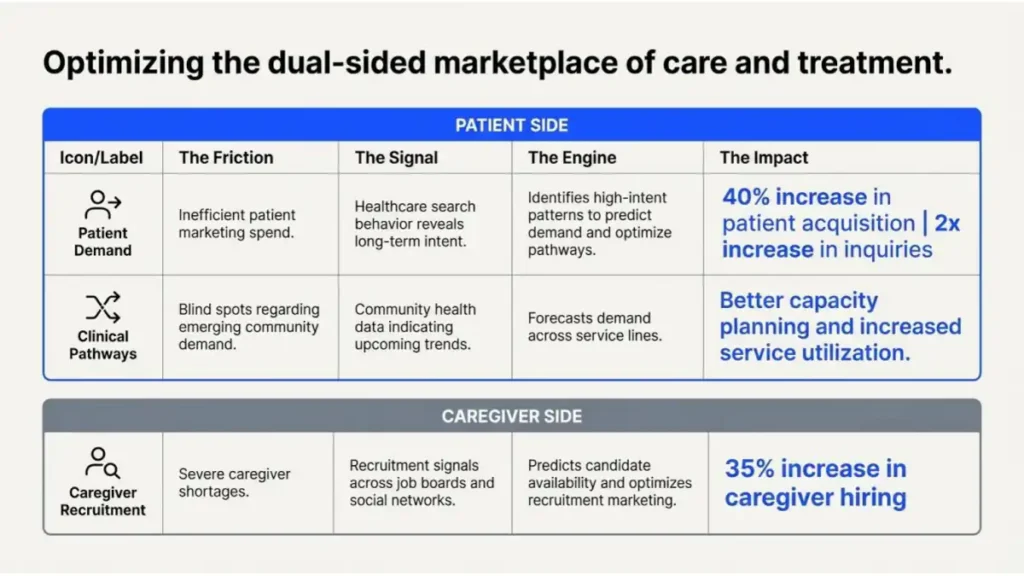
7he Shift: Solving the crisis of 30% admin overhead by using agentic workflows to unify fragmented patient records.
| Customer Job | Pain Points (Friction) | Gains (Impact) | Pain Relievers (The Engine) |
| Care Coordination | Severe caregiver shortages; manual scheduling. | 35% increase in caregiver hiring; 20% higher throughput. | Predicts candidate availability and optimizes recruitment marketing. |
| Revenue Cycle | Slow manual claims; 30% admin spend. | 18-25% increase in RCM efficiency. | Real-time claims validation and automated admin task execution. |
| Patient Acquisition | Inefficient marketing spend; blind spots. | 40% increase in acquisition; 2x inquiries. | Predicts high-intent search behavior to optimize clinical pathways. |
| Clinical Pathways | Slower diagnosis; manual review bottlenecks. | 37-50% faster claims processing. | Unified patient records across fragmented systems for instant data access. |
Manufacturing: Self-Optimizing Supply Chains
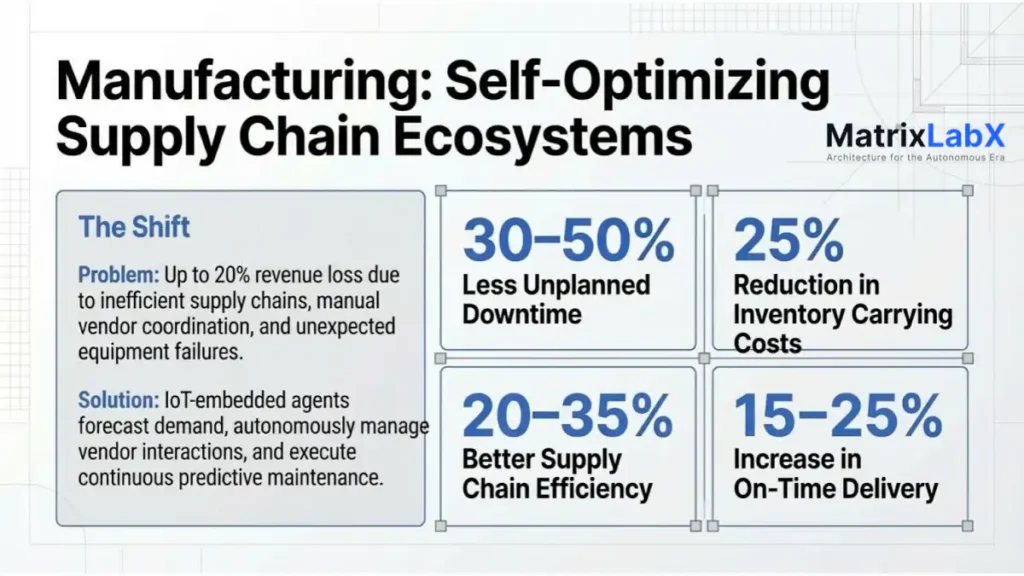
The Shift: Eliminating the 20% revenue loss caused by inefficient supply chains and unexpected equipment failures.
| Customer Job | Pain Points (Friction) | Gains (Impact) | Pain Relievers (The Engine) |
| Maintenance | Unexpected equipment downtime. | 30-50% less unplanned downtime. | IoT-embedded agents execute continuous predictive maintenance. |
| Inventory Mgmt | High carrying costs; overstock/stockouts. | 25% reduction in carrying costs. | Autonomous vendor interaction and demand forecasting. |
| Logistics | Manual vendor coordination; late deliveries. | 15-25% increase in on-time delivery. | Real-time adjustment of campaigns and allocation based on demand signals. |
| Lead Generation | Difficulty identifying early research behavior. | 3x increase in qualified leads. | Triggers targeted engagement with engineers in active design phases. |
Software & SaaS: Autonomous Growth Engines
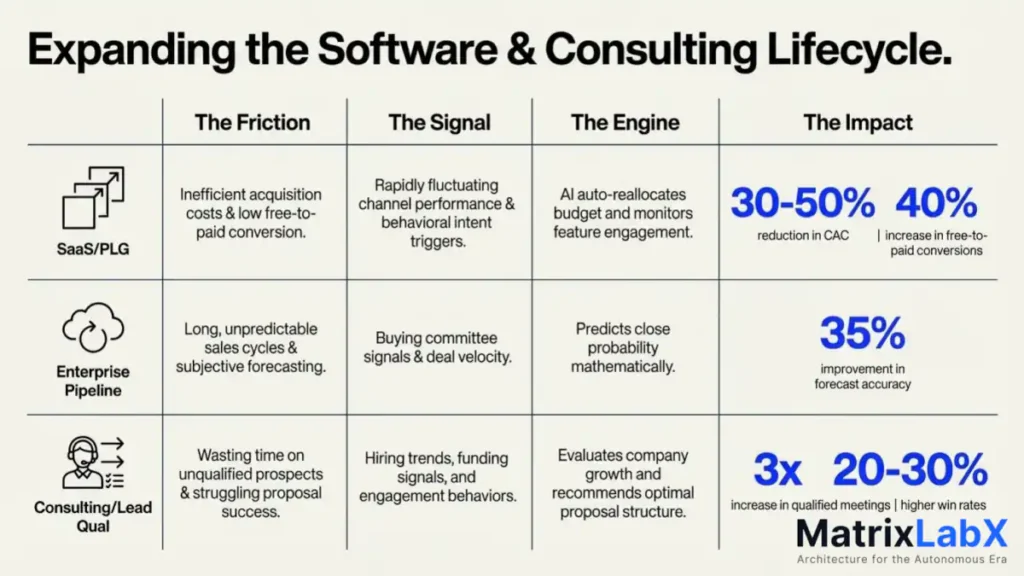
The Shift: Moving from “Software as a Tool” to “AI as a Teammate” to solve rising acquisition costs.
| Customer Job | Pain Points (Friction) | Gains (Impact) | Pain Relievers (The Engine) |
| Growth/Marketing | 30-40% budget waste; rising CAC. | 30-50% reduction in CAC. | Low free-to-play conversion rates. |
| Sales Conversion | Low free-to-paid conversion rates. | 40% increase in conversions. | Monitoring of feature engagement to trigger real-time interventions. |
| Enterprise Sales | Unpredictable cycles; subjective forecasting. | 35% improvement in forecast accuracy. | AI auto-reallocates the budget based on behavioral-intent triggers. |
| Lead Qualification | Wasting time on unqualified prospects. | 3x increase in qualified meetings. | Evaluates company growth and recommends optimal proposal structures. |

Innovation Levers Enabled by AI
- Faster Product Iteration: AI detects bugs, anomalies, and UX friction in real time.
- Autonomous Feature Recommendations: AI identifies which features drive retention and automatically promotes them.
- Data-Driven Roadmaps: Product decisions shift from opinion-based to behavior-based.
- 4. Continuous Learning Systems: Every user interaction improves the system globally.
AI enables SaaS companies to shift from customer support to customer prediction and orchestration.
The Shift to Intelligence-First SaaS
Traditional SaaS products were designed as tools that users must learn. AI-first SaaS platforms are designed to be partners that learn from users.
This shift fundamentally changes:
- Retention model → from reactive to predictive
- User expectations → from navigation to conversation
- Product design → from static UI to adaptive interfaces
- Growth strategy → from sales-led to product-led

Why SaaS Leaders Are Moving to AI Now
- Collapse of traditional funnels in favor of PLG
- Rising Customer Acquisition Costs (CAC)
- Increased competition and feature parity
- Demand for instant value realization
- Growth of AI-native competitors
AI Capabilities and Their Impact on SaaS Metrics
| AI Capability | Impact on SaaS Metrics |
| Predictive Lead Scoring | Increases Sales Velocity |
| Automated Bug Detection | Reduces Development Cycles |
| NLU Search | Improves User Retention |
| Generative AI Copilots | Increases Daily Active Users (DAU) |
| Behavioral Analytics | Improves Product-Market Fit |
| AI Onboarding | Reduces Time-to-Value |
Vertical AI Specializations
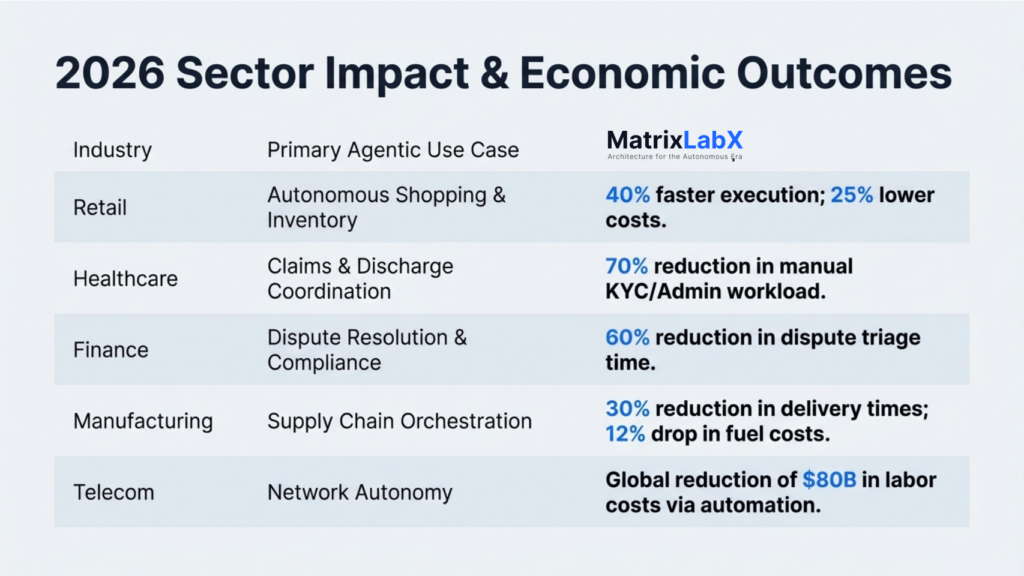
Industry Impact at a Glance
| Industry | Primary AI Application | Key Strategic Outcome |
| Finance | Fraud & Risk Modeling | 40% Reduction in False Positives |
| Healthcare | Diagnostic Assistance | 25% Increase in Triage Efficiency |
| Retail | Demand Forecasting | 15% Reduction in Inventory Costs |
| SaaS | User Behavior Analytics | 20% Improvement in LTV (Lifetime Value) |
Trusted by the world’s leading businesses




“Ad wastage was eliminated by 35% lift in sales.”
Lead Results You Can Measure

FAQs
How does MatrixLabX improve Customer Lifetime Value (LTV)?
MatrixLabX uses the PrescientIQ engine to integrate digital and physical signals. Predicting subtle intent signals before a customer churns or buys allows for hyper-personalized interventions that have shown a 20% improvement in LTV and a 30% increase in cross-sell revenue.
What is the ROI of implementing agentic AI in manufacturing?
Manufacturers typically see a 25% reduction in inventory costs and up to 50% less unplanned downtime. By replacing manual coordination with IoT-embedded agents, firms recover the 20% of revenue usually lost to supply chain friction.
Can AI reduce Customer Acquisition Costs (CAC) in SaaS?
Yes. MatrixLabX results show a 30-50% reduction in CAC. The engine achieves this by automating prospecting and reallocating marketing budgets to leads showing high behavioral intent.