

Rearchitecting Hospitality: The hospitality industry is undergoing a fundamental strategic transition. For decades, the sector operated under a reactive, manual service model in which human staff managed guest needs as they arose.
1. The Paradigm Shift: From Service-Based to Intelligence-Driven Operations
However, rising labor shortages, escalating operational costs, and the emergence of AI-native competition have rendered this legacy approach a survival risk.
To remain viable, organizations must pivot toward autonomous, intelligence-driven models. This “survival requirement” replaces manual oversight with causal intelligence—systems that move beyond the hallucination risks of generic LLMs to execute precise actions.
By leveraging real-time intent signaling, these vertical-agentic platforms capture high-value segments such as the “Indulgent Explorer” through direct-booking paths that bypass costly OTA commissions.
| Feature | Value Chain Logic | Intelligence Architecture |
| Operational Logic | Reactive Manual Workflows | Prescient Agentic AI |
| Data Utilization | Batch-processed reporting and silos | Real-time intent signals and Causal Intelligence |
| Guest Interaction | Standardized, staff-dependent service | Hyper-personalized, autonomous orchestration |
| Market Positioning | Subject to high OTA commissions | Direct booking paths via loyalty orchestration |
| Competitive Moat | Generic brand promises | Proprietary “Guest Memory Layer” |
| Responsiveness | Lagged response to market volatility | 24/7 autonomous GTM adjustments |
This fundamental shift in philosophy underpins modern revenue management, transforming the value chain from retrospective analysis to active, real-time orchestration.
2. Autonomous Revenue Orchestration: Maximizing RevPAR and ROI
The evolution of Revenue Per Available Room (RevPAR) marks the transition of hospitality metrics from static reporting to real-time optimization.
In the agentic era, RevPAR is an objective function driven by engines that continuously scan the environment to adjust pricing and inventory with mathematical precision.
By synthesizing complex datasets, agentic AI transforms static heuristics into a dynamic optimization engine. This requires:
- Revenue Optimization Inputs: Orchestrating cancellation and no-show probabilities, local events, tourism demand, competitor occupancy rates, seasonal patterns, and real-time booking velocity.
- Revenue Outcomes: Capturing improved forecasting accuracy, leveraging increased daily revenue yield, and mitigating pricing inefficiencies through 24/7 autonomous adjustments.
Beyond guest-facing pricing, Operational RPA is being deployed to ensure revenue integrity in the B2B sector. Specifically, agentic systems eliminate the “latency leak” common in corporate negotiated rates.
By harmonizing stakeholder influence mapping within Global Distribution Systems (GDS) and automating high-fidelity outreach to corporate travel buyers, these agents ensure contract renewals and group bookings are tied to a native Bayesian MMM architecture.
This replaces brittle, rule-based heuristics with a “flight simulator” for GTM strategy, ensuring every dollar of B2B marketing spend is mathematically validated. Rearchitecting Hospitality for the Agentic Era calls for AI experts.
3. The Multimodal Guest Journey: Personalization and Contactless Excellence
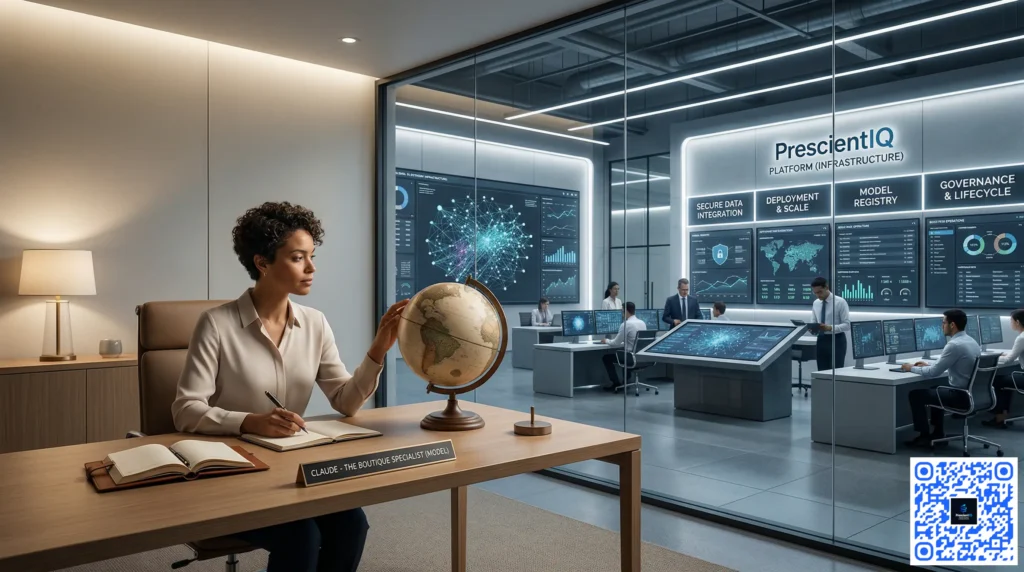
The strategic cornerstone of modern hospitality is the “Guest Memory Layer.” This infrastructure uses IoT and multimodal data processing to foster brand loyalty by ensuring a guest’s preferences are recognized and applied across every stay and location.
The Contactless Guest Journey utilizes facial recognition for check-in and room access, combined with smart concierges—NLU-powered voice assistants—to handle in-room requests. Through IoT integration, the environment (temperature, lighting, and dietary preferences) is adjusted automatically based on previous stays.
“Remembering” these preferences across a global portfolio serves as a powerful moat against customer churn; guests become entrenched in an ecosystem that recognizes their individual “DNA” before they even arrive.
Furthermore, Multimodal Shopping Agents—capable of processing voice and visual data—are drastically reducing booking abandonment.
By guiding travelers through complex booking flows via natural interaction, these agents bridge the gap between digital discovery and a confirmed reservation, providing the “white-glove” service of a human relationship manager at an autonomous scale.
Click on the image below and download the slide deck. CODE: VAP2026.

4. Comparative Impact Analysis: ROI Benchmarks Across Industry Sub-Segments
General-purpose LLMs lack the sector-specific precision required for hospitality. Vertical-Agentic Platforms outperform generic implementations by utilizing causal intelligence and models trained on proprietary sector data.
The following benchmarks highlight the measurable ROI improvements observed across high-yield sub-segments:
| Industry Sub-Segment | ROI Improvement | Primary Success Driver |
| Luxury Hotel Groups | +85.7% | Direct Booking Orchestration |
| Wellness Retreats | +84.6% | Personalized Retreat Upsells |
| Vacation Rentals | +75.6% | Occupancy Maximization |
| Casino Resorts | +64.7% | Cross-Ecosystem LTV Lift |
In the Wellness and Vacation Rental segments, AI-driven performance is powered by eliminating “inventory fragmentation.” For vacation rentals, the “Allocator Agent” creates a “glass-box view of ROI,” monitoring occupancy signals across platforms to reallocate marketing spend toward the highest-yield properties in real time.
In wellness retreats, the AI interprets complex guest requests—from spa schedules to dietary needs—to execute autonomous follow-up sequences.
This bridges the gap between digital discovery and high-value on-property bookings, resulting in a measurable increase in EBITDA by converting fragmented data into a unified revenue signal.
5. Future-Proofing Visibility: Generative Engine Optimization (GEO) and AEO
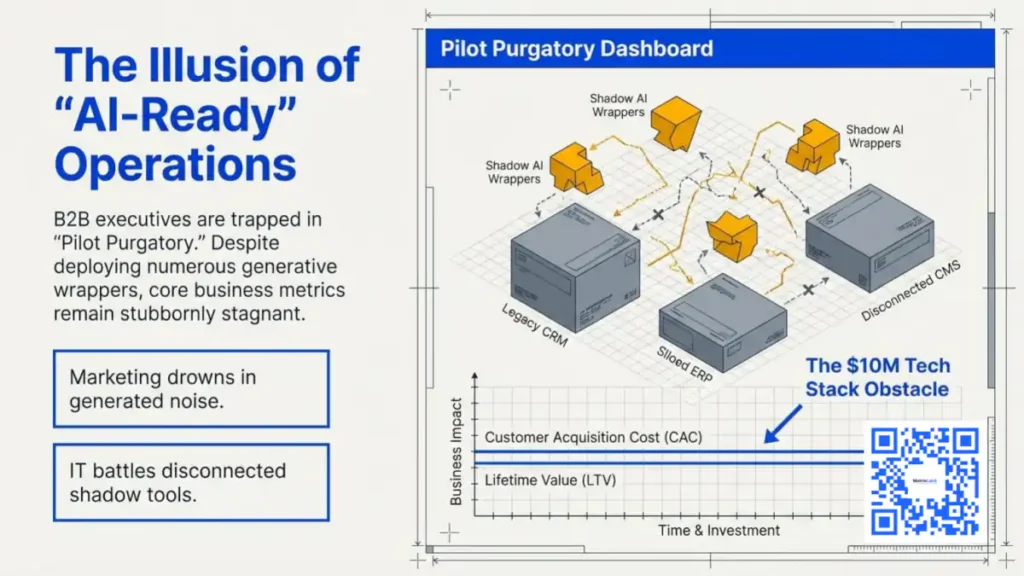
Traditional SEO is becoming obsolete as travelers move toward AI Overviews and Search Generative Experience (SGE).
To maintain visibility, hospitality leaders must pivot to Entity-Driven GEO.
Destination Marketing Organizations (DMOs) must utilize entity-based authority and unified regional tourism data to ensure they remain the “preferred” recommendation in autonomous research cycles.
This involves unifying regional data so that AI agents can coordinate co-op marketing campaigns autonomously with local stakeholders.
This approach has already demonstrated a 103.1% ROI in Economic Impact Attribution, maximizing the utility of public and private marketing funds. Rearchitecting Hospitality for the Agentic Era calls for AI experts.
To maintain destination authority through 2026-2027, the “PrescientIQ Edge” standards are mandatory:
- Vertical-first models: AI trained on proprietary sector data rather than generic web scrapes to ensure 97% forecasting accuracy.
- Multi-Agent Systems (MAS): Collaborative agents that reason across the entire tech stack, including ERP, CRM, and GDS.
- Multimodal Standards: Native processing of text, sight, and sound to ensure 100% data fluency in guest interactions.
6. The Strategy: MatrixLabX’s Agentic Readiness Audit

Before deploying technology, MatrixLabX conducts an Agentic Readiness Audit specifically for the travel sector. They identify where “intelligence gaps” exist in the guest journey.
- The Problem: Most hotels and travel providers have fragmented data—loyalty info is in the CRM, room availability is in the Property Management System (PMS), and guest preferences are in a separate marketing tool.
- The Audit Focus: MatrixLabX maps these silos. They look for “Data Liquidity”—ensuring that a guest’s preference (e.g., “prefers high floors”) can be “read” and “acted upon” by an AI agent in real-time across all systems.
- The Goal: Transitioning the brand from “Channel-Optimized” (trying to show up on Expedia) to “Agent-Optimized” (ensuring AI travel assistants can find and book the property directly).
The Engine: PrescientIQ as the “Digital Concierge”
Once the infrastructure is ready, PrescientIQ is deployed as the orchestration layer. Unlike a standard chatbot that just answers questions, PrescientIQ’s agents are Action-Oriented.
- Direct Booking Orchestration: Instead of generic email blasts, PrescientIQ agents monitor “intent signals.” If a past guest searches for flights to a hotel’s city, the agent can autonomously reach out with a personalized, “loyalty-aware” offer to capture the booking before they go to an OTA (Online Travel Agency).
- Hyper-Personalization at Scale: The platform uses Causal Intelligence to understand why a traveler chooses a specific package. It then dynamically adjusts the booking path—offering a wellness retreat upsell to one traveler and a high-speed Wi-Fi/business suite package to another—without human intervention.
- Disruption Management: For airlines and TMCs (Travel Management Companies), PrescientIQ agents monitor real-time flight data. If a delay is detected, the agent can autonomously initiate re-booking or trigger a “sorry” credit to the guest’s loyalty account before the traveler even calls support.
Industry-Specific Success Drivers
MatrixLabX and PrescientIQ focus on specific “Success Drivers” that shift the unit economics of hospitality:
| Sub-Segment | MatrixLabX/PrescientIQ Intervention | Primary Result |
| Luxury Hotels | Direct Booking Orchestration | Reduced OTA commissions by 20%+ |
| Casino Resorts | Cross-Ecosystem LTV Lift | Agents link gaming, dining, and stay data for real-time comps |
| Airlines | Ancillary Yield Optimization | Agents offer personalized seat/meal upgrades based on real-time inventory |
| TMCs & GDS | Sales Cycle Automation | 90% reduction in manual document discovery for corporate travel |
How the Solution is Developed (The “Discovery Phase”)
MatrixLabX follows a rigorous development cycle to ensure these agents don’t “hallucinate” or offer incorrect room rates:
- Semantic Mapping: They define all hospitality “Entities” (Room types, Rate codes, Loyalty tiers) in a machine-readable format.
- Tool Integration: The agents are given “Read/Write” access to legacy tools like Opera (PMS) or Salesforce, allowing them to execute actions (like checking a guest in) rather than just talking about it.
- Human-in-the-Loop Governance: They set “Red Lines.” For example, an agent can offer a 10% discount to save a booking, but anything higher requires automated approval from a human manager.
The Transition to 2026
By 2026, the industry standard will shift. Guests will increasingly use their own “personal AI agents” to find travel. MatrixLabX and PrescientIQ ensure that a brand’s “Digital Labor” (its own agents) can negotiate and transact with guest agents, so the brand is “found” and booked in an AI-first world. Rearchitecting Hospitality for the Agentic Era calls for AI experts.
6. Strategic Conclusion: From Management to Orchestration
The “Agentic Surge” is an imminent shift; with 30% of all applications predicted to be fully autonomous by 2026, the era of human-led manual intervention is ending.
This transition represents a capital reallocation from passive management to intelligent orchestration.
The adoption of digital labor results in measurable business outcomes:
- Service Delivery: Faster delivery with significantly lower staff dependency and a 50% reduction in Customer Acquisition Cost (CAC).
- Financial Efficiency: Ad wastage is eliminated, resulting in a 35% lift in sales through autonomous creative refreshing and real-time budget orchestration.
- Revenue Growth: Total yield optimization through Bayesian MMM architectures that link marketing spend to confirmed revenue. Hospitality leaders must now move beyond “Managing Marketing” and begin Orchestrating Outcomes. By deploying industry-specific agents that drive growth rather than merely analyze it, organizations can bridge the gap from fragmented data to a sustainable, autonomous revenue engine.
In the hospitality and travel industry, MatrixLabX and its orchestration layer, PrescientIQ, work in tandem to solve the “Execution Gap”—the space between having guest data and actually using it to drive revenue autonomously.
Their approach moves hospitality brands from a reactive model (waiting for a guest to book) to a proactive Vertical Agentic model.