
Discover how the 2026 AI ROI shift transitions AI from passive software tools into proactive digital teammates, revolutionizing business strategy and profitability.
Key Takeaways
- AI is evolving from task-specific applications into autonomous, collaborative agents.
- The 2026 ROI shift demands that we measure AI’s value by strategic outcomes, not just time saved.
- The integration of AI teammates requires a cultural shift that prioritizes human-AI collaboration.
- Businesses adopting AI as teammates see compounding returns across departments.
- Future-proofing requires investing in agentic workflows and semantic data architectures.
Moving from “Tools” to “Teammates”: The 2026 ROI Shift

Moving from “Tools” to “Teammates”: The 2026 ROI Shift marks a critical evolution in how businesses measure and maximize the value of artificial intelligence. No longer just passive software waiting for prompts, AI is rapidly becoming a proactive, autonomous collaborator.
This transformation redefines the core metrics of success, shifting from basic efficiency gains to massive, compounding returns on investment.
For organizations looking to dominate their sectors, understanding this fundamental shift is no longer optional; it is a strategic imperative.
By 2026, the companies capturing the most market share will not be those with the most software, but those that have successfully integrated AI as core members of their workforce.
The Evolution of Artificial Intelligence in the Workplace
From Passive Software to Proactive Agents
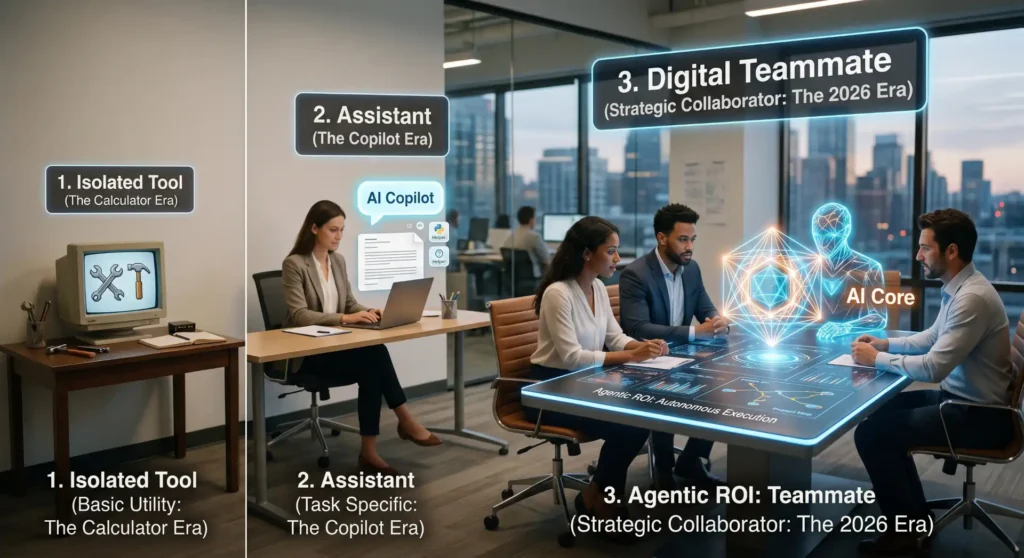
The journey of workplace technology has always trended toward greater automation. However, the current leap is distinct. Earlier AI iterations functioned as advanced calculators or spell-checkers—tools requiring constant human input.
The 2026 paradigm introduces agentic AI. These systems understand context, anticipate needs, and execute multi-step workflows with minimal supervision.
What is the 2026 AI ROI Shift?
The 2026 AI ROI Shift is the strategic transition where organizations stop measuring AI by hours saved on isolated tasks and start measuring it by the holistic, strategic value generated by autonomous AI agents acting as integrated team members.
How does an AI teammate work?

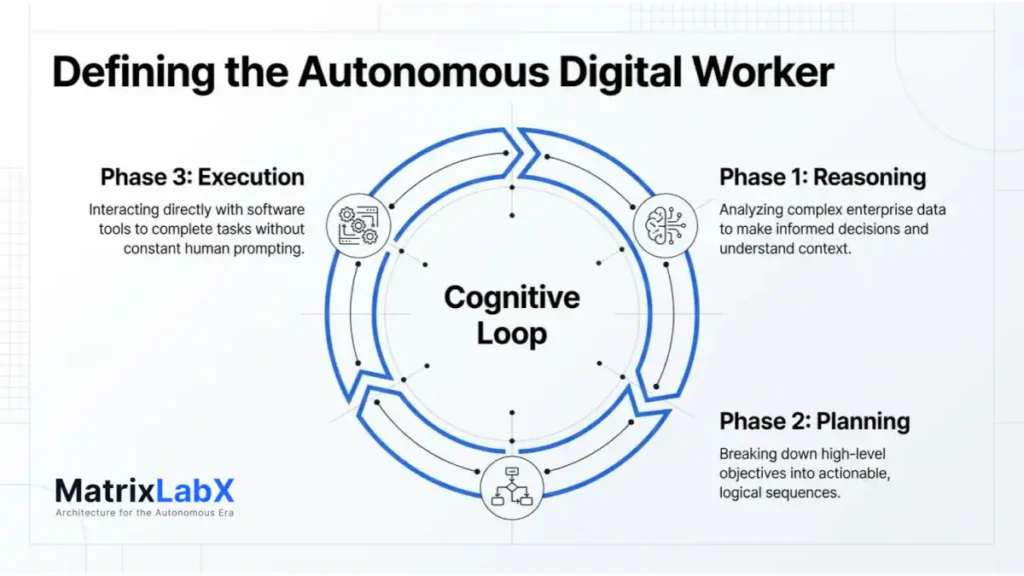
An AI teammate operates by integrating with a company’s data ecosystems to monitor workflows, identify inefficiencies, and autonomously execute solutions.
It follows a continuous loop of observing data, reasoning through potential actions based on business rules, executing the best path, and learning from the outcome.
An AI teammate transcends the limitations of a mere tool, fundamentally shifting its role within an organization. It achieves this by deeply embedding itself within a company’s comprehensive data ecosystems.
This integration is not passive; the AI actively monitors both real-time and historical workflows, scrutinizing every step and data point to systematically identify inefficiencies, bottlenecks, and opportunities for optimization.
Crucially, the AI is empowered to move beyond simple reporting to autonomously develop and execute precise solutions to the problems it uncovers.
This autonomous operation is governed by a sophisticated, continuous operational loop:
- Observing Data (Perception): The AI constantly ingests and analyzes vast streams of structured and unstructured data from across the business—from CRM records and supply chain logs to customer interaction transcripts and financial ledgers. This foundational data provides a comprehensive, real-time picture of the company’s operational health.
- Reasoning Through Potential Actions (Cognition): Based on the observed data, the AI employs sophisticated machine learning models, predictive analytics, and deep learning algorithms. It weighs potential courses of action against a pre-defined set of business rules, compliance standards, and strategic objectives. This phase involves complex, multi-variable scenario modeling to forecast the impact of different interventions.
- Executing the Best Path (Action): Once the optimal strategy is determined—the one that maximizes efficiency, reduces cost, or improves a key metric—the AI automatically executes the solution. This could involve re-routing a stalled logistics process, triggering an automated communication sequence, adjusting inventory levels, or dynamically modifying a production schedule, all without human intervention.
- Learning from the Outcome (Adaptation): Following the execution, the AI meticulously tracks the resulting performance indicators. The outcome data—whether a success or a failure—is fed back into the reasoning engine, refining its models and enhancing its understanding of cause-and-effect within the specific business context. This iterative process ensures the AI teammate becomes progressively smarter, more effective, and a continuously improving resource, adapting to the business’s dynamic needs and rules.
Why is the shift to AI teammates important?
This shift is vital because traditional software ROI has plateaued.
AI teammates unlock non-linear growth by taking over complex project management and strategic execution, freeing human workers to focus exclusively on high-level innovation, empathy-driven leadership, and complex problem-solving.
Measuring the New Return on Investment
The Limitations of Traditional Metrics
Historically, software ROI was calculated by comparing licensing costs against time saved. If a tool cost $1,000 but saved 50 hours of administrative work, it was deemed successful. The 2026 ROI shift renders this equation obsolete.
AI teammates do not just save time; they generate novel strategies, uncover hidden revenue streams, and prevent costly errors before they happen.
Statistical Reality Check
Organizations that treat AI as collaborative teammates rather than isolated tools see a 40% higher year-over-year revenue growth, according to the MatrixLabX 2025 report.
Recent studies show that 68% of enterprise leaders have actively restructured their KPIs to account for autonomous AI contributions by 2026.
The Framework for Integration
Steps to Cultivate an AI-Augmented Workforce
Transitioning to this new model requires deliberate organizational design.
Step-by-Step Integration Framework:
- Data Harmonization: Consolidate siloed data. AI teammates require a unified semantic layer to understand cross-departmental context.
- Role Redefinition: Rewrite job descriptions to focus on “managing AI agents” rather than “executing routine tasks.”
- Pilot Agentic Workflows: Start with a single department. Deploy an AI agent to handle end-to-end processes, like initial customer onboarding or supply chain auditing.
- Establish Guardrails: Implement robust governance frameworks to ensure AI actions align with company ethics and compliance standards.
- Measure Strategic Impact: Shift KPIs from “output volume” to “business outcomes generated.”
“The most dangerous thing a CEO can do today is view AI as an IT expense rather than a talent acquisition. The 2026 ROI shift demands we treat agents with the same onboarding rigor we apply to human executives.” — George Schidge, CEO at MatrixLabX
The Cultural Transformation
Overcoming Resistance and Fostering Trust
The largest hurdle in the 2026 ROI shift is not technological; it is psychological. Employees must learn to trust AI recommendations and integrate them into daily operations.
Pros vs Cons of the AI Teammate Model
- Pros: Exponential productivity scaling, 24/7 autonomous execution, reduction in human error, enhanced data-driven decision-making.
- Cons: High initial integration costs, need for extensive data restructuring, potential for algorithmic bias if unmonitored, and employee apprehension.
Real-World Applications and Case Studies
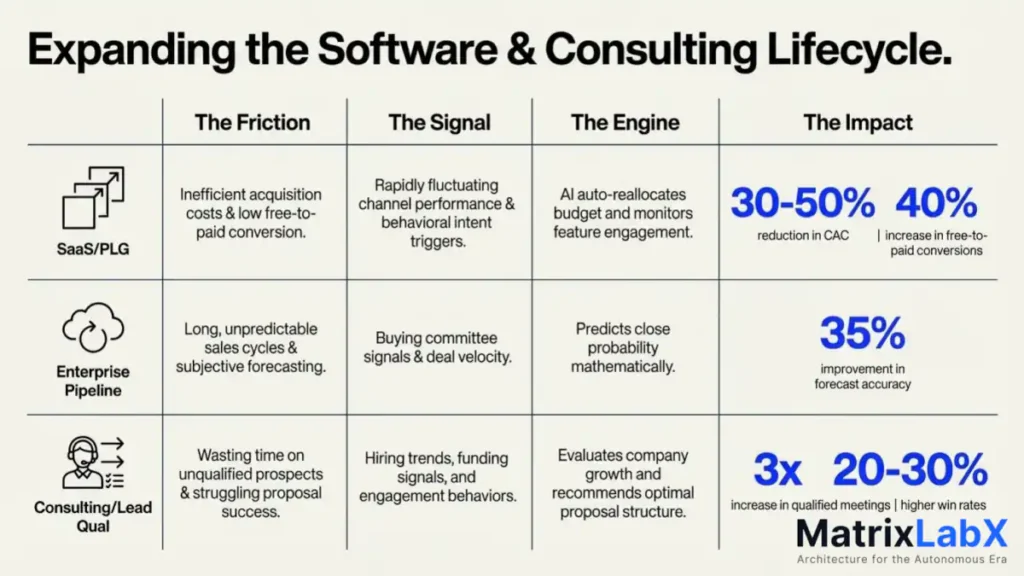
To understand the practical impact, let us examine how the 2026 ROI shift is manifesting across key sectors.
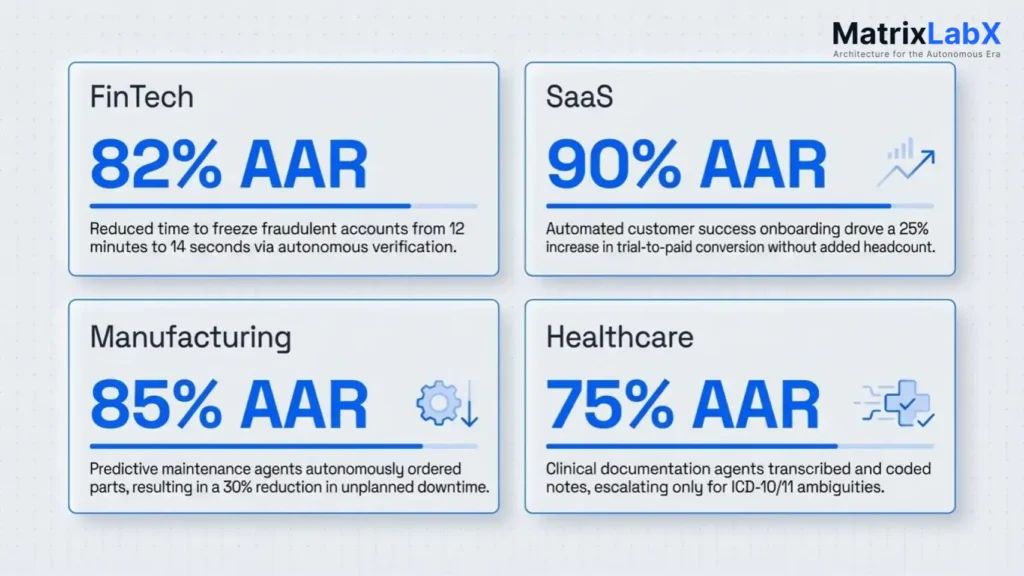
- FinTech: In FinTech, AI teammates are revolutionizing risk assessment and compliance. Instead of relying on analysts to pull reports using separate tools, an AI agent continuously monitors global transaction data, autonomously flags anomalies, and drafts compliance reports for final human review. This proactive stance reduces the risk of regulatory breaches by an estimated 75%.
- Healthcare: Within Healthcare, the shift is life-saving. AI is no longer just a scheduling tool; it functions as a diagnostic co-pilot. By concurrently analyzing a patient’s real-time vitals, historical records, and global medical research, the AI teammate suggests personalized treatment plans to the physician, drastically reducing time-to-diagnosis and improving patient outcomes.
- E-Commerce: E-Commerce brands are deploying AI as autonomous merchandisers. These teammates analyze real-time market trends, competitor pricing, and inventory levels to dynamically adjust storefronts, run targeted micro-campaigns, and negotiate with suppliers without human intervention, maximizing profit margins dynamically.
- Manufacturing: In the Industrial and Manufacturing sectors, AI teammates manage predictive maintenance. Instead of static alert systems, AI agents predict machinery failure, autonomously order replacement parts, and reschedule production runs to minimize downtime, effectively acting as proactive plant managers.
Future-Proofing Your Organization
Adapting to Semantic and Agentic Architectures
To fully capitalize on this shift, organizations must invest heavily in their underlying data architecture.
Large Language Models (LLMs) and autonomous agents rely on clean, corroborated data to ensure accuracy. Fragmented data leads to fragmented AI performance. Building semantic depth across internal knowledge bases ensures that AI teammates possess the context necessary to make high-level decisions.
“Organizations that fail to establish clean, semantic data structures will find their AI ‘teammates’ are nothing more than confident hallucination engines.” — George Schildge, CEO at MatrixLabX
Conclusion
The evolution from “Tools” to “Teammates” and the subsequent 2026 ROI Shift represent a watershed moment in corporate strategy.
As we have explored, organizations must move beyond treating AI as a simple utility and embrace it as a dynamic, autonomous partner.
By redefining metrics, restructuring data paradigms, and fostering a culture of human-AI collaboration, businesses can unlock exponential growth and unprecedented strategic agility.
The future belongs to those who recognize that the greatest ROI comes not from replacing human effort, but from radically augmenting it with intelligent, proactive teammates. The companies that begin this cultural and technological restructuring today will be the undisputed market leaders of tomorrow.
FAQ
What defines an AI teammate compared to an AI tool?
An AI tool requires a human operator to input specific commands to achieve a single task. An AI teammate operates autonomously, understanding broader business goals, initiating complex workflows, and collaborating seamlessly with human workers to solve problems without constant prompting.
How do we calculate ROI for AI teammates?
ROI is calculated by measuring strategic outcomes rather than just hours saved. This includes metrics such as accelerated time-to-market, net-new revenue streams generated by autonomous insights, reductions in critical errors, and overall increases in enterprise valuation and agility.
Is my data ready for autonomous AI agents?
Most organizations require significant data restructuring. AI teammates need a unified, semantic data layer to function effectively. If your data is siloed across departments and in incompatible formats, it must be harmonized before an AI agent can reliably access and act on it.
Will AI teammates replace human workers?
No, AI teammates are designed to augment human potential, not replace it. By offloading routine, data-heavy, and complex administrative workflows to AI, human workers are freed to focus on high-impact areas like creative strategy, empathy-driven client relations, and complex leadership decisions.
What is the timeline for the 2026 ROI shift?
The shift is happening now. Early adopters are already integrating agentic workflows. By 2026, this collaborative model will be the industry standard. Companies that wait until 2026 to begin integration will find themselves at a severe competitive disadvantage due to the compounding nature of AI learning.