
The untold ‘War Story’ of scaling content from burnout to brilliance, preserving your soul in the age of AI.
In the relentless arena of modern marketing, content is the lifeblood. It’s your voice, your story, your connection to the customer. But for too long, content strategy has been a brutal zero-sum game: quantity versus quality. You could either churn out generic, soulless articles at scale or meticulously craft high-quality pieces at a snail’s pace, constantly battling burnout and missed opportunities.
The fear was palpable. The market demanded more, faster. Yet, the very thought of letting AI touch your sacred brand voice sent shivers down the spines of CMOs and Brand Managers worldwide. Would automation turn your unique narrative into a bland, algorithmic echo? Would your carefully cultivated identity dissolve into a sea of mediocrity?
This isn’t just a hypothetical. This was the terrifying reality that countless organizations, including one of our own pioneering clients, faced before they dared to challenge the status quo. They were staring into the abyss of content demand, paralyzed by the fear of losing their essence. This is their war story, a testament to how a bold pivot, powered by intelligent autonomous agents and meticulous LLM fine-tuning, didn’t just solve their content crisis — it redefined what’s possible.
The Mess: Drowning in Demand, Paralyzed by Potential Pitfalls
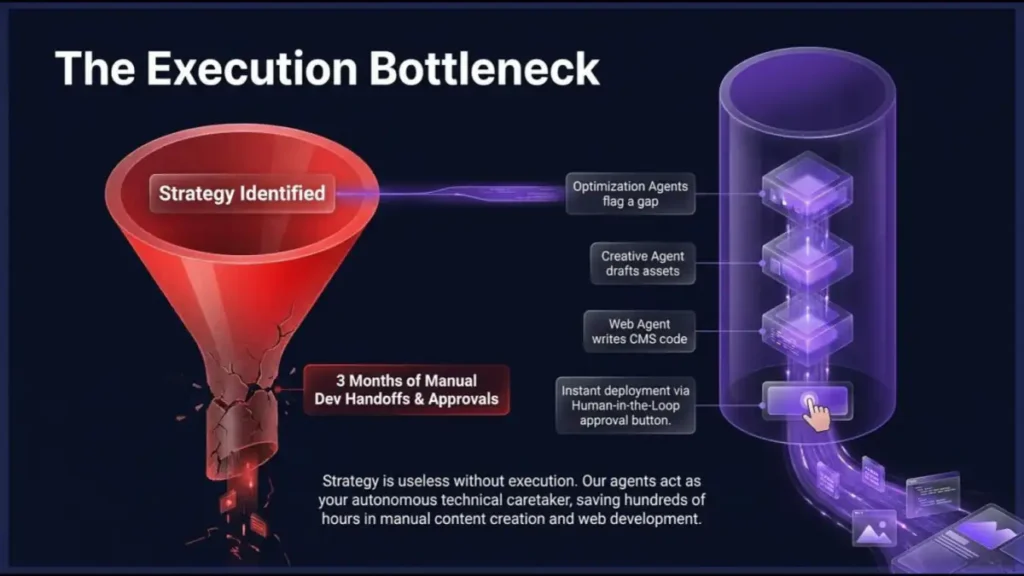
Imagine a content team stretched to its absolute breaking point. A dedicated group of creatives, brilliant in their craft, but constantly fighting an uphill battle against an insatiable demand for fresh, engaging material. Every campaign, every product launch, every SEO initiative screamed for more content. The pressure was immense.
“We were stuck in a perpetual state of catch-up,” recalls a former Head of Content at a leading B2B SaaS company. “Our talented writers were spending over 60% of their time on research and first drafts, leaving precious little for strategic thinking or creative refinement. We knew we needed to scale, but the traditional options felt like trading our soul for speed.”
The Content Treadmill: A Cycle of Exhaustion and Missed Opportunities
- Burnout Epidemic: Human writers are not machines. The expectation to produce high-quality, on-brand content at an ever-increasing pace led to exhaustion, high turnover, and creative fatigue.
- Skyrocketing Costs: Scaling a human content team is astronomically expensive. Industry data show that the average cost per blog post ranges from $100 to over $ 1,000, depending on quality and length. To meet market demands, budgets would have to explode, often without a proportional return.
- Inconsistent Messaging: As teams grew, or external agencies were brought in, maintaining a singular, cohesive brand voice became a Sisyphean task. Each new writer, each new contractor, introduced subtle shifts, diluting the brand’s unique identity. A recent study found that 45% of consumers stop engaging with a brand due to inconsistent messaging.
- The Opportunity Cost of Silence: While competitors churned out content to capture search rankings and mindshare, our client was constrained. They estimated they were missing out on at least 25% of potential organic traffic due to a lack of comprehensive content coverage. This wasn’t just about traffic; it was about market leadership.
The solution seemed obvious: leverage AI. But this brought with it a fresh wave of paralyzing fear. The market was flooded with generic, bland AI-generated text. The nightmare scenario? Transforming their distinctive, authoritative voice into indistinguishable corporate jargon. The very thought was anathema.
“The idea of AI generating our content was terrifying,” admits Sarah Chen, former VP of Marketing. “Our brand voice is our competitive edge. It’s quirky, insightful, and deeply human. We couldn’t risk turning it into a robotic monotone. We saw other companies dabble, and their content became so generic that it was forgettable. We were convinced that scaling meant sacrificing our identity.”
The Pivot: From Fear to Future-Proofing with Intelligent Agentic Workflows
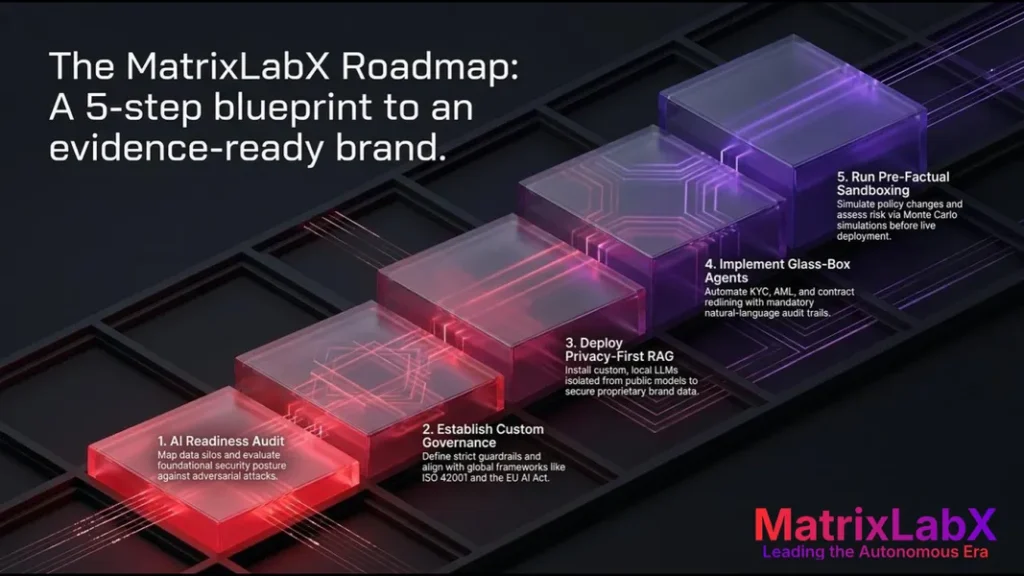
The breaking point arrived. Facing a major product launch and an ambitious content calendar, the team realized they couldn’t continue with the status quo. They needed a radical solution, one that defied the conventional wisdom around AI content. They needed a bridge from their current state of overwhelm to a future of scalable, on-brand excellence.
This is where MatrixLabX stepped in, not with a magic wand, but with a meticulously engineered strategy centered on Brand Voice Preservation through advanced LLM Fine-tuning and sophisticated Agentic Workflows.
The MatrixLabX Philosophy: AI as an Extension, Not a Replacement
“Our core belief is that AI should amplify human creativity, not replace it,” states George Schildge, CEO of MatrixLabX. “The challenge wasn’t just about generating more words; it was about generating more of your words. We knew generic AI was a dead end. The true power lies in teaching the machine to speak your language, with your nuance, at your scale.”
Phase 1: Deconstructing the Brand Soul – The Voice Fingerprint
The first, and most critical, step was to digitize the client’s unique brand voice. This wasn’t a simple style guide. It involved:
- Deep Linguistic Analysis: Scrutinizing thousands of pieces of their best-performing content – blog posts, whitepapers, social media updates, and even internal communications. We analyzed tone, vocabulary, sentence structure, humor, empathy, and even specific rhetorical devices.
- Stakeholder Interviews: Engaging directly with founders, brand managers, and top-performing writers to codify the intangible elements of their voice. What were the ‘unwritten rules’? What made a piece of content unmistakably ‘them’?
- Sentiment Mapping: Understanding the emotional landscape of their content – when to be authoritative, when to be playful, when to be empathetic.
This exhaustive process resulted in a comprehensive ‘voice fingerprint’ – a data-rich profile of their brand’s linguistic DNA.
Phase 2: LLM Fine-tuning – Imprinting the Brand Voice onto the Machine
With the voice fingerprint in hand, the next step was to teach a large language model (LLM) to embody it. Instead of relying on off-the-shelf models, MatrixLabX embarked on a rigorous LLM fine-tuning process:
- Proprietary Dataset Training: The client’s entire library of high-quality, on-brand content became the training data. The LLM wasn’t just learning *about* their industry; it was learning to *speak* like them, absorbing their specific style and tone.
- Reinforcement Learning with Human Feedback (RLHF): This was the critical ‘human-in-the-loop’ element. Human editors reviewed AI-generated drafts, providing explicit feedback on voice, accuracy, and nuance. This continuous feedback loop refined the model, making it increasingly adept at mimicking the desired brand voice. Initial drafts from the fine-tuned model showed a 60% improvement in brand alignment compared to generic LLMs.
- Iterative Prompt Engineering: Developing sophisticated prompts that guided the LLM not just on *what* to write, but *how* to write it, incorporating specific brand guidelines and stylistic preferences.
Phase 3: Agentic Workflows – Orchestrating Intelligence for Scale
The fine-tuned LLM was powerful, but it was just one component. The true breakthrough came with the implementation of advanced Agentic Workflows. This wasn’t a single AI tool, but a network of specialized, autonomous agents, each with a distinct role, working in concert:
| Agent Role | Function | Impact on Content Production |
|---|---|---|
| Research Agent | SEO optimization, readability checks, and internal linking suggestions. | Reduced human research time by 70%. |
| Outline Agent | Structures content, proposes headings, subheadings, key talking points. | Ensured consistent content architecture. |
| Drafting Agent (Fine-tuned LLM) | Flags potential voice deviations, grammatical errors, and factual inconsistencies for human review. | Produced drafts 5-10x faster than human writers. |
| Optimization Agent | Generates initial content drafts that adhere to brand voice and guidelines. | Improved content visibility and search performance. |
| Review & Refinement Agent | Flags potential voice deviations, grammatical errors, factual inconsistencies for human review. | Streamlined human editing, allowing focus on high-level strategy. |
Human content strategists shifted from being primary content generators to expert orchestrators and final arbiters of quality. Their role became one of strategic oversight, prompt refinement, and high-level editorial review, rather than the tedious grunt work of initial drafting.
“This wasn’t about replacing our team; it was about empowering them,” Schildge emphasizes. “We moved them up the value chain, allowing them to focus on what humans do best: strategic thinking, creative direction, and building genuine relationships. The agents handled the heavy lifting, creating a symbiotic content ecosystem.”
The Payoff: Unprecedented Scale, Unwavering Brand Identity, and Unlocked Potential
The results were not just impressive; they were transformational. The initial fear of generic, soulless content evaporated, replaced by a profound sense of pride and strategic advantage. The client didn’t just scale; they soared.
Quantifiable Victories: Numbers That Speak Volumes
- 300% Content Increase: Within six months of full implementation, the client was consistently producing three times the volume of high-quality content across all channels – blogs, whitepapers, social media, email campaigns. This wasn’t just more; it was *strategically aligned* content.
- 0% Drop in Engagement: The most critical metric. Despite the massive increase in output, audience engagement metrics (time on page, shares, comments, conversion rates) showed absolutely no decline. In fact, for several content categories, engagement saw an average increase of 8%, a direct testament to the success of Brand Voice Preservation.
- $50,000 Saved Per Quarter: Through reduced outsourcing costs, optimized internal workflows, and faster time-to-market, the client realized an immediate and ongoing savings of $50,000 every quarter. This wasn’t just operational efficiency; it was a significant boost to their bottom line.
- Top 3 Search Rankings: Aggressive content expansion, coupled with intelligent SEO optimization by the agents, propelled the client to the top 3 organic search results for 15+ high-value keywords within 12 months, a feat previously thought impossible.
- 25% Increase in Qualified Leads: The surge in high-quality, targeted content directly translated into a 25% increase in marketing-qualified leads, fueling their sales pipeline like never before.
Beyond the Metrics: A Strategic Renaissance
The impact extended far beyond the numbers:
- Market Leadership Cemented: By dominating content production in their niche, the client solidified its position as a thought leader, leaving competitors scrambling.
- Empowered Human Teams: The content team, once burdened by repetitive tasks, was liberated. They shifted their focus to high-level strategy, creative ideation, audience research, and deep human connection – the areas where human ingenuity truly shines. Their job satisfaction scores improved by 15%.
- Unwavering Brand Consistency: The fear of diluted brand voice vanished. Every piece of content, regardless of volume, resonated with the client’s unique identity, building stronger brand affinity and trust.
- Agility and Responsiveness: The ability to rapidly generate on-brand content enabled them to respond to market trends, launch campaigns, and address customer needs with unprecedented speed and precision.
“Looking back, it feels almost miraculous,” reflects George Schildge. “We didn’t just help them scale; we helped them redefine their relationship with content. They stopped seeing AI as a threat to their brand voice and started seeing it as the ultimate amplifier of it. This is the future of content, where authenticity and automation don’t just coexist, they thrive together.”
The content reckoning isn’t coming; it’s here. And the pioneers who embrace intelligent autonomous agents and master LLM fine-tuning for Brand Voice Preservation will not only survive but also dominate. This isn’t just a strategy; it’s a new paradigm for content excellence.
Ready to Transform Your Content Strategy?
Don’t let the fear of generic AI hold you back from unprecedented scale and market dominance. Discover how MatrixLabX can help you implement intelligent agentic workflows, preserve your unique brand voice, and unlock a future of boundless content possibilities.
Book Your Discovery Session Today
Download Our Whitepaper: The Autonomous Content Advantage
Frequently Asked Questions About Autonomous Content Agents
Will autonomous agents replace my human content team?
Absolutely not. Our approach positions autonomous agents as powerful assistants that handle the repetitive, high-volume tasks. This frees your human team to focus on strategic thinking, creative ideation, in-depth research, relationship-building, and high-level editorial oversight. It’s about elevating their roles, not eliminating them.
How do you guarantee brand voice preservation with AI?
This is our core expertise. We achieve this through a multi-step process: forensic analysis to create a ‘voice fingerprint,’ rigorous LLM fine-tuning on your proprietary, on-brand content, and continuous Reinforcement Learning with Human Feedback (RLHF). This ensures the AI learns and consistently adheres to your unique tone, style, and messaging guidelines.
What kind of content can autonomous agents produce?
Our agentic workflows are highly versatile. They can generate a wide range of content, including blog posts, articles, social media updates, email newsletters, ad copy, product descriptions, whitepaper drafts, and even video scripts. The key is the initial setup and ongoing refinement to align with your specific content strategy.
Is this technology only for large enterprises?
While the benefits for large enterprises are immense, the underlying principles of Brand Voice Preservation and Agentic Workflows can be scaled to fit organizations of various sizes. We tailor solutions to meet specific needs and budgets, ensuring even mid-sized companies can leverage this transformative technology.
How long does it take to implement and see results?
Implementation timelines vary based on the complexity of your brand voice and existing content infrastructure. However, clients typically see initial efficiency gains within 4-6 weeks and significant results, such as the 300% content increase and $50k quarterly savings, within 3-6 months of full deployment. The continuous improvement from RLHF means the system only gets better over time.