
The AI Revolution in Marketing Agencies: An Overview
Artificial Intelligence (AI) is rapidly transforming the marketing landscape, fundamentally altering how agencies operate, the services they offer, and the skills required from their workforce. This technological shift is not merely an incremental improvement but a paradigm-altering force.
Shifting Paradigms: From Automation to Augmentation
Initially, AI’s role in marketing was largely perceived as a tool for automation, handling repetitive tasks like data entry, basic reporting, and ad bidding. However, its capabilities have evolved significantly. Today, AI serves as a powerful augmentation tool, enhancing human creativity, strategic thinking, and decision-making rather than simply replacing manual labor.
- AI automates routine tasks, freeing up human marketers for higher-value activities.
- It augments human intelligence by processing vast datasets and identifying complex patterns.
- The focus is shifting from pure automation to human-AI collaboration.
The Dual Impact: Job Transformation vs. Displacement
The introduction of AI in marketing agencies sparks discussions about job displacement. While some roles that require highly repetitive tasks may be automated, the more common outcome is job transformation. AI creates new roles, redefines existing ones, and necessitates a new set of skills for marketing professionals.
- Certain manual, data-intensive tasks are susceptible to automation.
- New specialized roles focused on AI management and strategy are emerging.
- Existing roles are evolving to incorporate AI tools and insights.
Get Your Agentic Autonomy Ratio (AAR) Benchmark Score
The Agentic Autonomy Ratio (AAR) is an emerging enterprise performance metric that measures the degree of independence an AI agent has within a specific workflow. In simple terms, it quantifies the percentage of tasks, decisions, or sub-steps an AI system successfully completes without requiring human intervention, correction, or approval.
Agentic Autonomy Ratio (AAR) Benchmark
The total number of tasks in the workflow.
How many of those tasks are routed to an AI agent?
Percentage of AI tasks requiring human correction/confirmation (0-100).
⚠️ Competitive Risk Warning
Your workflow falls below the 2026 Enterprise Target of 85% autonomy. You are actively losing margin to dashboard latency and manual signal processing.
You are at Level X. Learn how to reach Level 4 (Full Autonomy) in 45 days.
Reserve Your Technical AuditKey Areas of AI Impact on Marketing Agency Roles
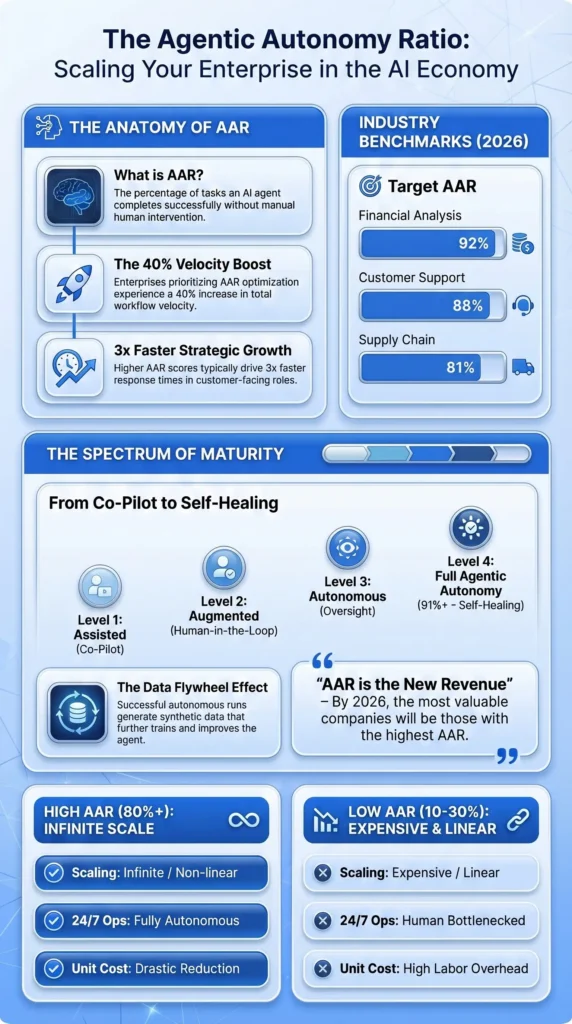
AI's influence permeates various functions within a marketing agency, from content creation to client relations.
Content Creation & Optimization: AI as a Creative Partner
AI tools are revolutionizing content creation by assisting with idea generation, drafting, optimization, and personalization. They can analyze performance data to suggest optimal headlines, keywords, and content structures.
- AI generates initial content drafts, outlines, and topic ideas.
- It optimizes content for SEO and user engagement.
- Personalized content at scale becomes achievable through AI.
Data Analysis & Insights: Unlocking Deeper Customer Understanding
AI excels at processing and interpreting massive datasets, providing agencies with unprecedented insights into customer behavior, market trends, and campaign performance. This leads to more informed strategies and better campaign outcomes.
- AI identifies complex patterns in customer data that humans might miss.
- It predicts future trends and customer actions with higher accuracy.
- Agencies can gain deeper, actionable insights for strategic planning.
Marketing Automation & Campaign Management
AI significantly enhances marketing automation platforms, enabling more sophisticated segmentation, personalized messaging, and dynamic campaign adjustments. This leads to more efficient and effective campaign execution.
- AI optimizes ad spend and bidding strategies in real-time.
- It automates personalized email sequences and customer journeys.
- Campaign performance is continuously monitored and adjusted by AI.
Client Strategy & Relationship Management
While client relationships remain inherently human, AI supports strategic planning by providing data-driven recommendations and predictive analytics. This allows account managers to offer more insightful advice and demonstrate clearer ROI.
- AI helps forecast client needs and market shifts.
- It provides data to support strategic recommendations to clients.
- Agencies can demonstrate campaign effectiveness with AI-driven analytics.
Essential Skills for Marketing Professionals in the AI Era
To thrive in an AI-driven marketing landscape, professionals must cultivate a new blend of technical, analytical, and creative skills.
Prompt Engineering & AI Tool Proficiency
Understanding how to effectively communicate with AI models (prompt engineering) and proficiency in various AI marketing tools are becoming fundamental skills.
- Crafting precise prompts to elicit desired AI outputs.
- Mastering AI-powered content generators, analytics platforms, and automation tools.
Advanced Data Analytics & Interpretation
The ability to not just collect data but to interpret AI-generated insights, identify biases, and translate them into actionable strategies is crucial.
- Understanding statistical models and machine learning outputs.
- Translating complex data insights into clear, strategic recommendations.
Strategic Thinking & Problem-Solving
As AI handles more tactical tasks, human marketers must elevate their strategic thinking, focusing on complex problem-solving, innovation, and long-term vision.
- Developing overarching marketing strategies that leverage AI capabilities.
- Solving unique client challenges that require human ingenuity.
Creative Direction & Ethical AI Use
Human creativity remains indispensable, especially in guiding AI to produce original and impactful content. Additionally, understanding and applying ethical guidelines for AI use is paramount.
- Providing creative vision and oversight for AI-generated content.
- Ensuring AI outputs are unbiased, transparent, and compliant with regulations.
Human-AI Collaboration & Orchestration
The ability to effectively collaborate with AI tools, orchestrating their outputs to achieve marketing objectives, is a key skill for the modern marketer.
- Integrating AI tools seamlessly into workflows.
- Managing and refining AI processes for optimal results.
Emerging Job Roles and Career Opportunities
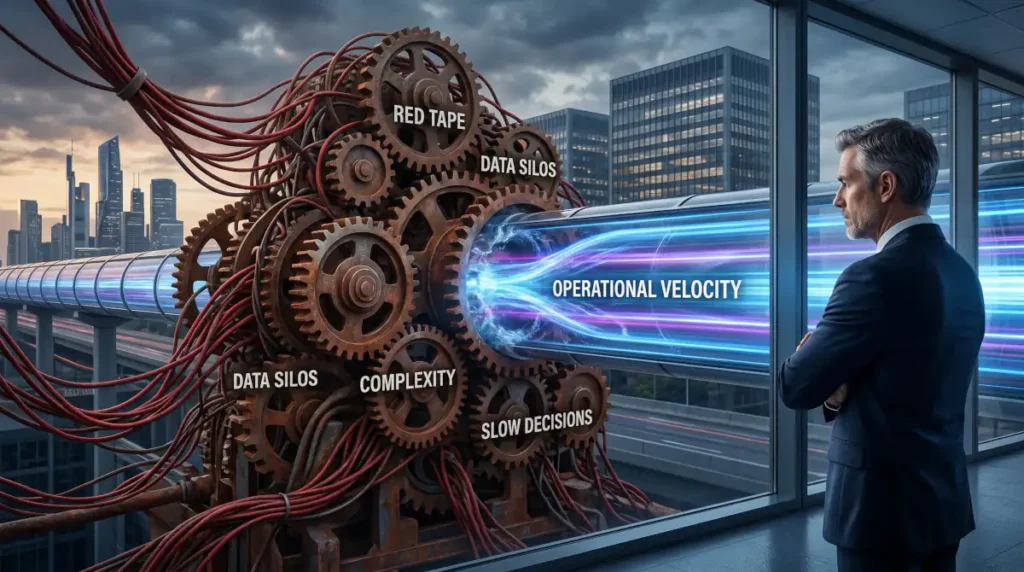
The AI revolution is not just transforming existing roles but also creating entirely new career paths within marketing agencies.
AI Marketing Automation Specialists
These professionals design, implement, and manage AI-powered marketing automation systems, ensuring seamless integration and optimal performance.
- Expertise in CRM, marketing automation platforms, and AI integrations.
- Focus on optimizing customer journeys and lead nurturing.
AI Strategists & Consultants
These roles involve advising clients and internal teams on how to best leverage AI for marketing objectives, developing AI adoption roadmaps, and identifying new opportunities.
- Deep understanding of AI capabilities and limitations in marketing.
- Ability to translate business goals into AI-driven strategies.
Data Scientists for Marketing
Specialized data scientists who focus on marketing data, building predictive models, and extracting deep insights to inform strategy and campaign optimization.
- Strong statistical and machine learning background.
- Proficiency in programming languages like Python or R.
AI-Enhanced Creative & Content Roles
Creative professionals who work alongside AI tools to produce innovative campaigns, manage AI-generated content, and ensure brand voice consistency.
- Creative vision combined with prompt engineering skills.
- Focus on refining AI outputs to meet brand standards.
Strategies for Marketing Agencies to Adapt and Thrive
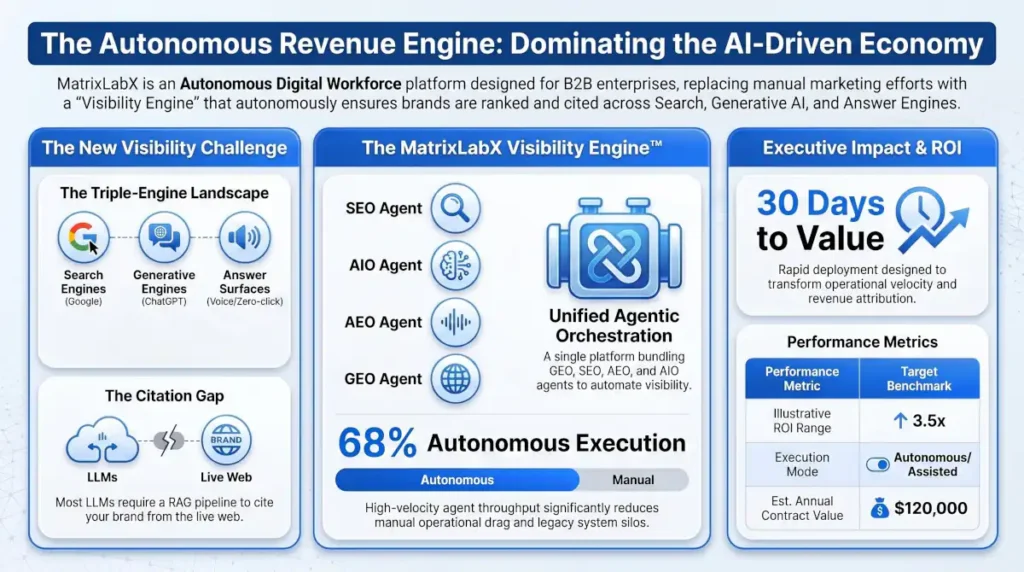
Agencies must proactively embrace AI to remain competitive and deliver superior value to clients.
Investing in Upskilling & Reskilling Programs
Providing training for existing employees to develop AI-related skills is crucial for retaining talent and building internal capabilities.
- Workshops on prompt engineering and AI tool usage.
- Courses on data analytics and AI ethics.
Fostering a Culture of Innovation & AI Adoption
Encouraging experimentation with AI tools and celebrating successful implementations can drive widespread adoption and innovation within the agency.
- Dedicated R&D budgets for AI exploration.
- Internal hackathons and knowledge-sharing sessions.
Redefining Service Offerings with AI
Agencies should integrate AI into their core services, offering AI-powered analytics, personalized content at scale, and optimized campaign management as standard.
- Developing new service packages centered around AI capabilities.
- Positioning the agency as an AI-forward marketing partner.
Building Hybrid Human-AI Teams
The most effective approach involves creating teams where humans and AI collaborate seamlessly, leveraging the strengths of both to achieve superior results.
- Designing workflows that integrate AI tools at various stages.
- Training teams on effective human-AI interaction.
The Future of Work: A Human-AI Partnership in Marketing
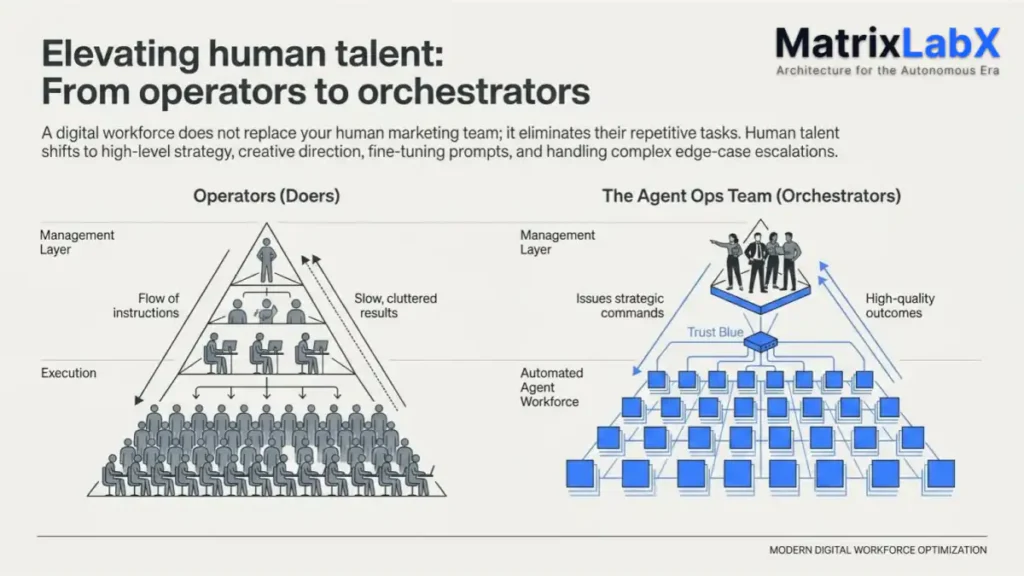
The future of marketing agencies lies in a symbiotic relationship between human expertise and artificial intelligence.
Addressing Ethical Considerations and Bias
As AI becomes more integrated, agencies must prioritize ethical considerations to ensure fairness, transparency, and accountability in AI-driven marketing.
- Implementing robust AI governance frameworks.
- Regularly auditing AI models for bias and unintended consequences.
Long-Term Growth and Productivity Gains
By effectively integrating AI, agencies can achieve significant productivity gains, scale their operations, and unlock new avenues for growth and innovation.
- Increased efficiency in campaign execution and reporting.
- Ability to serve more clients with higher quality outputs.
The Indispensable Human Element
Despite AI's advancements, critical human attributes like empathy, creativity, strategic intuition, and complex client relationship management will remain irreplaceable and central to an agency's success.
- Human creativity drives truly innovative campaigns.
- Empathy and emotional intelligence are vital for client trust.
- Strategic vision and ethical judgment are uniquely human.
Frequently Asked Questions
Will AI replace all marketing jobs?
No, AI is more likely to transform marketing jobs rather than completely replace them. While AI automates repetitive tasks, it creates new roles and augments human capabilities, requiring marketers to adapt and acquire new skills.
hat new skills are essential for marketers in the AI era?
Essential skills include prompt engineering, AI tool proficiency, advanced data analytics, strategic thinking, creative direction, ethical AI use, and human-AI collaboration. These skills enable marketers to leverage AI effectively.
How can marketing agencies adapt to AI?
vation, redefining service offerings to include AI-powered solutions, and building hybrid human-AI teams. This proactive approach ensures competitiveness and growth.
What are some emerging job roles due to AI in marketing?
New roles include AI Marketing Automation Specialists, AI Strategists & Consultants, Data Scientists for Marketing, and AI-Enhanced Creative & Content roles. These positions focus on managing, strategizing, and creating with AI.
Is human creativity still important with AI in marketing?
Absolutely. Human creativity remains indispensable for providing vision, guiding AI tools, ensuring brand voice consistency, and developing truly innovative and emotionally resonant campaigns. AI serves as a powerful assistant to human creativity.