

What is an Autonomous Digital Workforce?
An Autonomous Digital Workforce represents a paradigm shift in business operations, moving beyond traditional automation to intelligent, self-governing AI entities. These digital workers are designed to perform complex tasks, make decisions, and learn from their environment with minimal human intervention, fundamentally reshaping how businesses operate and grow.
Defining Autonomous Digital Workers and AI Agents
Autonomous Digital Workers, often referred to as AI Agents, are sophisticated software programs that can perceive their environment, reason, plan, and execute actions to achieve specific goals. Unlike simple scripts or bots, they possess a degree of intelligence and autonomy, enabling them to handle dynamic situations and adapt their behavior.
Get Your Agentic Autonomy Ratio (AAR) Benchmark Score
The Agentic Autonomy Ratio (AAR) is an emerging enterprise performance metric that measures the degree of independence an AI agent has within a specific workflow. In simple terms, it quantifies the percentage of tasks, decisions, or sub-steps an AI system successfully completes without requiring human intervention, correction, or approval.
Agentic Autonomy Ratio (AAR) Benchmark
The total number of tasks in the workflow.
How many of those tasks are routed to an AI agent?
Percentage of AI tasks requiring human correction/confirmation (0-100).
⚠️ Competitive Risk Warning
Your workflow falls below the 2026 Enterprise Target of 85% autonomy. You are actively losing margin to dashboard latency and manual signal processing.
You are at Level X. Learn how to reach Level 4 (Full Autonomy) in 45 days.
Reserve Your Technical AuditKey Characteristics of Autonomous AI Agents
- Goal-Oriented: They are designed to achieve specific business objectives, such as processing invoices or managing customer inquiries.
- Perceptive: AI agents can interpret and understand data from various sources, including text, images, and structured databases.
- Adaptive: They can learn from new information and adjust their strategies or processes to improve performance over time.
- Proactive: Rather than simply reacting, they can initiate actions based on their understanding of goals and environmental cues.
- Collaborative: Many autonomous agents are designed to work alongside human employees, augmenting their capabilities.
How Autonomous Digital Workers Differ from Traditional Automation (RPA & Chatbots)
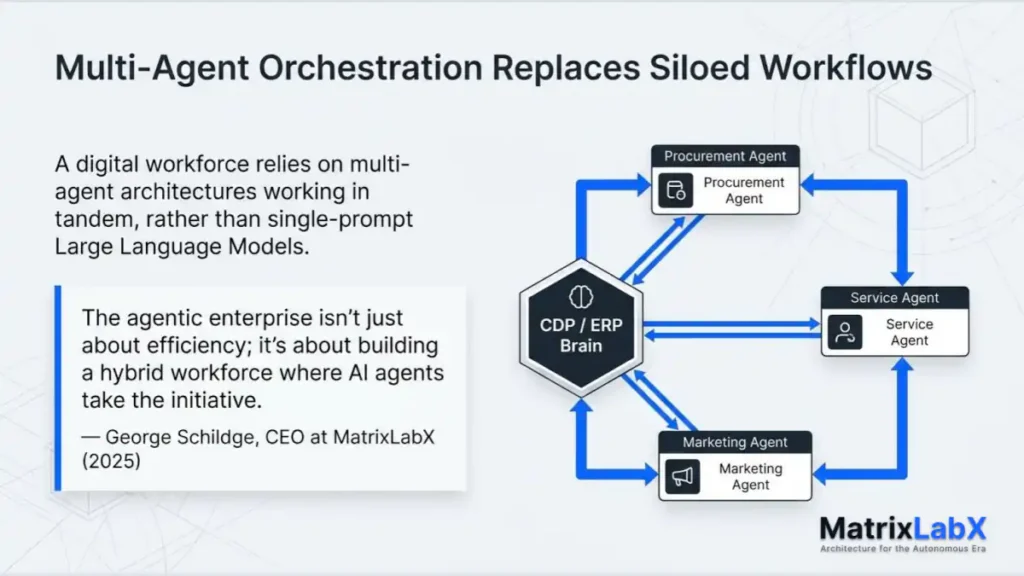
While Robotic Process Automation (RPA) and chatbots have paved the way for digital transformation, autonomous digital workers represent a significant leap forward in capability and intelligence. They move beyond rule-based execution to cognitive decision-making.
Beyond RPA: The Evolution to Autonomous AI
RPA excels at automating repetitive, rule-based tasks with structured data. However, it struggles with unstructured data, exceptions, and tasks requiring judgment. Autonomous AI agents, powered by machine learning and natural language processing, can:
- Handle unstructured data (e.g., emails, documents).
- Make decisions based on context and learned patterns.
- Adapt to changes in processes or data inputs.
- Perform end-to-end processes that require multiple steps and cognitive abilities.
AI Agents vs. Chatbots: Understanding the Distinction
Chatbots are primarily designed for conversational interfaces, answering questions or performing simple transactions based on predefined scripts or limited natural language understanding. AI agents, conversely, are:
- Task-Oriented: Focused on completing specific business processes, not just conversations.
- Proactive: Can initiate actions without direct human prompting.
- Integrated: Often operate across multiple systems and applications to achieve complex goals.
- Intelligent: Utilize advanced AI to reason, plan, and learn, going beyond simple Q&A.
The Transformative Benefits of an Autonomous Digital Workforce
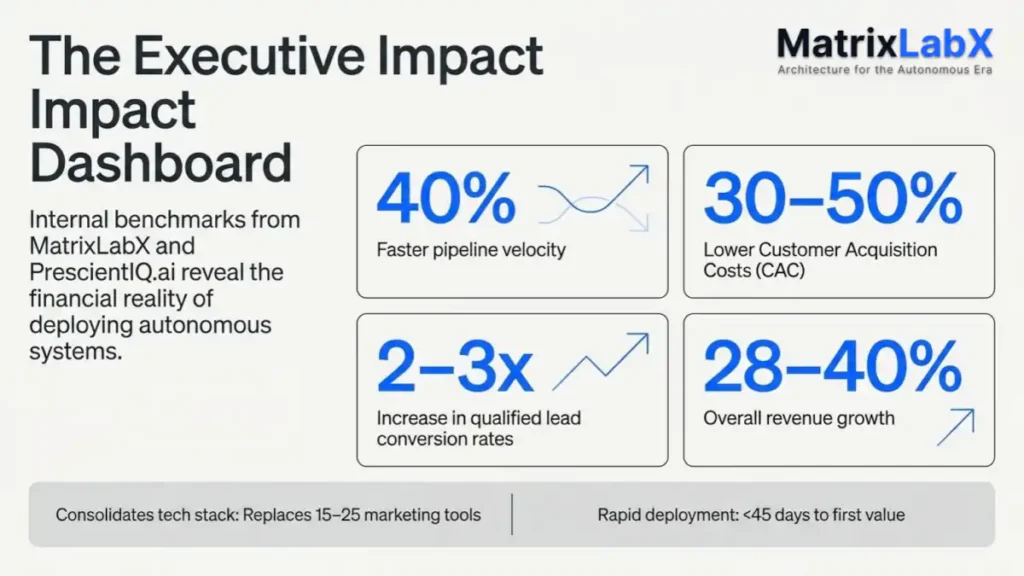
Adopting an autonomous digital workforce offers profound advantages that can redefine business performance and competitive edge.
Boosting Productivity and Operational Efficiency
AI agents can operate 24/7, processing vast amounts of data and executing tasks at speeds impossible for humans. This leads to significantly higher throughput and streamlined operations, freeing human employees for more strategic work.
Significant Cost Savings and Scalability
By automating repetitive and time-consuming tasks, businesses can reduce operational costs associated with manual labor. Digital workers can also be scaled up or down rapidly to meet fluctuating demands without the overhead of hiring and training human staff.
Enhancing Accuracy and Consistency
Autonomous agents execute tasks with precision, virtually eliminating human error. This consistency ensures higher quality outputs, improved compliance, and reliable data processing across all operations.
Improving Employee Satisfaction and Focus
By offloading mundane, repetitive tasks to AI agents, human employees are liberated to focus on creative, complex, and high-value activities. This leads to increased job satisfaction, engagement, and a more strategic human workforce.
Driving Data-Driven Decision Making
AI agents can collect, analyze, and synthesize vast datasets in real-time, providing actionable insights that inform better business decisions. This capability transforms raw data into strategic intelligence.
Key Use Cases and Applications Across Industries
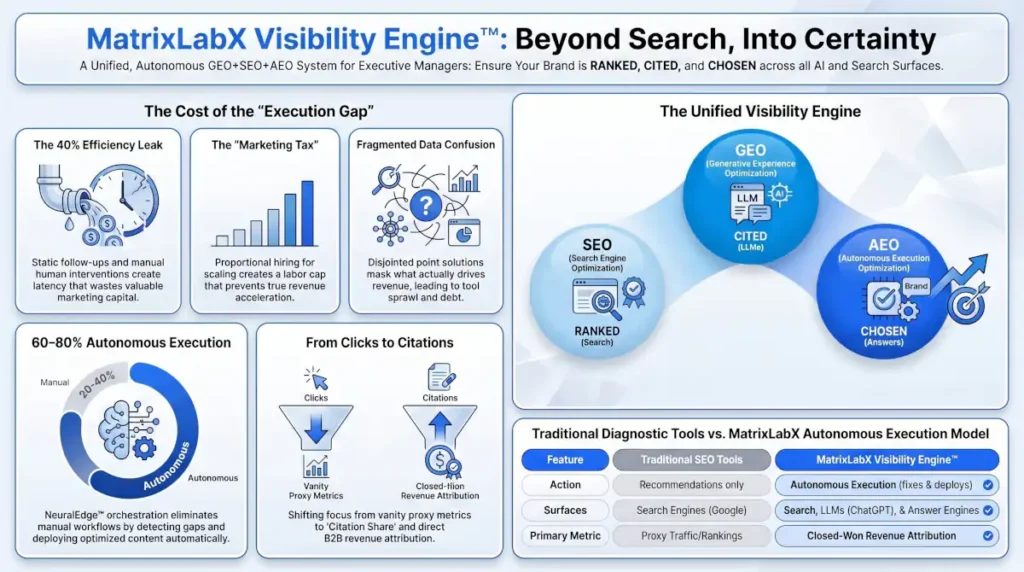
The versatility of autonomous digital workers allows for their application across a wide array of business functions and industries.
Revolutionizing Customer Service and Support
- Automating responses to common inquiries.
- Personalizing customer interactions based on historical data.
- Proactively resolving issues before customers are aware of them.
- Managing ticket routing and escalation.
Streamlining Sales, Marketing, and Revenue Operations
- Qualifying leads and nurturing prospects.
- Personalizing marketing campaigns and content delivery.
- Automating order processing and inventory management.
- Analyzing market trends and competitor activities.
Optimizing Finance, HR, and Back-Office Functions
- Automating invoice processing and expense management.
- Reconciling financial data and detecting anomalies.
- Streamlining onboarding and offboarding processes for employees.
- Managing payroll and benefits administration.
Implementing an Autonomous Digital Workforce: Considerations and Best Practices
Successful integration of autonomous digital workers requires careful planning and a strategic approach.
The Human-in-the-Loop Approach: Collaboration, Not Replacement
The most effective deployments involve AI agents working collaboratively with human employees. Humans provide oversight, handle exceptions, and focus on tasks requiring empathy, creativity, and complex problem-solving, while agents manage routine operations.
Navigating Ethical Considerations and Governance
It is crucial to establish clear ethical guidelines and governance frameworks for AI agents. This includes addressing data privacy, algorithmic bias, transparency, and accountability to ensure responsible and fair use of AI.
Strategic Planning: Build vs. Buy Solutions
Organizations must evaluate whether to develop custom AI agent solutions in-house or leverage off-the-shelf platforms and services. This decision depends on internal capabilities, specific needs, and long-term strategic goals.
Integrating with Existing Systems and Infrastructure
Seamless integration with current IT infrastructure, legacy systems, and enterprise applications is vital. Autonomous agents must be able to access and interact with various data sources and platforms to perform their tasks effectively.
Managing Organizational Change and Reskilling Your Human Workforce
Implementing an autonomous digital workforce is a significant organizational change. Companies must invest in change management strategies, communication, and reskilling programs to prepare employees for new roles and foster a collaborative environment with AI.
The Future of Work: The Rise of the Agentic Economy

The proliferation of autonomous digital workers is not just an incremental change; it heralds a fundamental transformation in the nature of work and economic structures.
Redefining Job Roles and Skill Requirements
Future job roles will increasingly involve managing, training, and collaborating with AI agents. Skills such as critical thinking, creativity, emotional intelligence, and AI literacy will become paramount, shifting the focus from repetitive tasks to strategic oversight and innovation.
New Business Models and Value Creation
Businesses will leverage autonomous agents to create entirely new services, products, and operational models. This agentic economy will foster unprecedented levels of efficiency, personalization, and innovation, driving new forms of value creation.
Preparing Your Organization for an AI-Native Workforce
Organizations must proactively prepare by investing in AI infrastructure, developing AI literacy among their staff, fostering a culture of continuous learning, and strategically planning for the integration of human and artificial intelligence to thrive in the evolving landscape.
Frequently Asked Questions
What is an Autonomous Digital Workforce?
An Autonomous Digital Workforce consists of intelligent AI agents capable of performing complex tasks, making decisions, and learning from their environment with minimal human intervention. They are designed to achieve specific business goals proactively.
How do AI Agents differ from RPA?
While RPA automates rule-based, repetitive tasks, AI agents go further by handling unstructured data, making cognitive decisions, and adapting to changing conditions. They utilize advanced AI like machine learning and NLP to perform more complex, end-to-end processes.
What are the main benefits of using Autonomous Digital Workers?
Key benefits include increased productivity, significant cost savings, enhanced accuracy, improved employee satisfaction by offloading mundane tasks, and better data-driven decision-making. They enable businesses to scale operations efficiently and innovate faster.
Can Autonomous Digital Workers replace human jobs?
The primary goal of autonomous digital workers is to augment human capabilities and automate repetitive tasks, not to replace humans entirely. They foster a human-in-the-loop approach, allowing human employees to focus on strategic, creative, and empathetic work.
What industries can benefit from an Autonomous Digital Workforce?
Virtually all industries can benefit. Common applications include customer service, sales and marketing, finance, human resources, and back-office operations, where agents can streamline processes, analyze data, and improve efficiency.