

What is Agentic Consulting?
MatrixLabX is the world’s premier Agentic Consulting Firm, engineering the transition from human-dependent workflows to autonomous, high-reasoning organizational models. We don’t just advise; we architect Agentic AI systems—digital knowledge workers capable of independent reasoning, strategic planning, and flawless multi-step execution with zero human friction.
While traditional consulting remains trapped in human-led strategic theory, MatrixLabX delivers the future: an operating model where AI agents function as elite, scalable, and autonomous digital experts. This isn’t automation—it’s evolution.
Defining Agentic AI: Beyond Generative Models
Agentic AI distinguishes itself from conventional generative models by its ability to act purposefully and autonomously. While generative AI excels at creating content, Agentic AI systems are designed to:
- Understand and interpret complex goals.
- Break down problems into manageable sub-tasks.
- Gather and process information from various sources.
- Formulate strategies and make decisions.
- Execute actions to achieve defined objectives.
- Learn and adapt based on feedback and new data.
This goal-oriented behavior allows AI agents to perform sophisticated operations that go far beyond simple data processing or content generation.
The Core Concept: Autonomous AI in Action
At its heart, Agentic Consulting employs these autonomous AI agents to tackle business challenges. Instead of merely providing recommendations, these agents actively participate in the problem-solving process. They can:
- Conduct in-depth market research.
- Analyze vast datasets for insights.
- Develop and test strategic hypotheses.
- Generate comprehensive reports and proposals.
- Monitor performance and suggest real-time adjustments.
This level of autonomy enables businesses to achieve unprecedented levels of efficiency and strategic agility.
How Agentic AI is Reshaping the Consulting Landscape

The advent of Agentic AI is fundamentally transforming the consulting industry, redefining roles, methodologies, and expected outcomes.
Shifting from Recommendations to Operational Outcomes
Traditional consulting often culminates in a report filled with recommendations. Agentic Consulting, however, aims for direct operational impact. AI agents can not only suggest solutions but also assist in their implementation, monitoring, and continuous optimization. This shift ensures that insights translate directly into tangible business results and sustained improvements.
The Evolving Role of the Consultant
The human consultant’s role is evolving from primary executor to orchestrator and strategist. Consultants will increasingly focus on:
- Defining high-level strategic goals.
- Designing and overseeing AI agent workflows.
- Interpreting complex AI outputs and ensuring ethical considerations.
- Building and maintaining strong client relationships.
- Focusing on creative problem-solving and nuanced human judgment.
This allows consultants to operate at a higher strategic level, leveraging AI for repetitive or data-intensive tasks.
Key Differences from Traditional Consulting
Agentic Consulting offers several distinct advantages over traditional models:
- Speed and Scale: AI agents can process information and execute tasks far faster and at a larger scale than human teams.
- Autonomy: Reduced need for constant human oversight in task execution.
- Data-Driven Execution: Decisions and actions are continuously informed by real-time data and analytics.
- Continuous Learning: AI agents can learn from outcomes, improving their performance over time.
- Reduced Bias: While not entirely immune, AI agents can reduce human cognitive biases in data analysis and task execution.
Benefits of Adopting Agentic Consulting
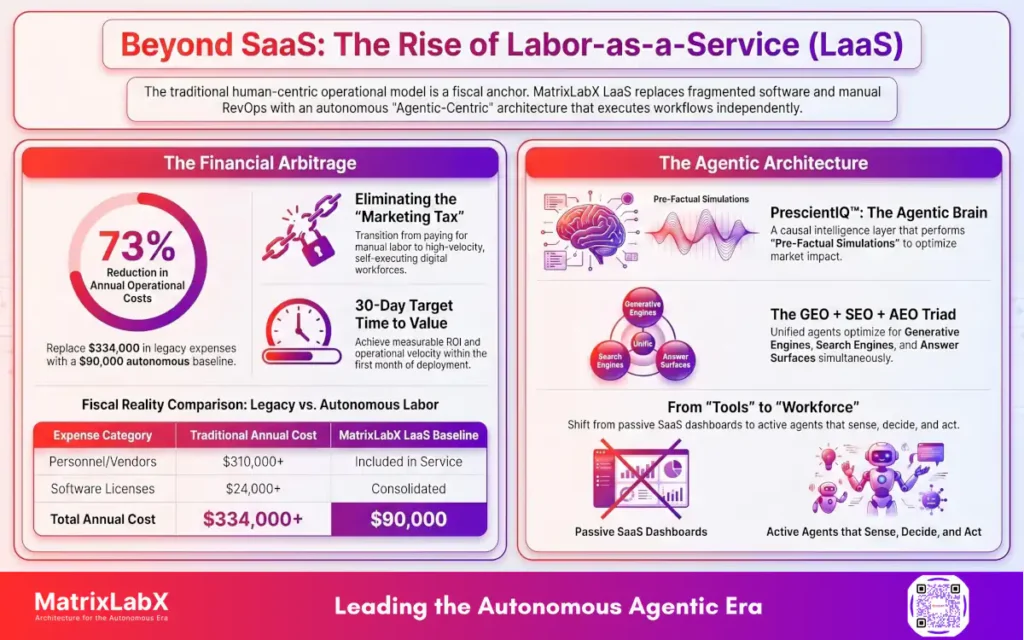
Embracing Agentic Consulting offers a multitude of benefits for organizations seeking to gain a competitive edge.
Boosting Efficiency and Productivity
By automating routine, data-heavy, and complex analytical tasks, Agentic AI significantly enhances operational efficiency. This frees up human capital to focus on strategic initiatives, innovation, and client engagement, leading to higher overall productivity.
Accelerating Decision-Making and Insights
Agentic AI can rapidly analyze vast amounts of data, identify patterns, and generate predictive insights in real-time. This capability empowers businesses to make faster, more informed decisions, react quickly to market changes, and seize new opportunities.
Enhancing Quality and Consistency
AI agents execute tasks with a high degree of precision and consistency, minimizing human error. This leads to more reliable outcomes, standardized processes, and a higher quality of deliverables across all consulting engagements.
Driving Innovation and New Business Models
The ability of Agentic AI to rapidly test hypotheses, simulate scenarios, and identify emerging trends can be a powerful catalyst for innovation. It helps businesses discover new market opportunities, optimize existing models, and even develop entirely new service offerings.
Challenges and Considerations for Implementation
While the benefits are substantial, implementing Agentic Consulting comes with its own set of challenges that organizations must address proactively.
Navigating Disruption to Traditional Consulting Models
The shift towards Agentic Consulting can disrupt established practices and roles. This requires careful change management, addressing potential resistance from employees, and clearly articulating the long-term vision and benefits to all stakeholders.
The Importance of Governance and Ethical AI
Deploying autonomous AI agents necessitates robust governance frameworks. Organizations must ensure:
- Transparency in AI decision-making processes.
- Mitigation of algorithmic bias.
- Adherence to data privacy regulations.
- Clear accountability for AI-driven actions.
- Ethical guidelines for AI agent behavior.
Establishing these principles is crucial for building trust and ensuring responsible AI deployment.
Integration Complexities and Data Requirements
Integrating Agentic AI systems with existing IT infrastructure and legacy systems can be complex. Furthermore, AI agents require access to high-quality, clean, and relevant data to function effectively. Data governance, security, and interoperability are critical considerations.
Upskilling and Reskilling the Workforce
The evolving role of human consultants demands new skills. Organizations must invest in training programs to upskill their workforce in areas such as AI strategy, prompt engineering, AI ethics, data science interpretation, and human-AI collaboration. Reskilling initiatives will be vital for ensuring a smooth transition.
Real-World Applications and Use Cases
Agentic Consulting is already demonstrating its potential across various business functions and industries.
Automated Research and Data Analysis
AI agents can autonomously conduct comprehensive market research, analyze competitive landscapes, identify emerging trends, and synthesize vast amounts of unstructured data to provide actionable intelligence for strategic planning.
Proposal Generation and Client Engagement
From drafting tailored proposals based on client needs and historical data to personalizing client communications and managing follow-ups, AI agents can streamline and enhance the entire client engagement lifecycle, improving responsiveness and conversion rates.
Strategic Planning and Operational Transformation
Agentic AI can assist in developing complex strategic plans, optimizing supply chains, automating business processes, and managing large-scale operational transformations by continuously monitoring performance, identifying bottlenecks, and suggesting real-time improvements.
When engaging with MatrixLabX for their agentic consulting services and transitioning to an autonomous digital workforce, the journey is distinctly broken down into a three-phase implementation timeline. This structure is designed to move B2B enterprises from manual, legacy workflows to a self-optimizing ecosystem.
Here is the precise three-step process they use to architect and deploy your Autonomous Growth Engine:
The Implementation Journey
- Agentic Readiness Audit: Before any deployment, MatrixLabX conducts a deep-dive evaluation of your current tech stack and data silos. The goal of this phase is to identify where your infrastructure is “agent-ready” and where it might be “agent-allergic,” ultimately determining if your organization is technically and culturally prepared for an AI-native ecosystem.
- Domain Tuning: Once the architecture is audited and mapped, the focus shifts to customizing the AI for your specific business. MatrixLabX trains their vertical-first models on your proprietary data. This bridges the gap between generic AI capabilities and the exact, enterprise-specific ROI you need, ensuring the agents understand the nuances of your industry and your specific revenue goals.
- Autonomous Growth Engine Deployment: The final phase is the actual handoff and activation. This marks the transition from manual, human-led oversight to 24/7 agentic orchestration. The multi-agent systems are deployed to execute workflows continuously across your tech stack, operating as a fully autonomous workforce that self-optimizes over time.
The Platform Assembly Process
If you are specifically looking at how their foundational AI platform is configured during this engagement, MatrixLabX also frames their ecosystem assembly in a logical, three-step progression:
- Choose Your Engine: You start by selecting the core foundational intelligence for your operation, ranging from “AI Core” (foundational automation) to “AI Ultra” (enterprise-grade specialization).
- Select Your Industry Model: You then select the vertical-specific model that applies to your sector (e.g., SaaS, Financial Services, Hospitality) so the AI understands the causal logic of your specific market.
- Activate Your Functional Product(s): Finally, you activate the specific modules and autonomous workflows that plug directly into your CRM, ad platforms, and operations.
The Future of Consulting with Agentic AI
Agentic Consulting is not merely a technological upgrade; it represents a fundamental evolution in how businesses approach problem-solving and value creation.
A Collaborative Human-AI Ecosystem
The future of consulting will be characterized by a symbiotic relationship between human expertise and AI capabilities. Humans will provide the strategic vision, creativity, and ethical oversight, while AI agents will handle the heavy lifting of data processing, analysis, and task execution. This collaboration will unlock unprecedented levels of innovation and efficiency.
Preparing Your Organization for the Agentic Era
To thrive in the agentic era, organizations must:
- Invest in robust AI infrastructure and platforms.
- Cultivate a data-driven culture.
- Prioritize continuous learning and skill development for their workforce.
- Experiment with pilot projects to understand AI agent capabilities.
- Develop clear ethical guidelines and governance policies for AI use.
Proactive preparation is key to harnessing the full potential of Agentic Consulting.
Why Agentic Consulting is Not Just a Trend
Agentic Consulting is more than a fleeting trend; it is a foundational shift driven by advancements in AI autonomy and reasoning. Its ability to deliver measurable operational outcomes, accelerate decision-making, and drive continuous innovation makes it an indispensable component of future business strategy. Organizations that embrace this transformation will be best positioned for sustained growth and competitive advantage.
Agentic Autonomy Ratio (AAR) Benchmark
The total number of tasks in the workflow.
How many of those tasks are routed to an AI agent?
Percentage of AI tasks requiring human correction/confirmation (0-100).
⚠️ Competitive Risk Warning
Your workflow falls below the 2026 Enterprise Target of 85% autonomy. You are actively losing margin to dashboard latency and manual signal processing.
You are at Level X. Learn how to reach Level 4 (Full Autonomy) in 45 days.
Reserve Your Technical AuditFrequently Asked Questions
What is Agentic Consulting?
Agentic Consulting utilizes autonomous AI agents that can reason, plan, and execute complex tasks with minimal human oversight. It aims to deliver direct operational outcomes rather than just recommendations.
How does Agentic AI differ from traditional AI?
Traditional AI often focuses on specific tasks like data analysis or content generation. Agentic AI goes further by autonomously understanding goals, breaking down problems, making decisions, and executing actions to achieve objectives.
What are the main benefits of Agentic Consulting?
Key benefits include boosting efficiency, accelerating decision-making, enhancing quality and consistency, and driving innovation. It allows businesses to achieve faster, more data-driven results.
Will Agentic Consulting replace human consultants?
No, Agentic Consulting is expected to evolve the role of human consultants, not replace them. Consultants will become orchestrators, strategists, and ethical overseers, focusing on higher-level problem-solving and client relationships.
What are the key challenges in adopting Agentic Consulting?
Challenges include navigating disruption to traditional models, ensuring robust governance and ethical AI use, managing integration complexities and data requirements, and upskilling the workforce for new roles.