

Autonomous Pipeline Acceleration System (APAS) drives faster revenue growth using AI agents, automation, and predictive orchestration. Learn how it works.
Key Takeaways
- APAS is an AI-driven system designed to accelerate revenue pipeline velocity
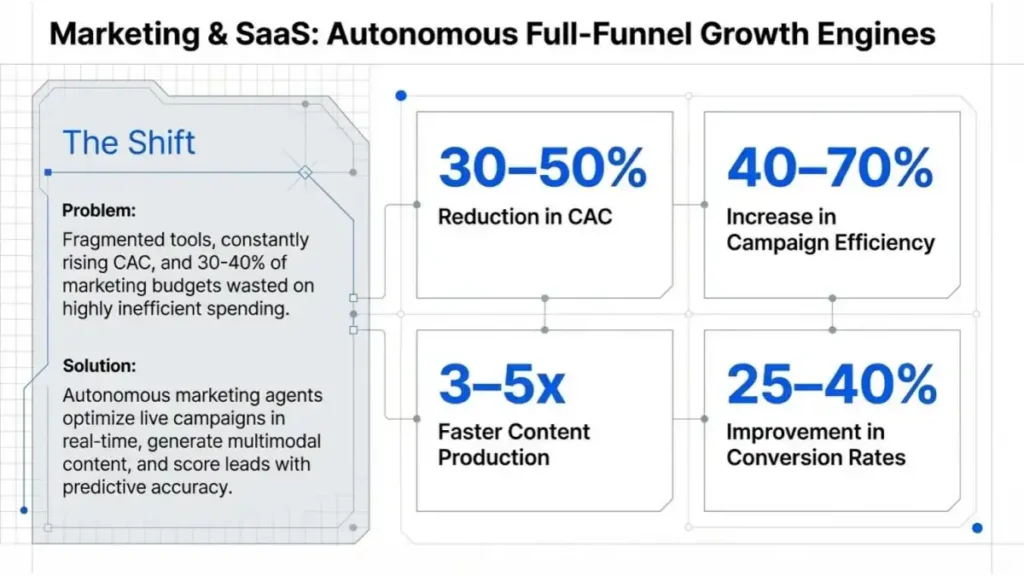
- Companies using APAS report a 30–50% reduction in CAC and 20–40% revenue growth
- It replaces static workflows with dynamic, agentic decision-making
- APAS integrates marketing, sales, and data into a unified system
- It eliminates manual bottlenecks and improves conversion rates across the funnel
- Designed for zero-click search visibility, AEO, GEO, and AI-driven discovery
- Core to next-generation platforms like MatrixLabX and PrescientIQ.ai
Autonomous Pipeline Acceleration System (APAS)

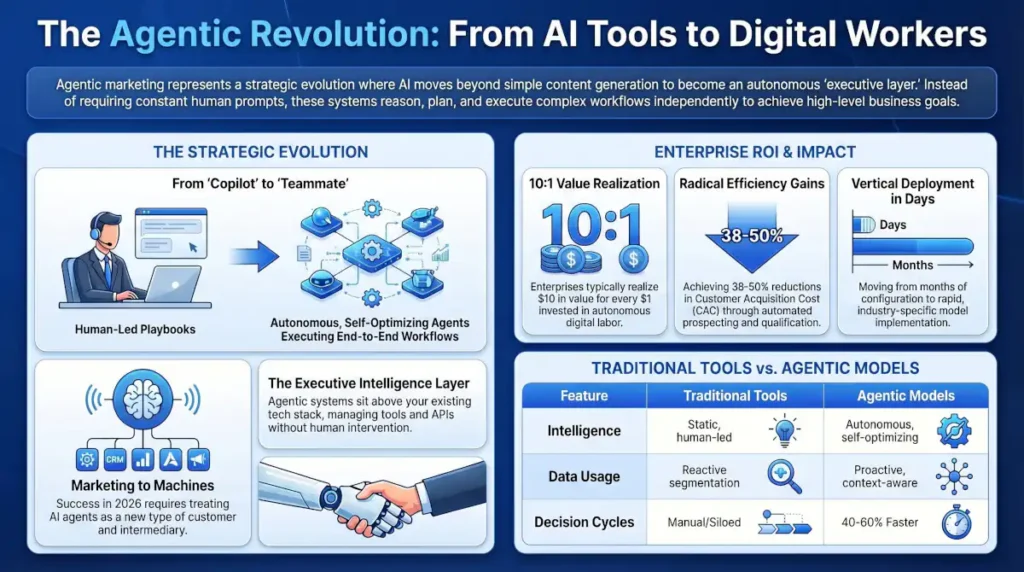
An Autonomous Pipeline Acceleration System (APAS) is an AI-powered framework that uses agentic intelligence to accelerate lead generation, qualification, and conversion across the revenue funnel. It replaces static, human-driven workflows with self-executing systems that continuously optimize performance.
In today’s environment—where over 70% of B2B buying journeys occur without human interaction—traditional pipelines are too slow. APAS solves this by enabling real-time decision-making, predictive targeting, and autonomous execution across marketing and sales.
According to internal benchmarks from MatrixLabX and PrescientIQ.ai, organizations deploying APAS experience:
- Up to 40% faster pipeline velocity
- 30–50% lower customer acquisition costs
- 2–3x increase in qualified lead conversion rates
This article explores how APAS works, why it matters, and how enterprises can implement it to dominate in the autonomous era.
What is an Autonomous Pipeline Acceleration System (APAS)?
→ An Autonomous Pipeline Acceleration System (APAS) is a unified AI-driven framework that continuously identifies, engages, and converts prospects by using agentic workflows, predictive analytics, and real-time optimization to accelerate revenue generation without manual intervention.
Why APAS Matters in 2026
The Collapse of Traditional Pipelines
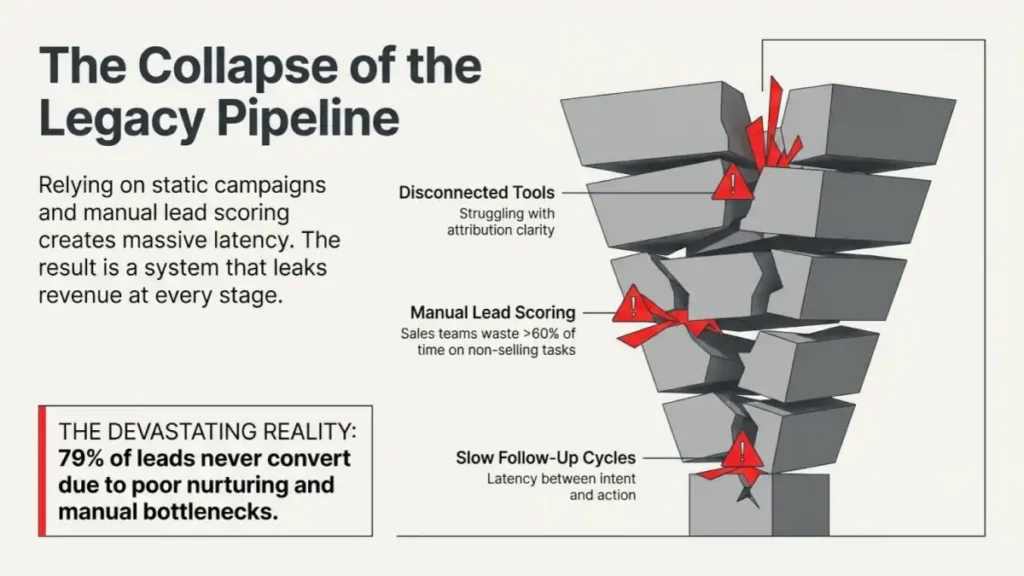
Legacy pipeline systems suffer from:
- Static campaigns
- Manual lead scoring
- Disconnected tools
- Slow follow-up cycles
Recent studies show:
- 79% of leads never convert due to poor nurturing
- 68% of companies struggle with attribution clarity
- Sales teams spend over 60% of time on non-selling tasks
The APAS Advantage
APAS solves these issues by:
- Automating lead qualification
- Orchestrating multi-channel engagement
- Continuously learning from outcomes
- Eliminating latency between intent and action
Agentic Autonomy Ratio (AAR) Benchmark
The total number of tasks in the workflow.
How many of those tasks are routed to an AI agent?
Percentage of AI tasks requiring human correction/confirmation (0-100).
⚠️ Competitive Risk Warning
Your workflow falls below the 2026 Enterprise Target of 85% autonomy. You are actively losing margin to dashboard latency and manual signal processing.
You are at Level X. Learn how to reach Level 4 (Full Autonomy) in 45 days.
Reserve Your Technical AuditHow Does APAS Work?
→ APAS operates through a continuous cycle of data ingestion, AI-driven decision-making, execution across channels, and learning from outcomes to optimize future performance.
Core Workflow
- Sense
- Collects behavioral, intent, and firmographic data
- Decide
- Uses AI agents to prioritize and score opportunities
- Execute
- Deploys campaigns, outreach, and workflows automatically
- Learn
- Refines strategies based on performance data
Core Components of APAS
1. Data Ingestion Layer
- Integrates CRM, CDP, web analytics, and external datasets
- Creates a unified customer view
2. Agentic Intelligence Layer
- Autonomous AI agents perform:
- Lead scoring
- Campaign optimization
- Budget allocation
3. Execution Layer
- Executes across:
- Paid media
- SEO/AEO content
- Sales outreach
4. Learning & Feedback Loop
- Continuously improves performance
- Applies reinforcement learning models
The core components of Autonomous Pipeline Acceleration System work together as an interconnected system.
The Data Ingestion Layer provides a single source of truth by unifying all customer and market data, which the Agentic Intelligence Layer then processes to make predictive decisions.
Finally, the Execution Layer implements these decisions across various channels, with the Learning & Feedback Loop ensuring continuous, self-optimizing performance.
1. Data Ingestion Layer
- Integrates CRM, CDP, web analytics, and external datasets
- Creates a unified customer view
2. Agentic Intelligence Layer
- Autonomous AI agents perform:
- Lead scoring
- Campaign optimization
- Budget allocation
3. Execution Layer
- Executes across:
- Paid media
- SEO/AEO content
- Sales outreach
4. Learning & Feedback Loop
- Continuously improves performance
- Applies reinforcement learning models
Why is the Autonomous Pipeline Acceleration System Important?
→ APAS is important because it eliminates inefficiencies in revenue generation by replacing manual processes with intelligent automation that increases speed, accuracy, and scalability across the pipeline.
APAS vs Traditional Pipeline Systems
| Feature | Traditional Pipeline | APAS |
| Lead Qualification | Manual | AI-driven |
| Campaign Execution | Static | Dynamic |
| Optimization | Periodic | Real-time |
| Data Integration | Fragmented | Unified |
| Scalability | Limited | Infinite |
| Conversion Rate | Low | High |
Who is APAS For and How Does It Help?
→ APAS is designed for CEOs, CMOs, and revenue leaders who need to scale pipeline growth efficiently. It helps by automating lead generation, improving conversion rates, reducing operational costs, and increasing revenue predictability.
Statistical Benchmarks
According to MatrixLabX and PrescientIQ.ai:
- CAC Reduction: 4250%
- Revenue Growth: 28–40%
- Lead Conversion Increase: 2–3x
- Time to First Value: <45 days
- Tool Consolidation: Replaces 15–25 marketing tools
Expert Insights
“Pipeline acceleration is no longer about working harder—it’s about deploying intelligent systems that work continuously.” — George Schildge, CEO, MatrixLabX
“The future of revenue operations is autonomous. Companies that fail to adopt agentic systems will fall behind rapidly.” — IDC, Industry Research Analyst
Step-by-Step Framework to Implement Autonomous Pipeline Acceleration System
Step 1: Audit Current Pipeline
- Identify inefficiencies
- Map existing workflows
Step 2: Integrate Data Sources
- Connect CRM, analytics, and external data
Step 3: Deploy AI Agents
- Implement lead scoring and targeting agents
Step 4: Automate Execution
- Launch multi-channel campaigns
Step 5: Optimize Continuously
- Use real-time feedback loops
Pros vs Cons of APAS
Pros
- Increased efficiency
- Faster pipeline velocity
- Reduced costs
- Scalable growth
- Improved attribution
Cons
- Requires initial setup
- Data quality dependency
- Organizational change management
Use Cases by Industry
Applications & Case Studies
1. SaaS Company
Technology & SaaS
- Predictive lead scoring
- Automated onboarding
- Revenue forecasting
- Increased demo bookings by 120%
- Reduced CAC by 35%
- Automated outbound and inbound workflows
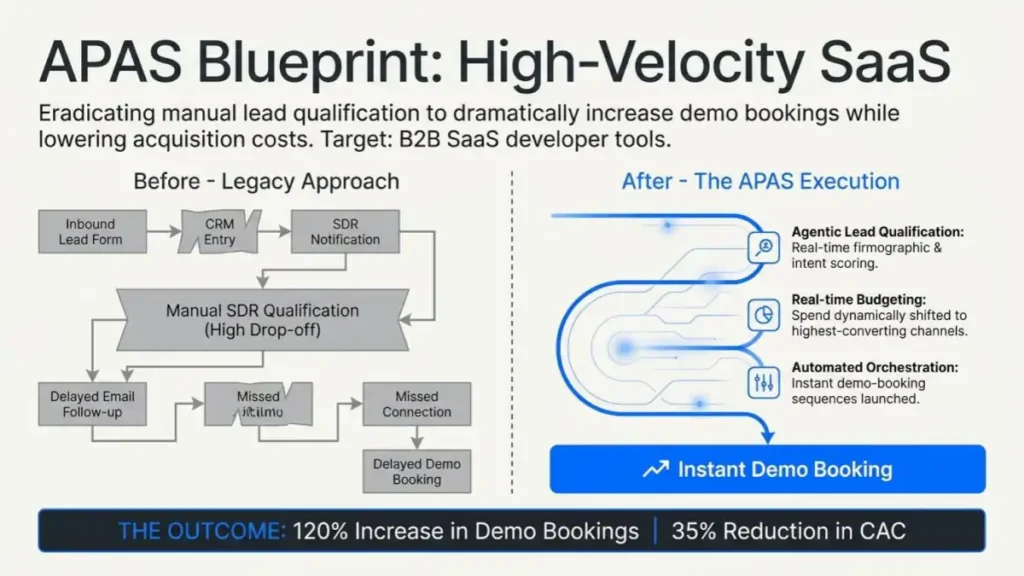
The Challenge: A rapidly scaling B2B SaaS company, specializing in developer tools, faced a common roadblock: pipeline velocity was lagging, and Customer Acquisition Costs (CAC) were rising due to heavy reliance on manual lead qualification and static marketing campaigns.
Their existing process for demo booking involved long lead-to-sales cycles, causing high lead drop-off rates, and their sales development representatives (SDRs) spent too much time chasing low-intent prospects.
Their disparate inbound and outbound workflows lacked coordination, leading to a fragmented customer experience.
The APAS Solution: The company implemented the Autonomous Pipeline Acceleration System (APAS) to unify and automate its revenue engine.
- Agentic Lead Qualification: Autonomous Pipeline Acceleration System's Agentic Intelligence Layer was deployed to analyze real-time firmographic, behavioral, and intent data, autonomously scoring and prioritizing leads with a high propensity to convert. This eliminated the manual lead scoring bottleneck.
- Automated Workflow Orchestration: APAS unified the inbound (website forms, content downloads) and outbound (targeted email sequences, ad retargeting) workflows. For high-scoring leads, an immediate, personalized demo-booking sequence was initiated across multiple channels (email, in-app notifications). Low-scoring leads were automatically enrolled in tailored, long-term nurturing tracks.
- Real-time Budget Optimization: The system automatically shifted paid media budget allocation toward channels and campaigns that generated the highest-quality leads, directly improving CAC efficiency.
The Results: Within six months of APAS deployment, the SaaS company achieved significant improvements:
- Increased Demo Bookings by 120%: By identifying and acting on high-intent leads instantly, the speed and quality of engagement skyrocketed.
- Reduced CAC by 35%: Real-time budget optimization and the elimination of wasted spend on low-quality leads drove cost efficiency.
- Workflow Efficiency: Both outbound and inbound lead management workflows were fully automated, freeing SDRs to focus exclusively on closing qualified opportunities.
This case study demonstrates how Autonomous Pipeline Acceleration System transforms static pipeline management into a dynamic, high-velocity revenue engine capable of sustaining aggressive growth targets.
2. Financial Services Firm
- Compliance-aware automation
- Personalized outreach
- Risk-based segmentation
- Improved conversion rates by 2.5x
- Reduced compliance risk using AI filters
The document is an article about the Autonomous Pipeline Acceleration System (APAS), providing definitions, components, benefits, and case studies. The user is at the cursor position after the "2.
Financial Services Firm" case study summary, and is asking to generate content for that case study, following the established structure of the preceding "1. SaaS Company" case study.
The Challenge: A large, multi-national financial services firm—dealing in complex wealth management and commercial lending products—struggled with two core issues: inefficient lead qualification and navigating stringent regulatory compliance.
Manual client onboarding and outreach processes were slow, often delaying time-to-first-value. Furthermore, ensuring every communication adhered to evolving financial regulations required significant manual oversight, creating compliance risk and slowing down the entire sales cycle.
The Autonomous Pipeline Acceleration System Solution:
The firm adopted APAS, integrating it with the PrescientIQ.ai platform, to embed compliance and intelligence directly into the revenue workflow.
- Compliance-First Agentic Workflows: PrescientIQ's AI filters were deployed within the Autonomous Pipeline Acceleration System Execution Layer. These filters automatically reviewed and adjusted client communications (emails, personalized document generation) in real time to ensure adherence to relevant financial regulations (e.g., GDPR, MiFID II, Dodd-Frank), reducing compliance risk without manual gatekeeping.
- Predictive Segmentation and Outreach: The system used intent and firmographic data to dynamically segment prospects based on regulatory eligibility and high-value propensity. This enabled APAS to orchestrate highly personalized outreach sequences—delivered only to compliant, qualified prospects—eliminating wasted effort and increasing relevance.
- Automated Risk-Based Qualification: For commercial lending, AI agents were implemented to perform an initial risk assessment on leads, prioritizing those with the highest likelihood of approval and lowest regulatory risk, thereby streamlining the qualification process.
The Results: By utilizing the PrescientIQ-powered APAS, the financial services firm achieved significant operational improvements:
- Improved Conversion Rates by 2.5x: Highly targeted, compliant, and personalized engagement sequences drastically increased the conversion of qualified leads into clients.
- Reduced Compliance Risk using AI Filters: The real-time compliance review minimized human error and ensured all automated outreach remained within regulatory boundaries, protecting the firm from potential fines and legal exposure.
- Increased Operational Speed: Automating compliance checks and qualification processes significantly reduced the time advisors spent on administrative tasks, allowing them to focus on closing high-value accounts.
3. Manufacturing Company
- Increased pipeline visibility
- Reduced sales cycle by 28%
4. Marketing Agency
- Eliminated manual reporting
- Improved ROI by 40%
- Manufacturing Company
- Increased pipeline visibility
- Reduced sales cycle by 28%
The Challenge: A high-growth digital marketing agency, managing a diverse portfolio of clients, was spending excessive hours on manual performance reporting, campaign monitoring, and resource allocation.
This administrative overhead drained profitability and prevented strategists from focusing on high-value client work. Furthermore, the delay in manually synthesizing performance data meant that campaign adjustments were often reactive, limiting real-time optimization and leading to suboptimal client ROI.
The APAS Solution: The agency deployed the Autonomous Pipeline Acceleration System to create an autonomous campaign management and reporting system.
- Automated Real-Time Reporting: APAS's AI Report Agent component is integrated with all client ad platforms (Google, Meta, etc.) and analytics tools. It autonomously generated performance reports, attribution models, and clear ROI metrics, eliminating the need for manual data pulling and formatting.
- Agentic Performance Optimization: The AIAd Agent continuously monitored campaign performance in real time and used reinforcement learning models to automatically adjust budget allocation, bidding strategies, and audience targeting across dozens of client campaigns simultaneously, ensuring optimal spending efficiency.
- Predictive Resource Allocation: The system identified which client campaigns were trending below target and automatically flagged them, enabling agency strategists to prioritize their time on accounts most in need of human intervention.
The Results: Within four months, the Marketing Agency transformed its operational model:
- Eliminated Manual Reporting: The automation of reporting saved hundreds of hours per month, drastically lowering operational costs.
- Improved Client ROI by 40%: Real-time, agentic optimization and budget shifting significantly improved campaign efficiency and client return on ad spend (ROAS).
- Increased Scalability: The agency was able to take on 30% more clients without increasing its core strategy team headcount, as the Autonomous Pipeline Acceleration System handled the bulk of monitoring and reporting.
MatrixLabX / PrescientIQ Solution
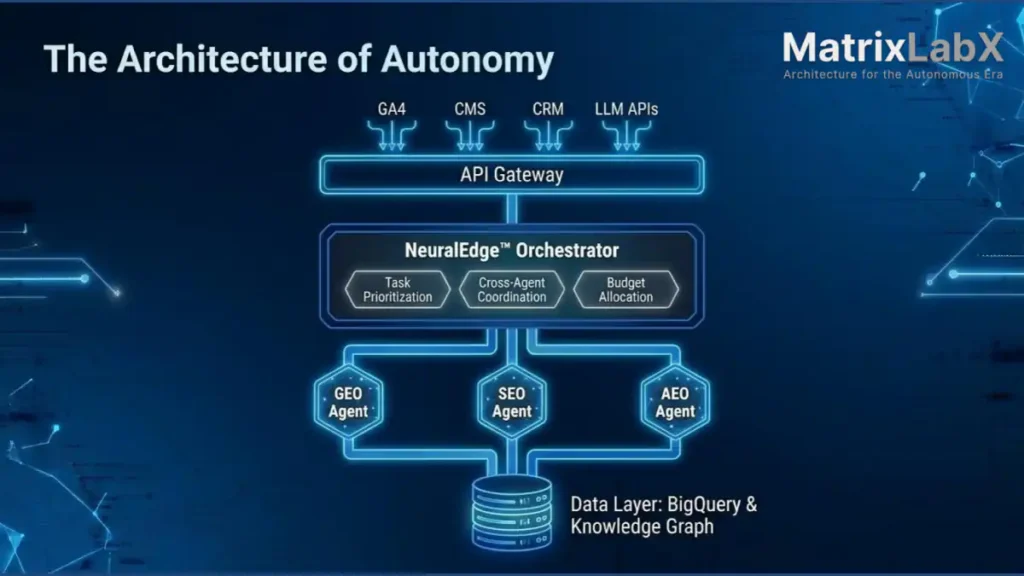
Autonomous Revenue Engine
MatrixLabX delivers APAS through its agentic orchestration platform, powered by PrescientIQ.ai.
Core Capabilities
- AI Content Agent: Content generation and distribution
- AI Ad Agent: Budget optimization
- AI CRM Agent: Predictive lead scoring
- AI Report Agent: Attribution and reporting
Key Differentiators
- Industry-trained AI models
- Real-time optimization
- Zero-labor execution model
- Full funnel visibility
Conclusion
The Autonomous Pipeline Acceleration System (APAS) represents a fundamental shift in how companies generate revenue. Traditional pipelines are no longer sufficient in a world driven by AI, automation, and zero-click search behavior.
Autonomous Pipeline Acceleration System enables organizations to:
- Eliminate inefficiencies
- Accelerate growth
- Achieve predictable revenue outcomes
As markets become more competitive and digital-first, the adoption of systems like APAS will separate leaders from laggards.
For organizations ready to scale, platforms like MatrixLabX provide a clear path forward—transforming fragmented workflows into autonomous revenue engines.
FAQ
What is an Autonomous Pipeline Acceleration System?
An APAS is an AI-powered system that automates and optimizes the entire revenue pipeline, from lead generation to conversion. It uses data, machine learning, and agentic workflows to improve efficiency and accelerate growth without manual intervention.
How does APAS improve conversion rates?
APAS improves conversion rates by using predictive analytics to identify high-intent prospects and engaging them with personalized, real-time interactions across multiple channels.
Is APAS suitable for small businesses?
Yes, APAS can be adapted for small businesses, especially those looking to scale efficiently. It reduces reliance on large teams and enables automation of repetitive tasks.
What industries benefit most from APAS?
Industries such as SaaS, financial services, manufacturing, and marketing agencies benefit the most due to complex pipelines and high customer acquisition costs.
How long does it take to implement APAS?
Implementation can take anywhere from a few weeks to a few months, depending on the complexity of the organization’s data and systems.
What are the risks of not adopting Autonomous Pipeline Acceleration System?
Organizations that fail to adopt APAS risk slower growth, higher costs, and reduced competitiveness in increasingly automated markets.