
The market moved. Then it corrected.
Demand for autonomous revenue agents is enormous — and the failure mode is consistent. What survives a security review, proves ROI, and earns buyer trust is governed autonomy: agents execute, humans authorize. Here's what the data says, seat by seat, for the six roles on a typical revenue committee.
Key takeaways
- →The macro opportunity is real: McKinsey estimates generative AI could add $2.6–$4.4T annually, with marketing and sales among the largest concentrations of value.
- →Then the reckoning: analysts now describe governance — not capability — as the bottleneck, and expect 40%+ of agentic AI projects to be cancelled by end of 2027.
- →The prescription isn't more autonomy — it's governed identities, least privilege, audit trails, and staged autonomy behind approval gates.
- →That is a specification for how to deploy agents, and it's the architecture the Revenue Accelerator was built on before it became consensus.
Two years of hype, one clear correction
The macro opportunity is real and large. McKinsey estimates generative AI could add the equivalent of $2.6–$4.4 trillion annually, with roughly three-quarters of the value concentrated in four areas — one of which is marketing and sales. Gartner projects that by 2028, 90% of B2B buying will be intermediated by AI agents, pushing more than $15 trillion of B2B spend through agent-to-agent exchanges.
Then the reckoning. The same analysts now describe governance — not capability — as the bottleneck. The prescription they write is not more autonomy. It is governed identities, least privilege, audit trails, and staged autonomy behind approval gates. That is a specification for how to deploy agents — and it's the architecture the Revenue Accelerator was built on before it became consensus.
How to read the figures. Industry statistics are third-party benchmarks, attributed to their named source, included for market context. MatrixLabX outcome figures are labeled by measurement status — Measured (live today), Target (modeled vs. a human/copilot baseline; validated per client via the free AAR), Case (a single named account), or Inherited (a Google Cloud platform capability). Nothing here is a guaranteed result; every Target is validated on your own data before any commitment.
Why don't output claims close deals?
Because a buyer cannot test one, and by now they know they cannot test one.
Consider what a volume claim actually asks of a prospect. A vendor states that their agents produce some multiple of a human team's output. The prospect has no access to the deployments that number came from, no visibility into whether those accounts resemble their own, and no way to distinguish a figure derived from measured production data from one derived from a model built in a spreadsheet. The claim is not necessarily false. It is unfalsifiable at the moment it matters, which for evaluation purposes is worse than false, because a false claim can at least be caught.
Now consider what happens when every vendor in a category makes the same unfalsifiable claim. The claims stop differentiating and start cancelling. A buyer holding seven proposals that all promise a large multiple does not conclude that all seven are excellent. They conclude the number is a genre convention, and they go looking for something else to decide on.
That something else is usually risk. Not because buyers stopped caring about output, but because risk is the dimension where the proposals actually differ and where the differences are checkable.
Governance is the checkable claim. Who authorised this action, under which rule, and where is the record — all three can be demonstrated in a working system during an evaluation, in about an hour, without trusting a single number.
The revenue committee · six seats
CRO / VP Revenue
Metric owned · pipeline velocity
What the data says
Activity is up and yield is down. Reps now spend only about 40% of their week actually selling (Salesforce, State of Sales 2026), and the average rep burns nearly two full days a week on admin (Forrester activity research). Roughly 78% of sellers missed quota in 2025, up from ~69% the year before. The teams closing the gap pair reps with AI: Gartner finds sellers who partner effectively with AI are 3.7× more likely to hit quota, and Bain attributes ~30% productivity gains to AI-assisted selling.
The fit
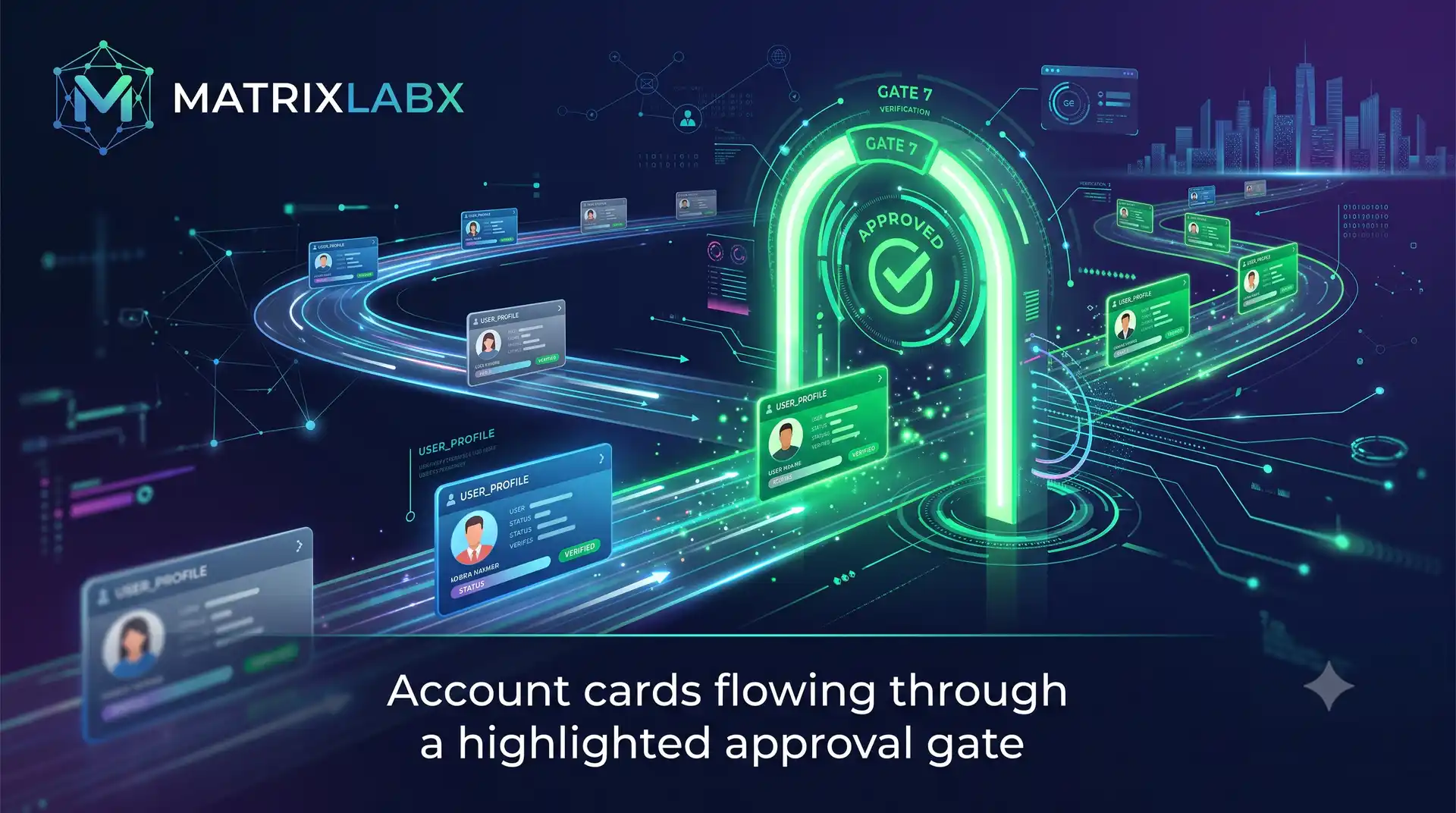
The CRO's ceiling isn't effort — signals now fire faster than a human team can act, and adding reps means linear cost and a multi-month ramp. Scout (prospecting) and Herald (outbound) run the full loop continuously and a human approves every consequential send — lifting the ceiling without inheriting the ungoverned-bot failure mode.
Read the CRO's guide to autonomous pipeline generation →Modeled vs. manual touch volume per rep.
Instrumented live today.
CFO
Metric owned · CAC / cost per pipeline dollar
What the data says
Acquisition cost is structurally fixed — seats, retainers, headcount — paid whether or not output lands. And the CFO now sits inside the AI budget conversation precisely because value has been hard to prove: Forrester found only ~15% of AI decision-makers saw an EBITDA lift, and fewer than one in three can connect AI spend to P&L. The buying pattern is shifting from flat per-seat licenses toward consumption and outcome-linked models.
The fit
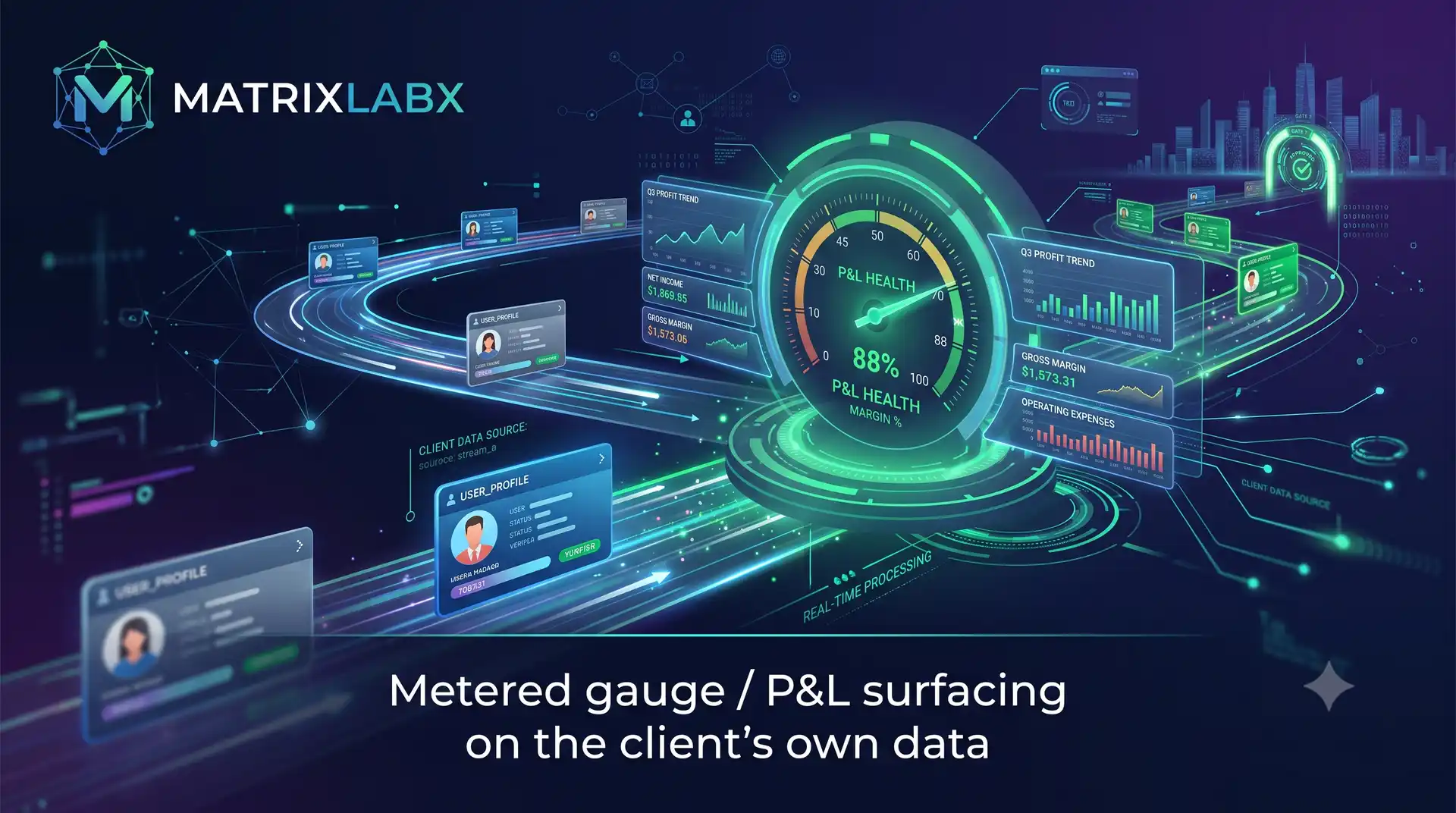
Labor-as-a-Service: you pay for executed workflows and delivered outcomes, not seats sitting at partial utilization. Fixed cost becomes variable and results-linked. The entry point is diligence before spend — the free AAR models a client-specific P&L on your own data before any commitment.
Read the CFO's guide to autonomous digital workforce economics →Modeled; validated per client via the free AAR.
Spend tracks executed workflows, metered per action — not a percentage claim.
COO
Metric owned · output per headcount
What the data says
In the old model, output is coupled to payroll — more volume means more people doing manual middleware: routing, reconciliation, follow-up. Bain estimates AI could roughly double the share of time sellers spend actually selling (~25%→50%). The upside is real when the plumbing is right: Salesforce reported that in-house, agents worked 130,000 previously untouched leads and generated 3,200 opportunities in four months.
The fit
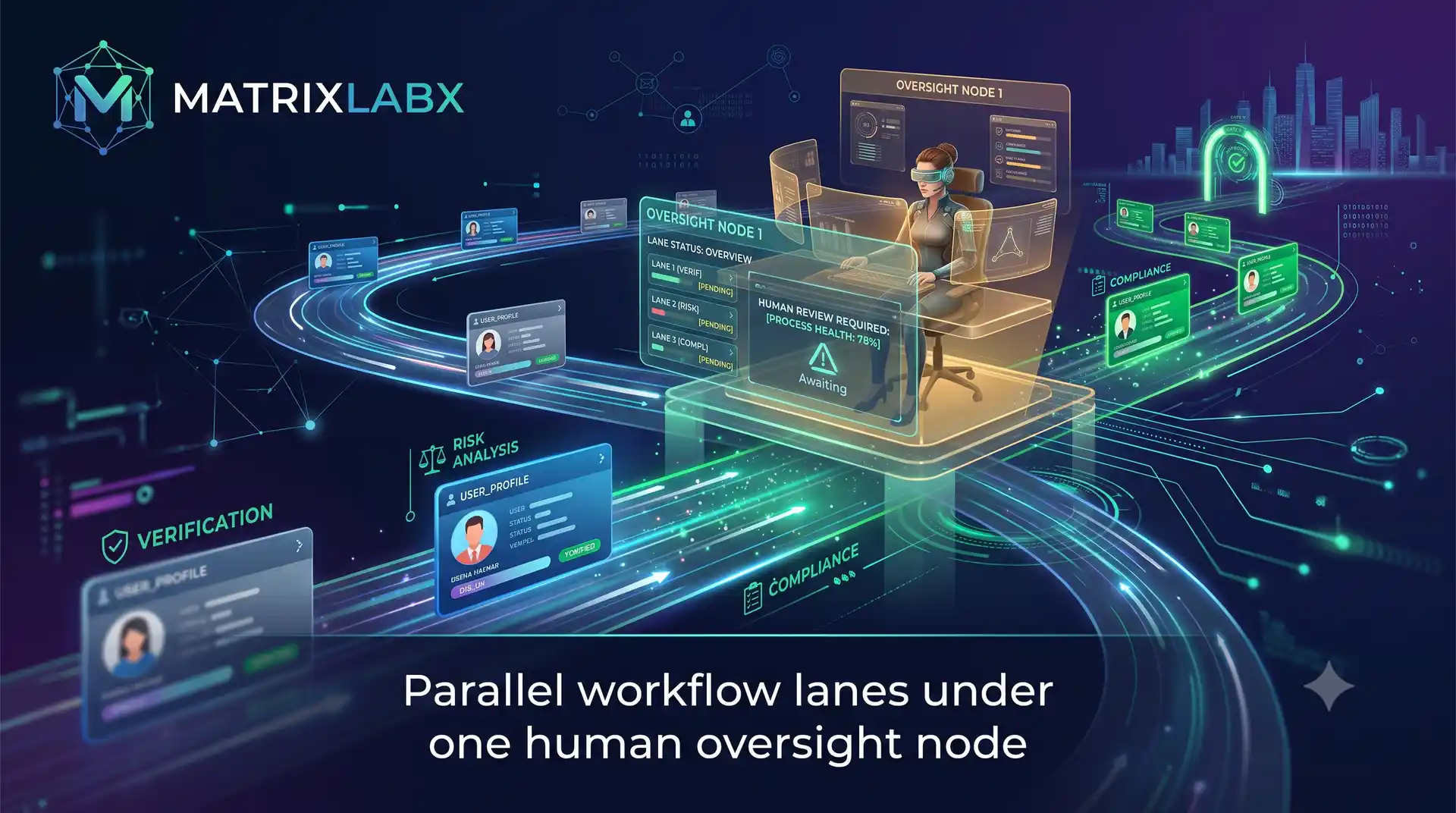
Digital labor decouples output from the payroll line. Agents execute end-to-end, humans stay on approval, so volume scales without the headcount line scaling with it — more durable than RPA (breaks on process change) or offshore BPO (trades rate for latency and QC).
Read how autonomous agents replace headcount in mid-market ops →Modeled vs. manual touch volume per rep.
Instrumented in the live demo.
VP Growth / PLG Owner
Metric owned · trial-to-paid conversion
What the data says
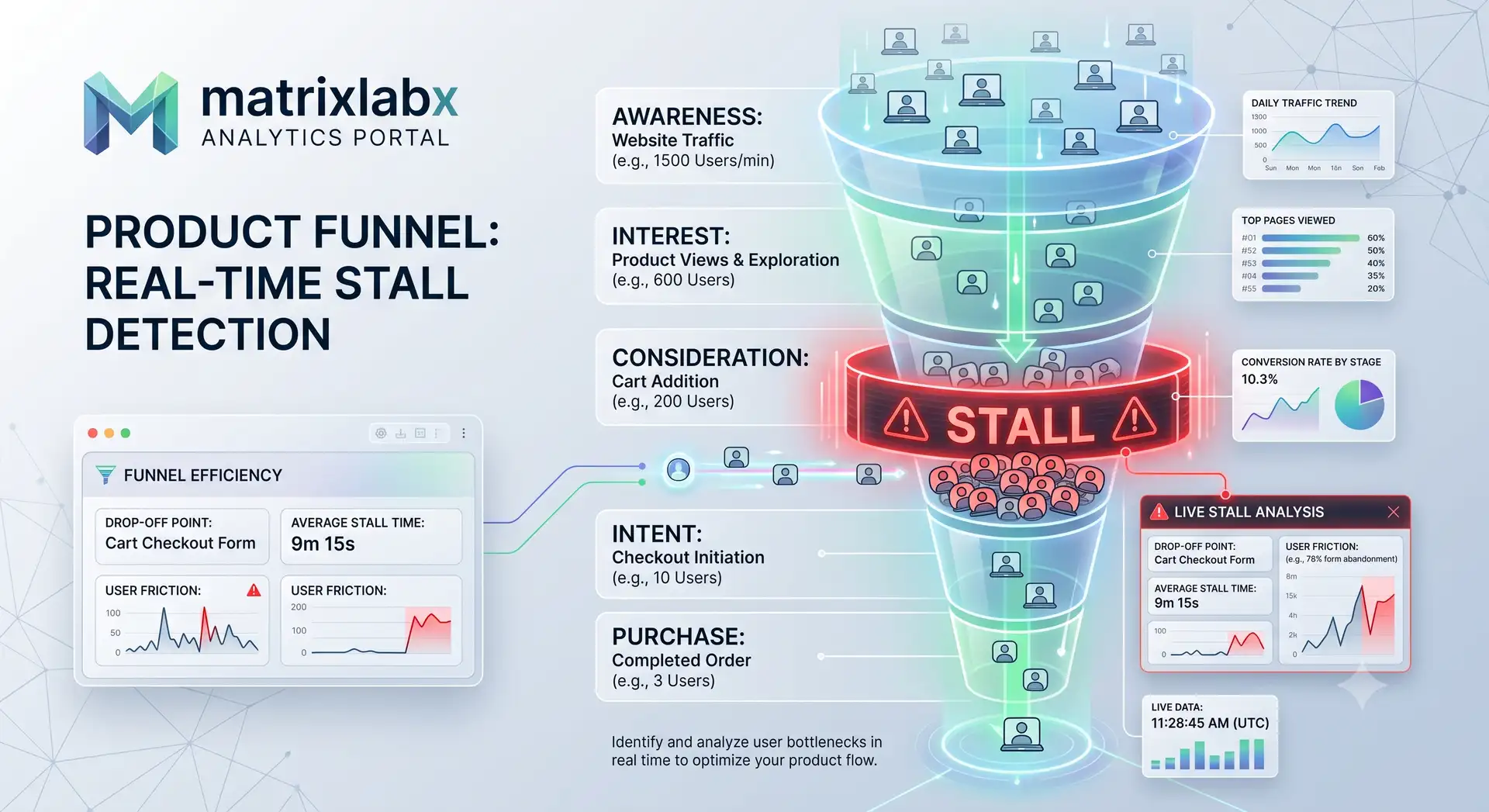
In product-led motions, conversion is decided early and most trials die quietly before the value event, with no one watching in real time. Speed of response is the lever — Salesforce's 2026 research shows sellers expect agents to cut research time ~34% and drafting time ~36%, freeing exactly the reaction speed a stalling trial needs. Across the market, AI-using teams reported 83% revenue growth last year versus 66% for teams without AI.
The fit
Analytics surface a stall after the fact; lifecycle email is pre-scheduled and blind to the moment. Guide (PrescientIQ’s trial conversion agent) monitors in-product behavior in real time and drafts a personalized activation sequence at the stall moment, for a human to approve and fire. It acts — it doesn't just render an insight.
Read why PLG funnels leak 40% of signups before activation →Modeled. Requires trial-telemetry instrumentation across a cohort.
RevOps Champion
Metric owned · CRM accuracy / time-to-value
What the data says
CRM data rots continuously — decay outpaces quarterly cleanups. ZoomInfo data indicates reps lose ~27% of their time to inaccurate data; Validity found 37% of CRM users report lost revenue tied directly to poor data quality; yet Forrester found only ~29% of revenue teams run a formal data-quality process, and Gartner pegs the average annual cost of poor data quality at $12.9M per organization. In the agent era, data quality is now cited as a top blocker to putting agents into production.
The fit
The Revenue Accelerator is designed to execute around imperfect data out of the box, and every change it makes is logged immutably — governance and hygiene in one motion rather than a separate cleanup project.
Read how CRM debt costs manufacturing tech companies their best buyer signals →Delivery commitment; validated per client.
Measured post-deploy.
Delivered by a separate Data Health product — not one of the four Revenue Accelerator agents. Distinction kept explicit.
CIO / Security
Metric owned · data perimeter / governance
What the data says
This is where the correction bites hardest — and where PrescientIQ™ has its strongest claim. Forrester's 2026 outlook warns an autonomous-agent deployment is likely to cause a major enterprise breach this year: a majority of organizations still lack AI governance policies, most security teams have already observed risky agent behavior, and a plurality of security pros now rank agentic AI a top emerging attack vector. Crucially, Forrester notes human-in-the-loop is useful but insufficient on its own — at scale you also need enforceable policy, least-privilege identity, and audit trails.
The fit
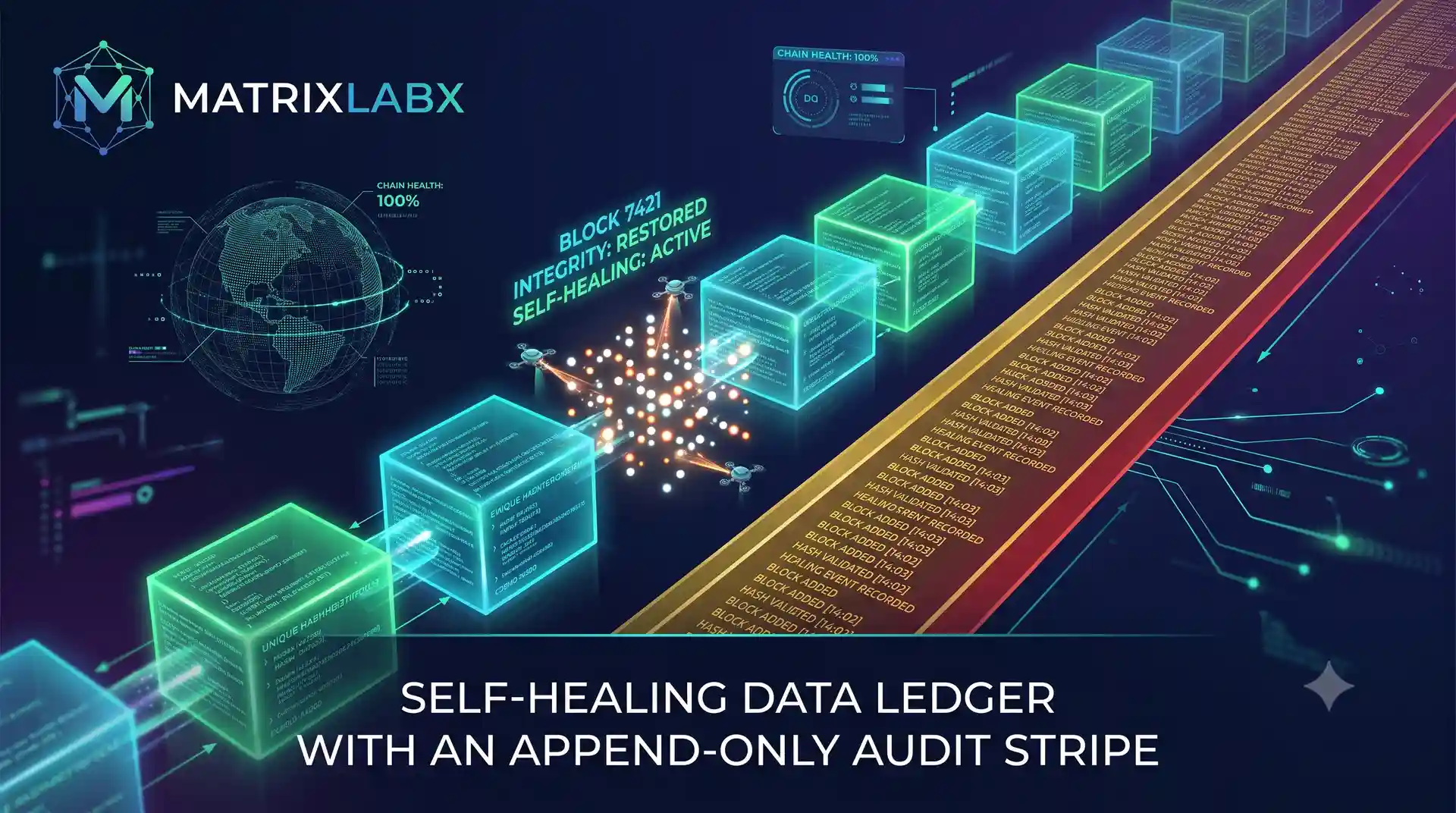
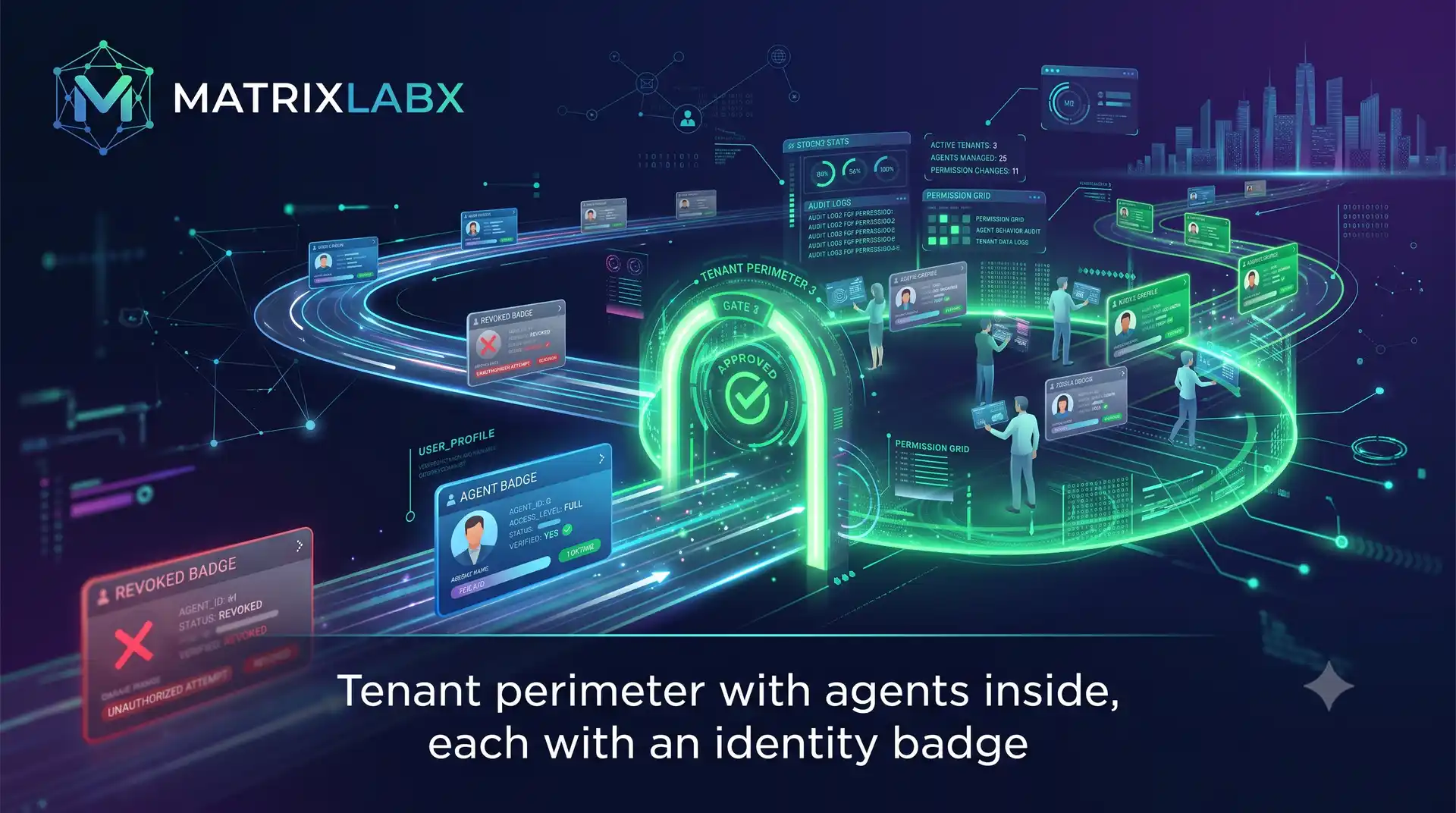
That is the exact specification the Revenue Accelerator was built to. Agents run on Google Cloud — every action is recorded to an immutable audit ledger. Each agent carries a least-privilege identity, Model Armor provides runtime protection, and every action lands in an immutable, glass-box audit trail. The approval gate is one control among several, not the only one.
Read how regulated FinServ companies cut CAC without losing the audit trail →Google Cloud platform capability — defensible today, attributable to the platform, not our application layer.
What can a buyer verify before they sign?
Each of these is demonstrable in a live product. None require access to anything confidential. A vendor who needs to follow up on more than one of them has told you something.
- Show the approval queue. Ask to see an action in a pending state, then watch it dispatch after approval. If the demo shows the action already sent with an approval logged afterward, that is a different product than the one being described.
- Reject something. Ask the reviewer to decline an action and watch what the agent does next. A governed system records the rejection and the reason, and the reason becomes signal. An ungoverned one silently retries.
- Ask which rule blocked an action.A governed system returns the specific governing clause. A generic policy violation means the reviewer cannot resolve the exception and has to escalate it, and within a few weeks the organisation's response is to widen the policy until the blocks stop — which quietly removes the control the product was bought for.
- Export the ledger. Ask for a raw export covering a date range. If the answer is a screenshot of a dashboard, the record is a view. A view recomputes from current state and is not evidence of what happened.
- Ask where the ledger lives. This determines who can produce your evidence when an auditor asks, and whether producing it requires a support ticket to a company whose interests may not align with yours at that moment.
Which governance questions matter most for your deployment?
The answer depends on where your constraint sits and what you need to prove afterward. The tool below returns a specification rather than a projection — the controls to require, from us or from anyone else.
Which agent leads — and what has to be true before it ships?
Three questions. The output is not a projection — it is the set of controls to require, from us or from anyone else. The numbers come from the free Autonomous Audit Report, modelled on your own data.
Frequently asked questions
What is AI agent governance?
The controls determining what an autonomous agent may do, who authorises consequential actions, and what evidence survives them. It requires three things together: a scoped permission boundary per agent, a human approval gate positioned on the execution path rather than after it, and an immutable record of actor, rationale, and before-and-after state.
Is human-in-the-loop the same as governance?
No. Human-in-the-loop describes a review step. Governance describes where that step sits, what it can see, and what it leaves behind. A review that happens after dispatch satisfies the phrase and none of the requirement.
Why do AI agent vendors lead with output claims?
Because output is what the technology visibly does and volume is easy to describe. The difficulty is that a buyer cannot verify the claim before purchase, so when every vendor makes a version of it the claims cancel and the decision moves to a dimension the buyer can actually test.
Related reading
Every target above is validated on your data first
The free Autonomous Audit Report maps these targets to your own environment — your pipeline, your CAC, your trial cohort, your data — and produces a client-specific P&L projection before you commit a dollar. Diligence first. Then decide.
Request your free AAR →Source index · third-party benchmarks
| Figure | Source |
|---|---|
| Gen AI value $2.6–$4.4T annually; ~75% in four areas incl. marketing & sales | McKinsey (2023–25) |
| 90% of B2B buying agent-intermediated by 2028; >$15T through agent exchanges; agents outnumber sellers ~10:1 | Gartner (2025) |
| 40%+ of agentic AI projects cancelled by end 2027; ~130 “real” agentic vendors | Gartner (2025) |
| 75% of B2B buyers prefer human-led experiences by 2030 | Gartner (2025) |
| Reps partnering with AI 3.7× more likely to hit quota; 72% overwhelmed by tools | Gartner (2024–25) |
| ~40% of week selling; 87% use AI; 54% used agents; ~34%/36% research/drafting cut; 83% vs 66% revenue growth; 130k leads → 3.2k opps | Salesforce, State of Sales (2026) |
| ~78% of sellers missed quota in 2025; ~2 days/week on admin | Salesforce / Forrester (2025–26) |
| ~30% productivity gain from AI-assisted selling; selling time could ~double | Bain (2025) |
| ~15% EBITDA lift reported; <⅓ tie AI to P&L; ~25% of AI spend deferred to 2027 | Forrester, Predictions 2026 |
| Agentic breach likely 2026; majority lack AI governance; most security teams saw risky agent behavior | Forrester 2026 security outlook |
| Rep time lost to bad data ~27%; 37% report lost revenue; 29% run formal data-quality process; poor data quality ~$12.9M/yr | ZoomInfo · Validity · Forrester · Gartner |
Benchmarks are third-party industry figures included for context. MatrixLabX outcome figures remain Measured / Target / Case / Inherited as labeled above.
See the governance architecture built for this correction
Book a 30-minute discovery call. We'll walk through the governed-autonomy loop and audit ledger with your revenue and security teams together.
Book a Discovery Call →George Schildge
Founder & Chief AI Officer, MatrixLabX
George Schildge founded MatrixLabX to resolve the tension revenue leaders face between the pressure to deploy autonomous agents and the governance bar security and compliance teams now require — building the approval gate and audit ledger into the agent architecture itself, rather than treating it as an afterthought.
Go deeper: the cluster articles
CRO / VP Revenue
Read the CRO's guide to autonomous pipeline generation
CFO
Read the CFO's guide to autonomous digital workforce economics
COO
Read how autonomous agents replace headcount in mid-market ops
VP Growth / PLG Owner
Read why PLG funnels leak 40% of signups before activation
RevOps Champion
Read how CRM debt costs manufacturing tech companies their best buyer signals
CIO / Security
Read how regulated FinServ companies cut CAC without losing the audit trail
See where your own execution effort is going
The Autonomous Audit Report models where your team's execution capacity is currently spent, what your configuration is actually paying for, and what the governed alternative looks like on your own data — before any commitment.
Get your free AAR benchmark