When autonomous outbound reaches SMS and the phone
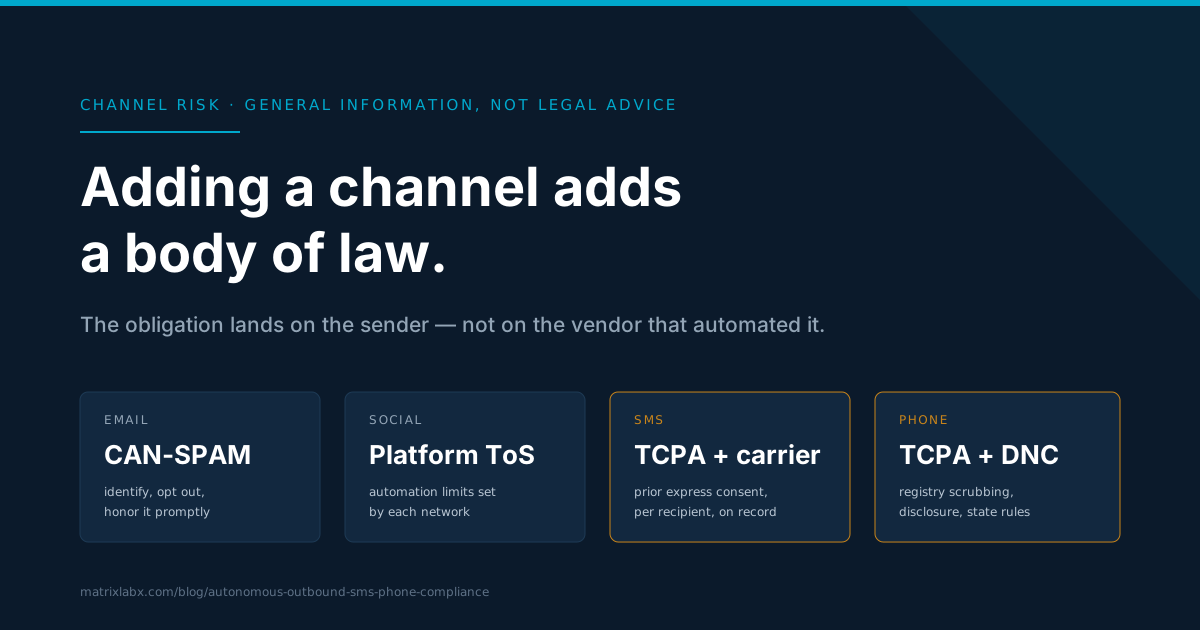
Every channel you add to automated outbound adds a body of law, and the obligation generally lands on the sender rather than on the vendor whose software sent it. Email is the forgiving channel. SMS and telephone are not: the model flips from opt-out to consent you have to evidence afterwards. This is general information, not legal advice — the point is to send you to counsel with the right question.
Channel coverage is the easiest thing to sell in this category. More channels is obviously better than fewer, it demos well, and the toggle takes about a minute to switch on.
What the toggle does not say is that email, social, SMS, and telephone are four different regulatory regimes, and that moving between them is not a feature upgrade. It changes who has to prove what, and when.
The four regimes, briefly
Non-exhaustive, US-centric, and simplified enough that your counsel will want to add to it. The purpose is to show you the shape of the change, not to substitute for advice:
| Channel | Principal regime | Shape of the obligation |
|---|---|---|
| CAN-SPAM | Broadly opt-out. Identify the sender, do not mislead in the header or subject, give a working way out, and honour it promptly. | |
| Social / messaging apps | Platform terms of service, plus applicable messaging law | Set by the network rather than a statute. Automation limits are contractual, enforcement is account-level, and the penalty is usually losing the account you built the motion on. |
| SMS | TCPA, plus carrier and industry messaging requirements | Closer to opt-in. Prior express consent is generally required per recipient, and you have to be able to produce evidence of it afterwards. |
| Telephone | TCPA, do-not-call rules, and a layer of state law | The most demanding. Registry scrubbing, calling-time restrictions, identification and disclosure obligations, and state rules that are stricter than the federal floor. |
Automation does not move the obligation
Two assumptions are worth killing early, because both are common and both are expensive.
“The software sent it, so it is the vendor’s problem”
Generally it is not. These regimes regulate the party on whose behalf the message was sent, and vendor agreements in this category commonly place responsibility for consent and applicable law on the customer explicitly. Read that clause before you enable a channel, not after — and read it with counsel, because it is usually the clause that decides who pays.
“It is AI, so the old rules do not fit”
The statutes regulate the conduct — contacting a person using particular technology — rather than what composed the words. What generated the message is not the operative fact. Autonomy changes the volume and the speed at which a mistake propagates, which is a reason for more care rather than less.
What actually reduces the exposure
Three things, in rough order of how much they help, and none of them is a feature you can buy on its own.
1. Consent evidence you can retrieve for one person
Not a count, not a percentage on a dashboard. The test is whether you can produce, for a single named recipient, what they agreed to and when. If retrieving that takes a data request and two days, you do not have an evidence trail — you have a database.
2. Suppression enforced at send, not at list build
A do-not-contact list applied when the list was assembled is a list that was correct at some point in the past. Between assembly and send, people opt out. The check has to happen at the moment of sending, and it should be able to stop a send that has already been queued.
3. A named human on the record for the send
In PrescientIQ, no message reaches a prospect without a named person approving it.
Two honest limits on that. An approval does not make a message lawful — an approved message can still be non-compliant, and an approver who does not know the consent status of the recipient is a rubber stamp with a name attached. And an approval queue is a real operating cost; it moves your constraint from volume to review capacity.
What it changes is the question. Without a gate, the question after an incident is who authorised this, and the answer is nobody. With one, the question is whether the authorisation was sound — a much better position to be in, and a much shorter conversation.
Before you switch a channel on
Five questions, for your vendor and for your own team. None of them is answerable from a feature page:
- For one named recipient, show me what they consented to and when. How long did that take?
- What does the system do when consent is missing or ambiguous — stop, proceed, or ask?
- Is suppression enforced at send time, and can it stop something already queued?
- Which contract clause allocates responsibility if a message goes out that should not have?
- Has our own counsel seen the channel plan — not the vendor’s compliance page, the plan?
If the honest answer to the fifth is no, that is the first thing to fix, and it costs nothing but a meeting. We have written the adjacent detail in the outbound controls post and on where this exposure hides in an SDR motion.
Frequently Asked Questions
- Does TCPA apply to AI-generated sales calls and texts?
- The statute regulates the conduct — calling and texting using regulated technology — rather than what composed the message, so the fact that software wrote it does not remove the obligation. Whether a specific deployment falls in scope is a question for your counsel, but the assumption that automation is outside the rules is the wrong starting point.
- Who is liable when an AI agent sends a non-compliant message?
- Generally the party on whose behalf the message was sent — you — rather than the vendor whose software sent it. Vendor agreements in this category commonly place responsibility for consent and applicable law on the customer, so read that clause before you switch a channel on, and read it with counsel rather than alone.
- What is the difference between email and SMS outbound compliance?
- Email under CAN-SPAM broadly operates on an opt-out model: identify yourself, offer a way out, and honour it promptly. SMS and telephone operate closer to an opt-in model, where prior express consent is generally required per recipient and must be evidenced afterwards. That reversal is the single biggest change when a channel is added.
- Can an autonomous agent obtain consent on its own?
- It can record that a consent event occurred, which is not the same as establishing that valid consent was given. Consent is a question about what the recipient actually agreed to and when, and it has to survive being examined a year later by someone unsympathetic. Treat the evidence trail, not the automation, as the deliverable.
- What should we ask a vendor before enabling SMS or phone outbound?
- Where consent evidence is stored and how it is retrieved for a single recipient, what the system does when consent is missing or ambiguous, whether suppression and do-not-contact lists are enforced at send time rather than at list build, and who the contract makes responsible when something goes out that should not have.
- Does a human approval gate help with outbound compliance?
- It creates a named person and a record for every outbound action, which is the thing an examiner asks for. It does not make a message lawful on its own — an approved message can still be non-compliant, and the approver needs to know what they are approving. It changes the question from whether anyone authorised this to whether the authorisation was sound.
Related Reading
Notes on this article
This is general information about how obligations shift between outbound channels. It is not legal advice, it is not a complete statement of any statute or rule, it is US-centric, and it does not create a professional relationship of any kind. Requirements vary by jurisdiction, by industry, by the relationship you have with the recipient, and over time. Consult qualified counsel about your own programme before enabling a channel. This article makes no assertion about the compliance posture, practices, or products of any vendor, named or unnamed, and no claim that any particular product or practice is or is not compliant. The metric shown renders from the site's claims register with its proof class attached.
See where your own execution effort is going
The Autonomous Audit Report models where your team's execution capacity is currently spent, what your configuration is actually paying for, and what the governed alternative looks like on your own data — before any commitment.
Get your free AAR benchmark