The marketing tax: what CFOs discover when they audit their SaaS and agency spend
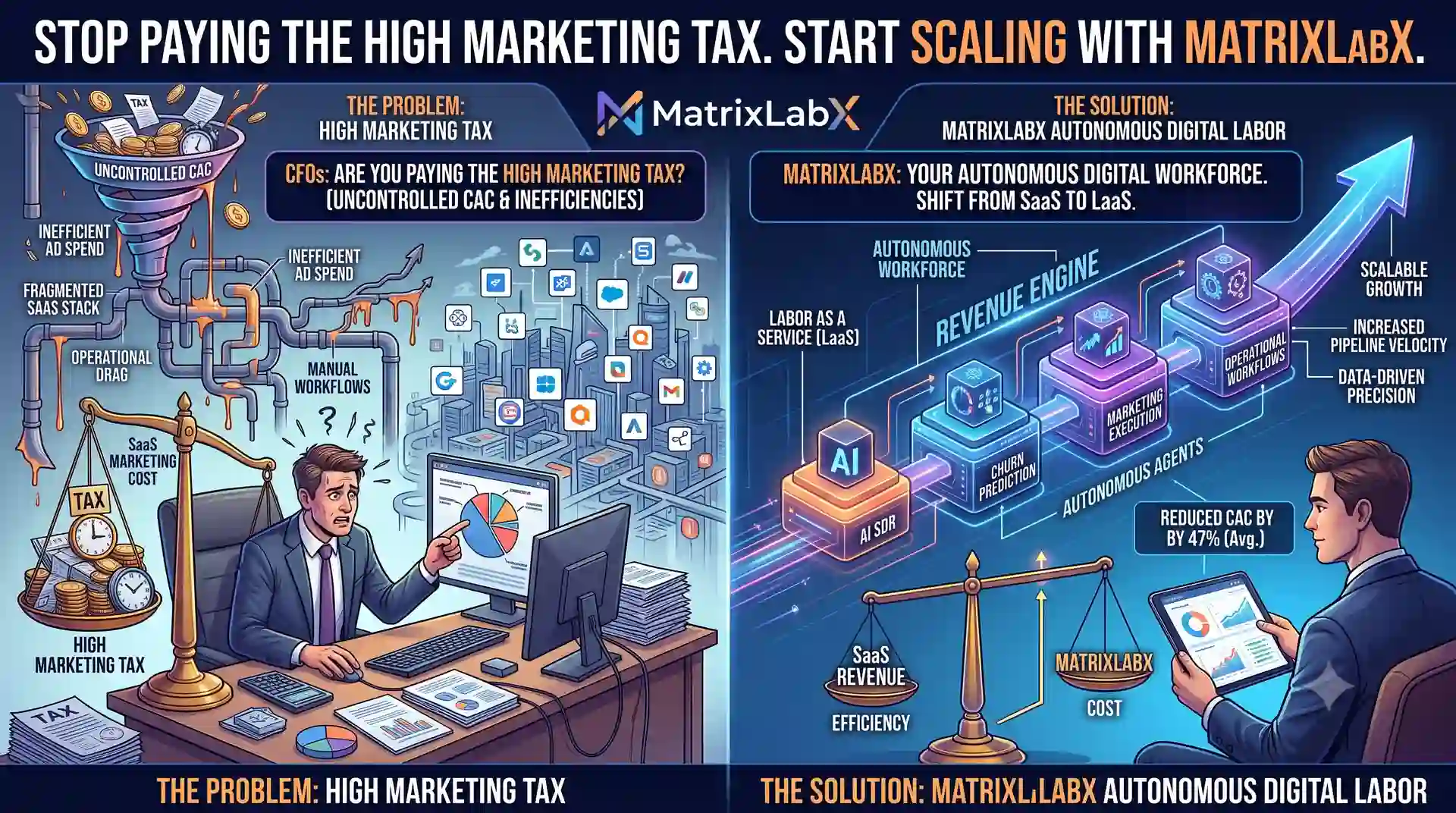
A marketing tax audit runs in six steps, from ledger export to staged cutover, and each step produces one artifact a finance team can defend in a board review. This post is the playbook. For what the tax is and how to size it, start with the formula.
Almost every CFO agrees the marketing stack should be audited. Very few have run one. Not from lack of will — from lack of a first step that does not immediately turn into a negotiation with the CMO about whether brand can be measured.
The way out is to make the first step clerical. You are not auditing marketing. You are auditing a register of recurring charges, and the judgment calls do not arrive until step four. By the time they do, you have a document instead of an opinion, which changes the conversation entirely.
What the audit is actually looking for
Four categories, and they need different remedies. Conflating them is why rationalization projects deliver less than their business case:
- Dormant. Paid for, not used. The easiest money on the register and the only category you can act on without a conversation.
- Redundant. Two tools doing one job, usually because they were bought by two teams in two years. Requires a decision about which one survives.
- Orphaned. In use, but nobody owns the outcome. These renew forever because cancelling requires someone to volunteer for the blame.
- Unattributable. Genuinely in use, genuinely resourced, and impossible to trace to a result. This is the largest category and the hardest, and it is where the argument actually happens.
The six-step audit
In order, because each step consumes the artifact the last one produced. Skipping to step five is the most common way this fails: triage without telemetry is just opinion with a spreadsheet.
| Step | Artifact | Owner |
|---|---|---|
| 1. Ledger exportInclude corporate cards. The tools nobody remembers buying are almost always on one. | Full recurring-charge register | Finance |
| 2. Function taggingOne line per tool, naming the job it does. Two tools with the same tag is the finding. | Tool-to-job map | RevOps |
| 3. Usage telemetryPull from the vendor admin console, not from the seat count on the invoice. | Seats against active users | IT / RevOps |
| 4. Attribution matchThe slow step, and the one that produces the answer. Budget real time for it. | Outcome per line item | Finance + Marketing |
| 5. TriageRun every line through the tree below. A line with no decision defaults to renewal. | Cut / keep / replace plan | CFO |
| 6. Staged cutoverContract end dates set the pace, not the plan. Order the work around them. | Sequence against renewal dates | CFO + RevOps |
Step four is where audits stall, and it is worth naming why. Matching a line item to an outcome means agreeing what counts as a trace, and that agreement has to be made once, in advance, by finance and marketing together. Made line by line, it becomes a negotiation you will lose forty times.
The triage tree: cut, keep, or replace
Step five, applied to one row of the register at a time. Four questions, asked in order, and the first one that resolves ends the walk. The default matters more than the tree does: a line that reaches the end of the quarter without a decision renews automatically, which is how the register got this long.
1. Can finance trace this line to an outcome?
No — activity only, no traceable pipeline
Flag for cut or replacement. This is the tax. Before you cut, confirm nothing downstream silently depends on it — dormant tools sometimes hold an integration together.
Yes — traceable to pipeline or revenue
Continue to question 2.
2. Does another tool on the register already do this job?
Yes — the function tag appears twice
Consolidate. Keep the tool with the cleanest attribution, not the cheapest or the one with the longest feature list, and retire the overlap at its next renewal.
No — it is the only tool doing this job
Continue to question 3.
3. Is seat utilization above the threshold you set in step 3?
Yes — the seats you pay for are in use
Keep. This line is working. Revisit at renewal like any other contract, and do not spend audit time here.
No — a meaningful share of seats are dormant
Keep the tool, reclaim the seats. Right-sizing at renewal is the least disruptive money on the register, and it needs no vendor and no migration.
4. Is what remains software you use, or hours you spend?
Software — the team decides with it
Keep it. The audit is finished for this line, and the remaining spend is defensible in a board review.
Hours — the team operates it
This is the candidate for replacement rather than cancellation. Cutting the license here just moves the work; the question is whether the execution itself can move.
Notice that the tree cuts on evidence and keeps on evidence, and that only the last question produces a replace. That ordering is deliberate. Cancellation and consolidation recover real money with no vendor involved, and they should be exhausted before anyone evaluates a platform — including ours.
What the audit will not tell you
Three limits worth setting expectations on before you start, because each one has ended an audit that was going well.
The savings are on the renewal calendar, not the audit date
A dormant tool with nine months left on its contract is not a saving this year. Build the recovery schedule from contract end dates, or the number you present to the board will be one you cannot deliver in the period you promised it.
Cutting the license does not cut the labor
The hours the tool accumulated stay on payroll unless the work itself goes somewhere. This is the single largest reason a second consolidation project underdelivers against the first: the license line was the part that was easy to see.
Broken attribution is upstream of all of it
If marketing and revenue systems share no common keys, step four cannot complete, and no amount of tooling decisions will change that. Fix the data foundation first. That is a readiness question, and it is what the Agentic Readiness Audit exists to answer.
Where agents fit — and where they do not
Only at the fourth triage question, and only for the lines that resolved to hours rather than software. That is a narrower opening than most vendor material implies, and it is the honest one: if your register is mostly dormant licenses, you need a procurement calendar, not a platform.
For the lines that are hours, the shift is from execution you staff to execution you contract. Three things are worth stating precisely, because they are what buyers ask at this point.
Every message, update, or spend decision a prospect or customer could see passes a named person before it executes. There is no autonomous external send. This is true by construction of the approval gate rather than a projected outcome.
Figures labeled as targets are modeled against current human and copilot baselines. They are not guarantees. Every engagement begins with a free Autonomous Audit Report — a P&L projection built on your own data — and targets are validated against your environment before any commitment.
This is the one that matters to step four. Attribution running over stale records is not attribution, and the manual cleanup keeping records current is one of the largest hour categories on any register.
On availability
Retainers work business hours and agents do not, but the honest version of that sentence has carve-outs in it:
Engineered availability SLO of ≥99.5% on the model and inference path, with named third-party carve-outs (Salesforce, HubSpot, intent-data vendors, email delivery).
The carve-outs are the point. Execution depends on systems we do not operate, and a continuity claim that ignores that is a claim you should not accept from any vendor in this category.
What it costs
A post about unexamined recurring spend should not hide its own recurring price:
| Component | Investment | Billing frequency |
|---|---|---|
| Annual platform feeEnvironment provisioning on Google Cloud, per-agent IAM, audit-ledger setup, and context ingestion from your CRM — plus four cooperating agents (Scout, Herald, Guide, and Steward), their coordinator Marshal, the approval queue and standing-policy controls, and the immutable audit ledger, and the monthly execution volume a typical mid-market deployment runs. One fee, from signature, every year.Target — modeled: live in 21 days or less$165,000/year is the complete platform fee. There is no separate implementation charge and no different first-year number — deployment work is included from signature, not billed as a distinct line. Scope beyond a typical deployment — additional bundles, sustained higher volume — is quoted at your AAR before anything is signed. | $165,000/yr | Billed monthly at $13,750/mo against an annual commitment |
$165,000 a year, flat — the same number in year one and every year after. Compare it against the lines your own triage marked replace — not against the whole register, which overstates it, and not against the license line alone, which understates it. Full detail is on our pricing page.
Why this might not work for you
An honest audit deserves honest failure conditions. This approach fits badly if:
- Your data is too fragmented to attribute. Step four stalls until the foundation is fixed, and every later step depends on it.
- Your spend is already lean. A tight stack with high seat utilization has little to recover, and the audit will cost more attention than it returns.
- The agency work is genuinely creative and attributed. A retainer producing measurable pipeline and craft you cannot reproduce is the wrong thing to replace at any price.
- There is no internal owner. Without a CFO or RevOps lead empowered to enforce cut decisions, the tools quietly renew and the register grows back.
- You cannot absorb change this quarter. Sequence the work across more renewals instead of forcing a cutover the organization will reject.
Frequently Asked Questions
- What is the marketing tax in a SaaS and agency budget?
- It is the portion of marketing infrastructure spend that produces no traceable outcome: dormant licenses, tools whose job another tool already does, retainers running on inertia, and the internal hours spent operating all of it. The arithmetic behind the term is set out in our companion post on what the marketing tax does to EBITDA.
- How do I run a SaaS cost audit for marketing tools?
- Six steps, in order: export every recurring charge from the ledger, tag each one to the job it does, pull seat telemetry, match each line to an outcome, decide cut or keep or replace, then sequence the cutover against renewal dates. Each step produces an artifact a finance team can defend, which is what makes the decisions stick.
- How much MarTech waste does a CFO typically find?
- We will not quote you an industry average, because the honest answer is that it varies enormously with how long the stack has been accumulating and whether anyone has ever been accountable for cancelling something. The audit exists precisely because the number cannot be estimated from outside. Run the six steps and you will have your own figure.
- Is an AI agent cheaper than an agency retainer?
- It depends on what the retainer does. Retainers bill for hours, so their cost rises with volume; a platform fee does not. But a retainer producing genuine creative judgment and traceable pipeline is not a candidate for replacement at any price. Compare the cost shapes on the work that actually repeats, not on the whole relationship.
- What does labor as a service mean for marketing spend?
- It moves the line from software you license and staff to execution you contract for. Rather than buying a tool and hiring the hours to operate it, you contract the repeating execution itself — with a named person approving every externally visible action before it runs. The budget line changes category, not just size.
- How long does it take to consolidate a MarTech stack?
- The constraint is almost never technical, it is contractual. Consolidation moves at the speed of your renewal calendar, because a tool with nine months left on its contract cannot be cut this quarter no matter how dormant it is. Sequence the cutover against renewal dates and the timeline writes itself.
- Will consolidating tools hurt my marketing performance?
- It can, if you consolidate on price rather than on attribution. The tool to keep is the one with the cleanest trace to an outcome, which is not always the cheapest or the one with the most features. Cutting a dormant license carries no performance risk at all; that is the part to do first.
- What should a CFO measure after a marketing tax audit?
- Three things: recurring spend eliminated against the renewal calendar rather than against the audit date, the share of remaining spend that now traces to an outcome, and the internal hours returned. The third is the one most audits skip, and it is usually larger than the license savings that justified the exercise.
Related Reading
- The Marketing Tax: How Your MarTech Stack Is Quietly Destroying Your EBITDA (the formula this playbook operationalizes)
- From 14 MarTech Tools to One: The CMO's Consolidation Playbook
- Why Seat-Based Pricing Is Taxing Your Growth
- What Is Labor as a Service?
- AI SDR vs. Human SDR: What Each One Actually Costs
- Why AI Agent Pilots Stalled — and What Buyers Ask Now
Notes on the figures
This post asserts no outcome, ratio, or industry average of its own. The audit method is a procedure for the reader to run on their own register, and every figure it produces is theirs. The metrics that render do so through the site's claims register, each carrying its own proof class; targets are modeled, not guaranteed, and are validated against your environment before any commitment. The availability statement renders verbatim, carve-outs included. Platform pricing is the published rate for the PrescientIQ Revenue Accelerator and is current as of the date on this post. No comparative performance claim is made about any named vendor, product, or agency.
See where your own execution effort is going
The Autonomous Audit Report models where your team's execution capacity is currently spent, what your configuration is actually paying for, and what the governed alternative looks like on your own data — before any commitment.
Get your free AAR benchmark