The Outcome-Based Workforce: Why Mid-Market Companies Are Buying Work, Not Seats
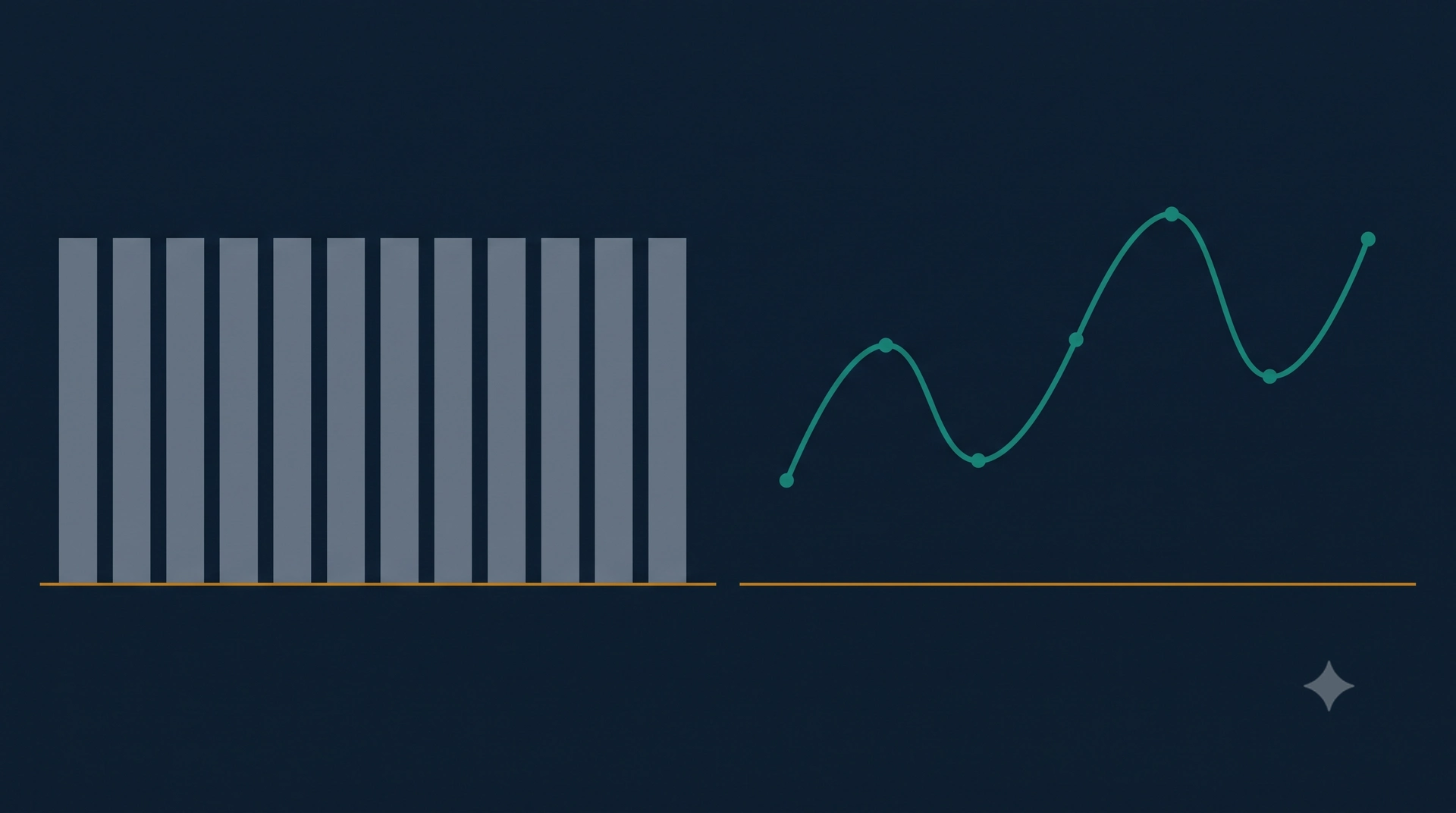
An outcome-based workforce pays for work completed rather than hours logged or seats licensed. Mid-market operators are blending full-time employees, fractional specialists, and governed digital labor into a single capacity model — shifting execution cost from fixed to variable while holding the approval authority in-house.
Ask a CFO what a unit of execution costs — one qualified prospect researched and routed, one renewal risk caught and worked, one campaign drafted, reviewed, and shipped — and the honest answer at most mid-market companies is that nobody knows. The costs are real, but they are dissolved into salaries, licenses, and managed-services retainers that were purchased as capacity and never reconciled against work.
The outcome-based workforce is what happens when operators stop accepting that opacity. It is the workforce corollary of governed digital labor: once part of your execution can be bought as completed work, the rest of the workforce model gets re-examined in the same light.
What is an outcome-based workforce?
It is a capacity model with three interchangeable sources of execution, planned in one place:
- Full-time employees — for work where judgment, relationships, and institutional context dominate. Fixed cost, highest context, the permanent core.
- Fractional and contract specialists — for expertise you need at partial intensity: a fractional RevOps lead, a contract designer, a seasonal analyst. Semi-variable cost.
- Governed digital labor — AI agents executing the high-volume, rule-describable layer under human approval, priced on the work delivered. Variable cost.
What makes the model outcome-based is the accounting spine: each source is measured against the same unit — completed, approved work — instead of employees being measured in hours, contractors in days, and software in seats. What keeps it governable is that approval authority never leaves the payroll: agents and contractors execute, but named employees approve.
Why are fixed-headcount models breaking?
Because demand for execution is variable and the cost structure that serves it is not. Pipeline pushes, product launches, seasonal surges, and territory expansions arrive as spikes; headcount and annual licenses arrive as steps. The mismatch bites twice — you carry idle capacity in the troughs and starve execution at the peaks, and hiring lead time means the capacity you add for a spike often lands after the spike has passed.
The line item that makes the mismatch expensive is the one most budgets understate: the true cost of a seat. We have decomposed this in detail for revenue teams — the fully loaded cost of a seven-person SDR team runs roughly 2.8× its salary budget line once variable comp, payroll tax, benefits, tooling, management, and ramp are counted [Case — modeled on published compensation and tooling data; full derivation in the linked analysis]. A fixed cost that is understated by that margin, multiplied across functions, is why “we can't afford to grow the team” and “the team is underwater” are so often true simultaneously.
How do you price work instead of seats?
Start by naming the unit. A seat is not a unit of work; neither is an hour. The unit is the completed workflow: a prospect researched, scored, and routed; an outbound sequence drafted and approved; a renewal-risk account flagged with evidence and a play. Digital labor makes this pricing possible because, for the first time, execution arrives pre-metered — every workflow an agent completes is a discrete, countable, ledger-recorded event.
Once the unit exists, comparison across sources becomes ordinary procurement math. As a structural example: if a workflow costs your team $60 in fully loaded labor at current volume, and a governed agent delivers the same workflow — human approval included — at a fraction of that, the delta times annual volume is the size of the prize [Illustrative — modeled composite; not a measured client average]. The point of the exercise is not the specific number; it is that the number becomes computable at all. The broader pricing shift this belongs to is mapped in our guide to the per-seat to outcome-based transition.
How do digital and human labor share a capacity plan?
By dividing the plan along the consequence line, not the function line. Within any function — sales development, marketing ops, customer success — the execution layer (research, drafting, updating, monitoring, reconciling) is a candidate for digital labor, while the consequence layer (approving sends, owning relationships, making exceptions, setting strategy) stays human. The capacity plan then stops asking “how many people does this function need?” and starts asking “how much execution does this function need, and from which source?”
Two planning rules keep the blend honest. First, every agent has a named human owner with approval authority — capacity without an owner does not enter the plan. Second, surge capacity comes from the variable sources first: when volume spikes, agent throughput scales within the approval envelope the owners can actually sustain, and fractional specialists extend the judgment layer if approvals become the bottleneck.
What does this do to the P&L?
Three effects, in order of visibility:
- Execution cost moves from fixed to variable. A portion of what was salary-and-license becomes spend that tracks delivered work — expanding in push quarters, contracting in consolidation quarters, and visible per workflow instead of dissolved in overhead.
- Unit economics become inspectable. Cost per qualified opportunity, per renewal saved, per campaign shipped — metrics that were unanswerable under seat accounting become queries against the ledger.
- Operating leverage compounds. Revenue growth stops requiring proportional headcount growth in the execution layer. Targets like the CAC and pipeline improvements we model for revenue deployments — for example, a 47% blended-CAC reduction within 90 days [Target — modeled, validated per client via the AAR]— are expressions of this leverage, sized on each client's own data rather than promised as averages.
How do you model this before committing?
Not with a vendor's benchmark deck. Every figure in this post is labeled as illustrative or as a modeled target for a reason: the only version of this model that should reach your board is the one computed on your own numbers — your fully loaded labor costs, your workflow volumes, your tooling spend, your approval capacity.
That is precisely what the MatrixLabX Autonomous Audit Report (AAR) produces: a baseline of what your execution costs today, workflow by workflow, and a modeled projection of what a governed blend would change — with every assumption exposed, so your CFO can interrogate the model rather than trust it.
Frequently asked questions
Is an outcome-based workforce just outsourcing with a new name?
No. Outsourcing moves both execution and judgment outside the company. An outcome-based workforce moves execution across a blend of employees, fractional specialists, and governed digital labor while the approval authority — the judgment — stays with named people in-house, recorded on an audit ledger.
Does outcome-based mean paying only on results?
Not necessarily. The defining shift is that the billable unit is completed work — an executed workflow, a delivered outcome — rather than a seat or an hour. Some engagements layer success components on top, but the structural change is what gets metered, not whether risk is shared.
What happens to the existing team in this model?
Their time moves up the value chain. Digital labor absorbs the repetitive execution layer — research, drafting, updating, reconciling — and the humans hold approvals, relationships, and strategy. The model reallocates the payroll you already have; it does not require reducing it.
How do we know what our work actually costs before switching?
Measure it. The honest starting point is a baseline of what each workflow costs you today in fully loaded labor and tooling, and what a blended model would change — computed on your own CRM and finance data rather than a vendor benchmark. That measurement is exactly what the Autonomous Audit Report produces.
The entire argument of this post resolves into one step: model it on your own data.
Get Your Autonomous Audit Report →Related
See where your own execution effort is going
The Autonomous Audit Report models where your team's execution capacity is currently spent, what your configuration is actually paying for, and what the governed alternative looks like on your own data — before any commitment.
Get your free AAR benchmark